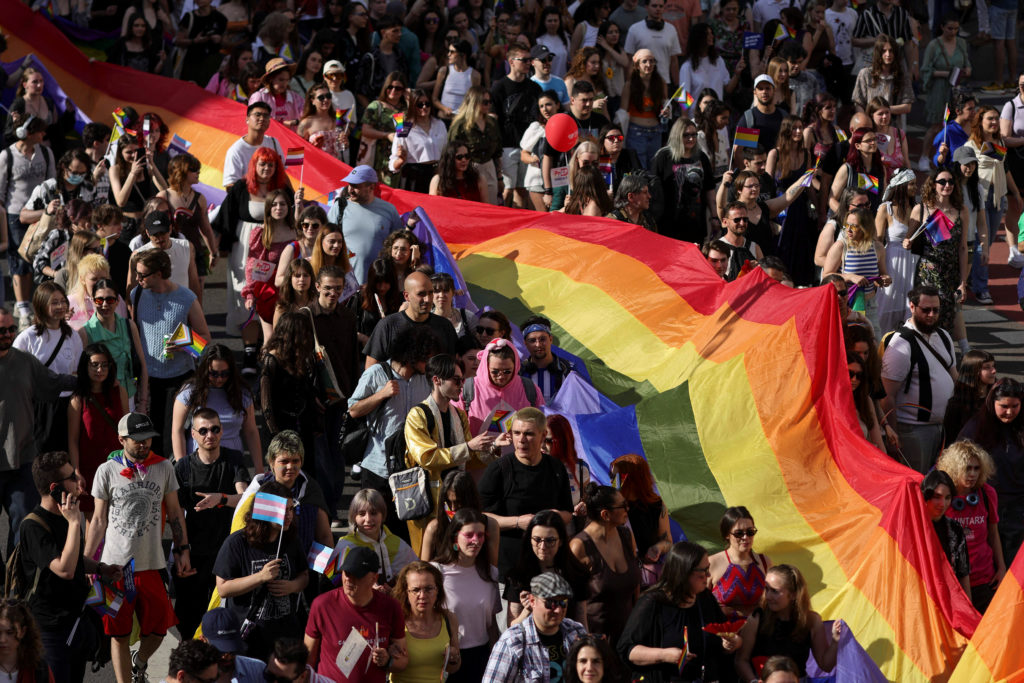
Tens of thousands of LGBTQ+ supporters participated in annual Pride parades in the capitals of Romania and Bulgaria on Saturday, calling for greater equality and legal recognition. The demonstrations occurred against a backdrop of rising opposition from conservative groups in both nations.
In Romania, large crowds gathered to march through the streets of Bucharest. Similarly, significant numbers of participants took to the streets in Sofia, Bulgaria, to advocate for LGBTQ+ rights. Organizers and attendees emphasized the demand for equal treatment under the law and an end to discrimination based on sexual orientation.
The events highlight a ongoing tension between LGBTQ+ advocacy groups and conservative factions within both countries. Reports indicate that opposition from conservative groups has been increasing in recent years, creating a challenging environment for these annual demonstrations. Despite this opposition, the turnout of tens of thousands of supporters demonstrates continued public engagement with the issue of equality.
Legally, neither Romania nor Bulgaria currently recognizes same-sex marriage or civil partnerships. This lack of legal recognition stands in contrast to the broader European Union framework, which prohibits discrimination based on sexual orientation. The discrepancy between EU-wide anti-discrimination principles and national laws regarding marriage and partnership rights remains a central point of contention for activists in both nations.
Activists at the marches stated that their primary goal is to secure equal rights comparable to those available to heterosexual couples. They argue that the current legal status in Romania and Bulgaria fails to protect LGBTQ+ individuals adequately, particularly in areas such as inheritance, healthcare decision-making, and social security benefits associated with civil unions or marriage.
Conservative groups have voiced opposition to the Pride events, arguing against what they describe as threats to traditional family values. These groups have organized counter-protests and public statements criticizing the marches. The presence of these opposing viewpoints underscores the polarized nature of the debate over LGBTQ+ rights in Eastern Europe.
The participation of tens of thousands of people in both Bucharest and Sofia suggests that there is a substantial segment of the population supporting legal reforms. Advocates hope that the visibility of the marches will pressure government officials to align national laws with EU anti-discrimination standards.
Observers note that the situation in Romania and Bulgaria differs from other EU member states where same-sex marriage or civil partnerships have been legalized. The lack of such legal frameworks in these two countries has drawn criticism from international human rights organizations and EU institutions, which have previously urged both governments to take steps toward greater equality.
As the marches concluded, participants reiterated their commitment to continuing the fight for legal recognition. Future Pride events are expected to remain focal points for advocacy, with organizers planning further campaigns to address the gap between EU law and national implementation in Romania and Bulgaria.
Read the original coverage
💬 Comments
📜 Comment Policy