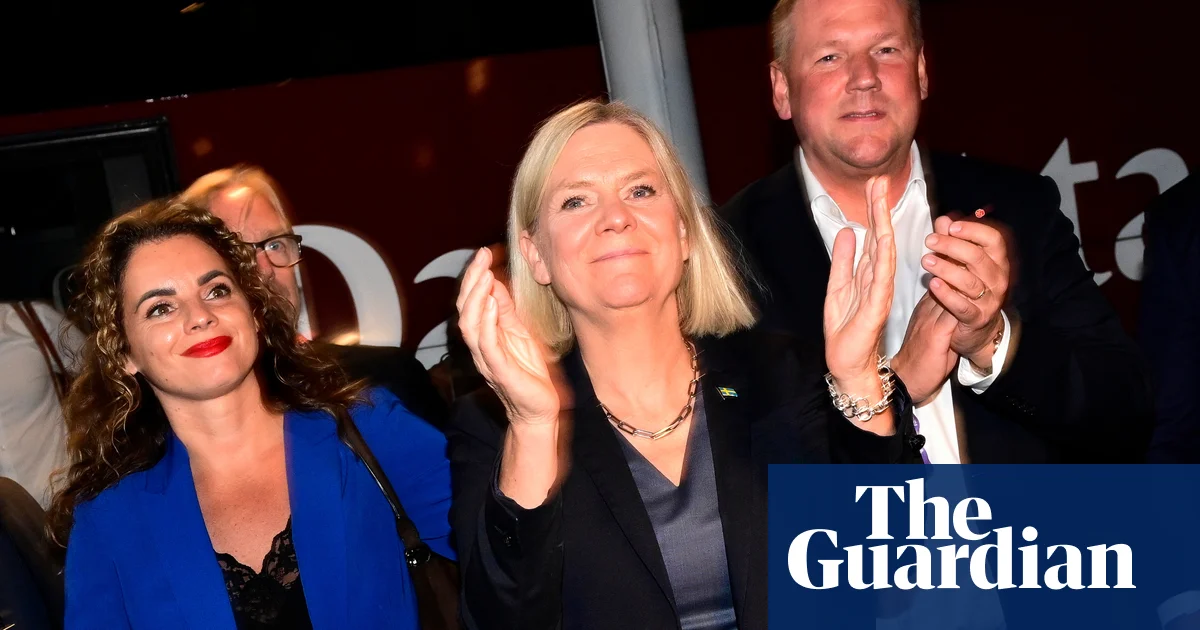
Sweden’s national election remained too close to call late Sunday night, with left-leaning parties holding a single-seat lead with 80% of votes counted. The Social Democrats, led by Magdalena Andersson, are projected to win 175 seats, while the right-wing bloc led by Ulf Kristersson had 174. With more than 90% of ballots tallied, the opposition led Prime Minister Kristersson’s bloc by roughly 20,000 votes, according to gb_news. SVT, the Swedish broadcaster, predicted only 20,000 votes separated the blocs at 10:30pm local time. The election authority said a preliminary vote count may not be ready until Thursday.
Kristersson stated that the final result remained uncertain, adding, “Which government will lead Sweden in the coming years is still an open question, and we will do everything we can to ensure that this government will be the very best for our country.” Andersson told supporters that every vote must be counted, noting, “It seems like it will be very even,” and that her party would take responsibility for the result if the lead held. The Sweden Democrats, hoping to enter government for the first time, slipped from the country’s second-biggest party to third.
The deputy prime minister, Ebba Busch of the Christian Democrats, predicted uncertainty lasting until Wednesday but remained adamant her coalition should remain in government. The unusually heated campaign was marked by personal attacks, accusations of misinformation, and ads inspired by the US MAGA movement. A record 3.6 million voters took part in early voting. The Social Democrats are on about 28 per cent of the vote, ahead of Kristersson’s Moderate Party on 19.9 per cent, while the Sweden Democrats are polling at approximately 17.6 per cent.
Our reading is that the Swedish election is exceptionally close, with both the left and right blocs vying for control. The discrepancy in reporting, seat count versus vote margin, highlights the complexity of translating popular vote into parliamentary power. The unusually heated campaign and record early voting suggest a high level of engagement, but also potential volatility in the final result.
Read the original coverage
💬 Comments
📜 Comment Policy