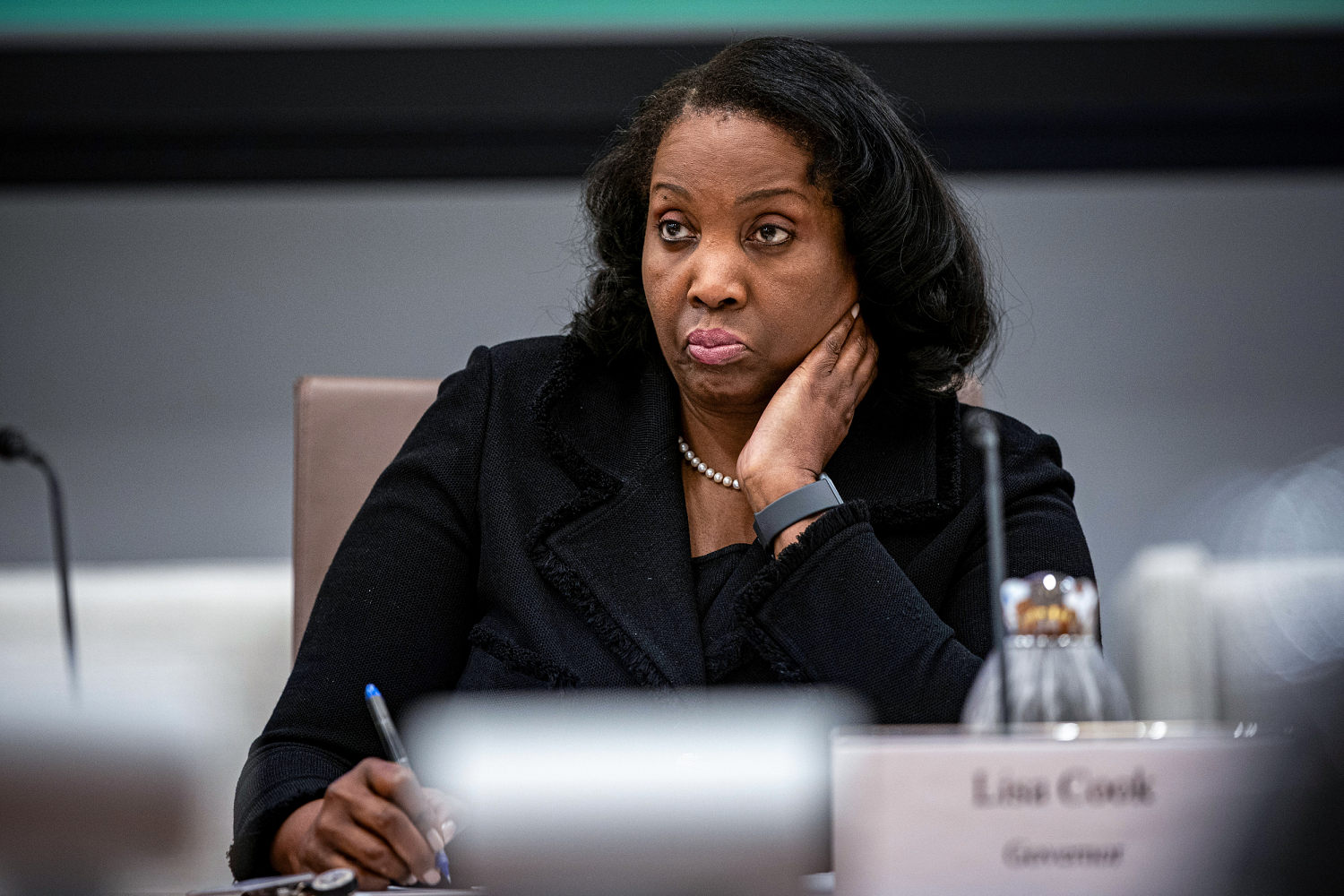
The Supreme Court issued rulings Monday concerning the extent of presidential authority over independent federal agencies and a member of the Federal Reserve Board. The court rejected President Donald Trump’s attempt to remove Lisa Cook from the Federal Reserve board, while simultaneously expanding his power to fire officials at most independent agencies within the executive branch.
The decision regarding Lisa Cook affirmed that presidents do not have unilateral authority to remove members of independent agencies like the Federal Reserve unless Congress specifically allows it. This aspect of the ruling was a setback for Trump's attempt to exert greater control over the board, according to NBC News.
In a separate 6-3 decision, the Supreme Court overturned nearly a century of precedent that had shielded certain agency officials from at-will removal by the president. The Hill reported that this ruling strengthens President Trump’s control over independent agencies. The court's majority opinion argued that Congress must explicitly limit a president's firing power if it wishes to protect those officials.
The Washington Examiner noted that the decision allows presidents to fire officials at most independent agencies, undoing a precedent established in 1926. This earlier ruling had allowed Congress to insulate certain agency heads from presidential interference, ensuring their decisions were based on expertise rather than political pressure.
The rulings came in cases involving the Consumer Financial Protection Bureau (CFPB) and the Federal Housing Finance Agency (FHFA). The court found that the structure of these agencies—with a single director who could only be removed for cause—violated the separation of powers. According to The Hill, the decision overrules the precedent set by Humphrey’s Executor v. United States.
The dissenting justices argued that the majority opinion undermines the independence of regulatory agencies and concentrates too much power in the hands of the president. NBC News reported no further details on this argument.
The court's decisions are expected to have significant implications for the future of independent agency oversight, potentially leading to increased political influence over these bodies.
Read the original coverage
💬 Comments
📜 Comment Policy