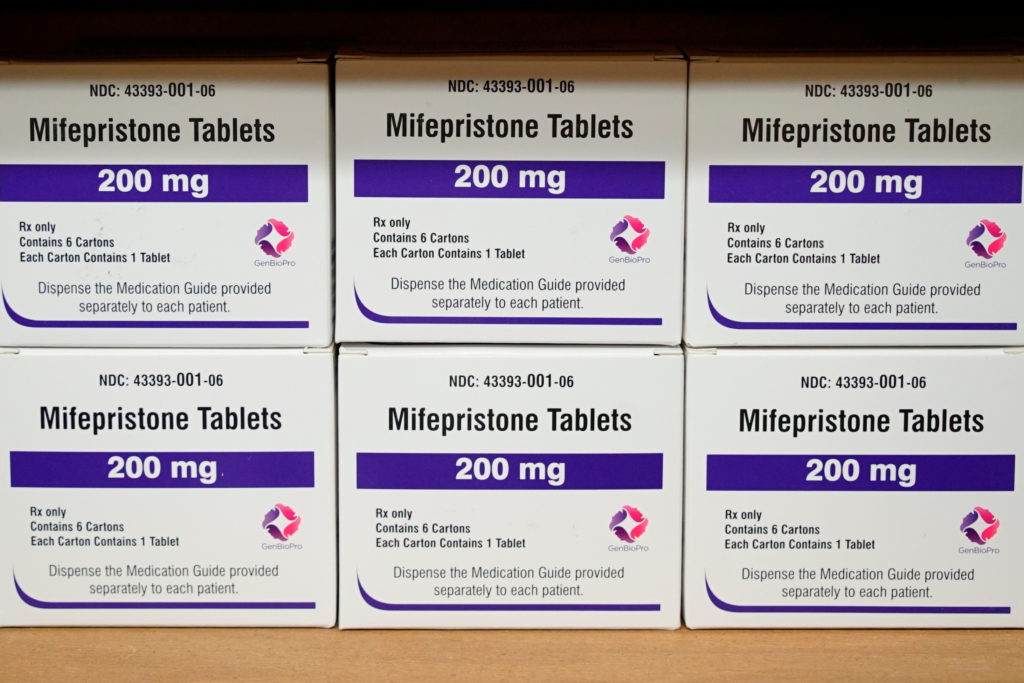
The Supreme Court has extended a temporary order maintaining full access to the abortion pill mifepristone, including by mail and telehealth, until at least Thursday. Justice Samuel Alito issued the extension on Monday, giving the justices additional time to consider an emergency request from the Biden administration to block a lower court ruling that would impose restrictions on the drug.
The administrative stay, originally issued on Friday, was set to expire, but Alito's order prolongs the pause while the court deliberates. The case stems from a lawsuit brought by Louisiana against the Food and Drug Administration, challenging the FDA's approval and regulation of mifepristone. A lower court ruling would have blocked nationwide access to the pill through the mail and required in-person dispensing, among other restrictions.
The Biden administration asked the Supreme Court to intervene, arguing that the lower court's decision would disrupt access to a medication used in the majority of abortions in the United States. The administration contends that the FDA's longstanding approval and subsequent easing of restrictions, including allowing mail delivery, are lawful and based on scientific evidence.
The legal challenge, filed by a group of anti-abortion doctors and medical associations, asserts that the FDA acted improperly when it relaxed safeguards for mifepristone. The plaintiffs argue that the drug poses safety risks and that in-person medical oversight is necessary. The lower court agreed in part, ordering the FDA to reinstate older, more restrictive rules.
The Supreme Court's temporary extension does not signal how the justices will ultimately rule on the merits. The court could decide to grant the administration's request for a longer stay while appeals proceed, or it could allow the restrictions to take effect. The case is being closely watched as the most significant abortion-related dispute to reach the high court since the overturning of Roe v. Wade in 2022.
Mifepristone, used in combination with another drug, is approved for terminating pregnancies up to ten weeks. The FDA first approved it in 2000 and has since modified its risk evaluation and mitigation strategy, including permanently allowing mail-order dispensing in 2021. The current legal battle could reshape how the drug is accessed across the country, even in states where abortion remains legal.
As of Monday, the justices have not indicated a timeline for a final decision on the emergency application. The extension ensures that the status quo remains in place at least through Thursday, preserving access to mifepristone by mail and telehealth for now.
Read the original coverage
💬 Comments
📜 Comment Policy