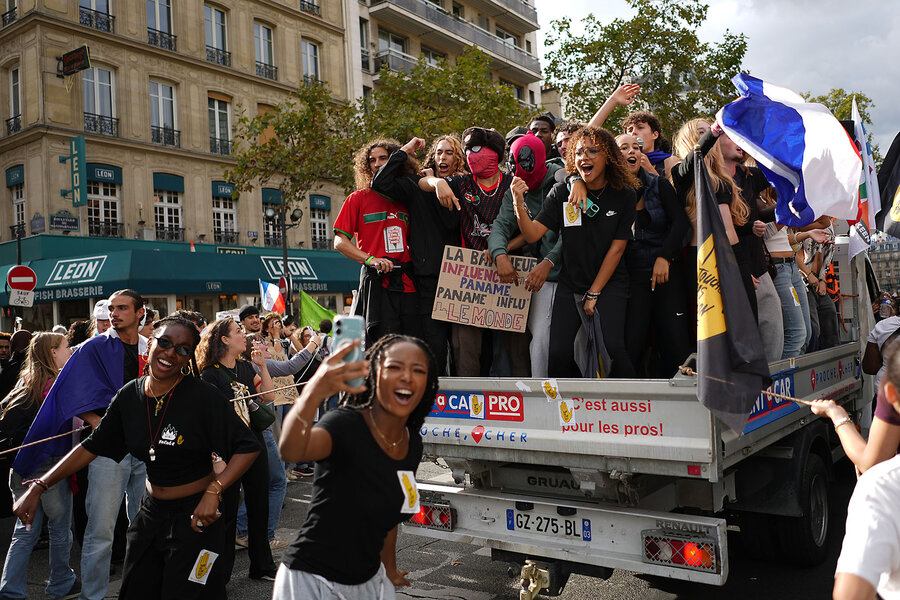
Thousands of students in France are protesting conditions within the country’s education system, including overcrowded classrooms, crumbling buildings, and a lack of substitute teachers, in demonstrations that have stretched into their fourth week and drawn comparisons to the pivotal May 1968 student revolution. Fifteen-year-old Lise Bourrée has been barricading the entrance of her high school in Paris with classmates, calling for change, with the support of her parents, who believe “young people just want to be taken seriously.” The movement, which includes Swedish activist Greta Thunberg, saw a second nationwide strike on Tuesday. At least 24 of France’s 3,700 high schools have been set on fire or ransacked, and riotous demonstrations have included smashed storefronts and burning garbage cans. President Emmanuel Macron has condemned the violence as “unacceptable.” The protests are occurring as gas prices reach nearly $9 per gallon, and there are calls for the student movement to join a larger demonstration on Saturday focused on broader cost-of-living concerns. The scale of the unrest is raising questions about its potential impact on next year’s presidential election, with some drawing parallels to the 1968 protests, which halted daily life for nearly two months and pressured the government of Charles de Gaulle.
Our reading is that the current student protests in France are occurring within a context of broader systemic strain. The combination of issues, crumbling infrastructure, economic pressures like high gas prices, and underlying fiscal instability, suggests a deeper dissatisfaction than simply educational concerns. The explicit comparison to 1968, and the mention of the upcoming presidential election, indicate a potential for these protests to escalate beyond localized disruptions and become a significant political factor.
Read the original coverage
💬 Comments
📜 Comment Policy