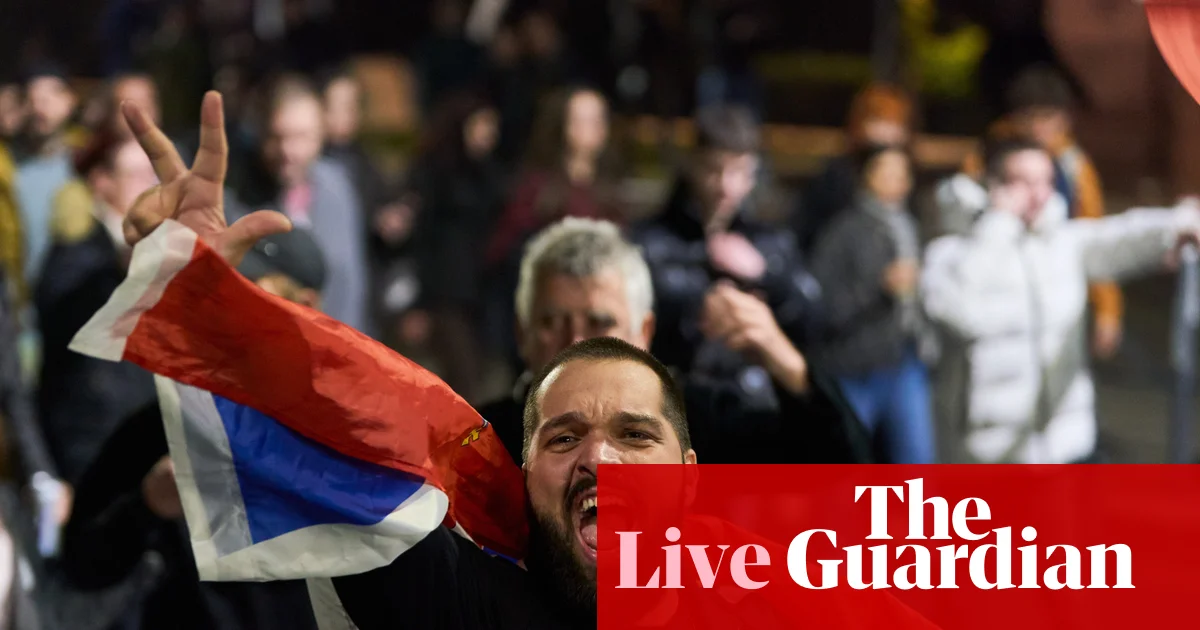
Aleksandar Vučić, Serbia’s president for a decade, conceded defeat Sunday following a sweeping victory by a student-led opposition movement. The latest CeSID projection suggests the movement will secure 140 seats in the 168-seat parliament, surpassing the 126 needed for a majority, while Vučić’s bloc will hold 103 seats. No other party crossed the 3% threshold, with national minority parties taking the remaining seven seats. The outcome raises hopes for a new opening in relations with the EU and other partners after a period of authoritarian rule.
Hungary’s Prime Minister Péter Magyar expressed emotional investment in the Serbian election results, drawing parallels between the victories of opposition movements in Hungary and Serbia. He stated, “Surely I wasn’t the only one feeling nostalgic when I saw those pictures coming out of Serbia last night? It’s symbolic that the “Budapest Express” reached Belgrade in politics before it did on the tracks.”
Newsmax reported that Vučić had guided Serbia through 14 years of economic development and infrastructure expansion, while also working to strengthen relations with the West. International observers are set to present their preliminary report on the vote in the early afternoon. In other European news, Bulgaria held a presidential vote with a record-low 22% turnout, with a second round scheduled for this Sunday. France is preparing for pivotal talks between the Prime Minister and student unions regarding ongoing protests, while defense ministers from France, Germany, Italy, Poland, and the UK are meeting in Paris to discuss Ukraine. Slovakia’s foreign minister is in Moscow for energy talks with Russia.
Our reading is that this election represents a significant rebuke of a decade of Vučić’s leadership, as the student-led movement has secured a clear parliamentary majority. The framing of the election by different outlets, one emphasizing economic development under Vučić, the other focusing on authoritarian rule and the potential for EU alignment, highlights the starkly contrasting narratives surrounding his tenure. The parallel drawn by the Hungarian Prime Minister suggests this outcome may be part of a broader regional shift in political sentiment.
Read the original coverage
💬 Comments
📜 Comment Policy