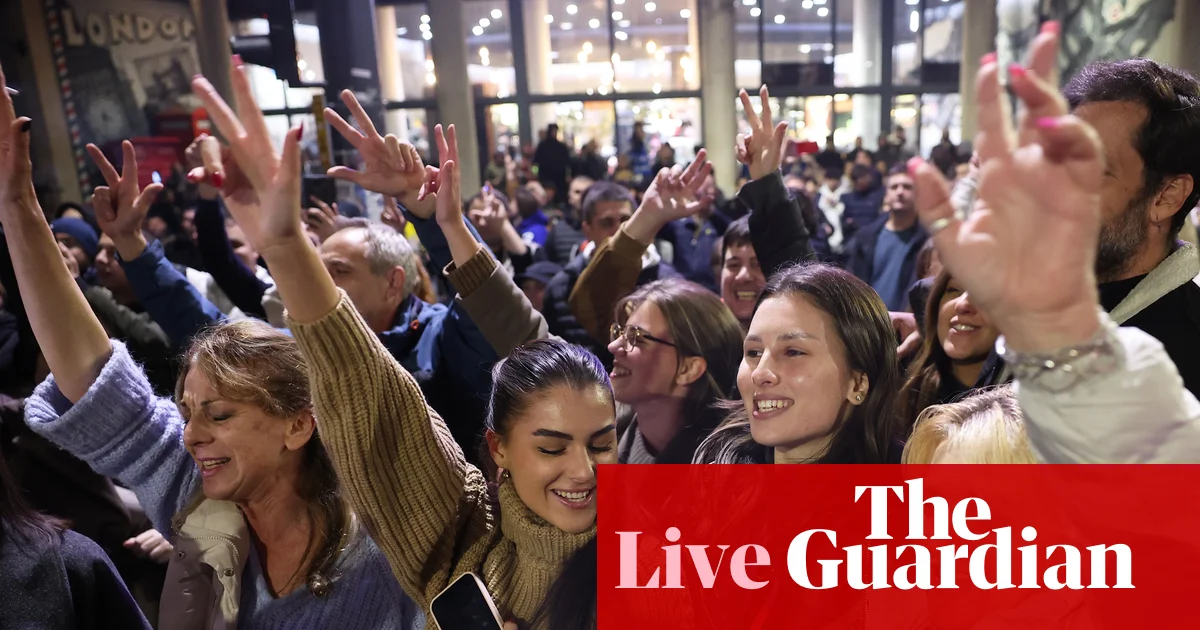
Serbia’s long-ruling party has conceded defeat in parliamentary elections, marking a significant political turning point after nearly two years of protests. Supporters of the student-backed opposition movement celebrated in Belgrade following the announcement, with preliminary figures indicating the highest parliamentary election turnout in over three decades. The election follows widespread demonstrations sparked by a deadly railway station collapse in November 2024, which fueled anger over alleged corruption and failures in public oversight.
President Aleksandar Vučić’s decision to resign and contest the election has resulted in the need for a second vote to determine his presidential successor. International leaders have welcomed the outcome and expressed support for Serbia’s democratic transition. Montenegrin President Jakov Milatovic congratulated the Student List, anticipating a new chapter in relations between the two countries based on respect and cooperation. Council of Europe Secretary General Alain Berset also offered congratulations, pledging support for strengthening human rights, democracy, and the rule of law in Serbia. European Commission President Ursula von der Leyen and European Council President António Costa similarly congratulated the Student List, stating their readiness to support reforms and Serbia’s future in the European Union.
The protests that preceded the election began after a concrete canopy collapsed at a Novi Sad railway station, killing 16 people. This incident galvanized students, who led demonstrations demanding accountability and political change, eventually uniting people from diverse political backgrounds. While the election results signal a potential shift in the western Balkans, the extent of change remains to be seen, particularly regarding Serbia’s relationship with Russia.
Our reading is that this election result represents a genuine shift in Serbian politics, moving away from the long-standing dominance of Aleksandar Vučić and his party. The high voter turnout and the success of the student-led movement suggest a strong public desire for change and accountability. While the full extent of this change remains to be seen, the concession of defeat by the ruling party is a significant development, signaling a potential democratic transition.
Read the original coverage
💬 Comments
📜 Comment Policy