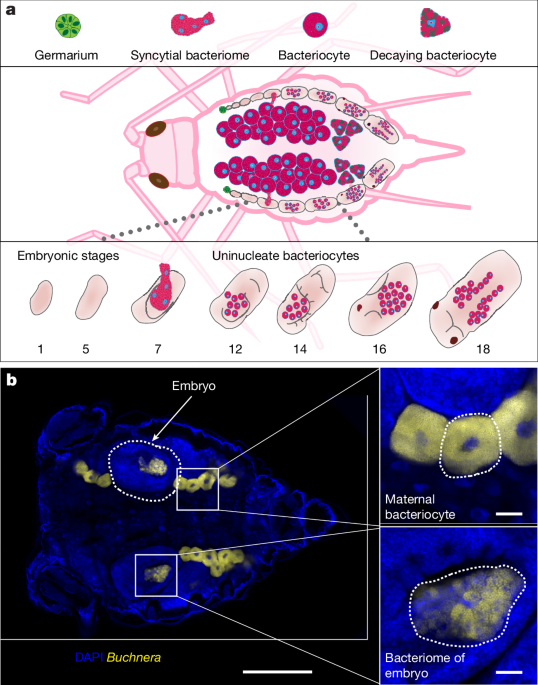
Researchers have identified a protein, SyeA, crucial for the colonization of host cells by the bacterium *Buchnera*. The discovery, published in *Nature* on July 1, 2026, sheds light on the mechanisms behind bacterial transmission and its evolutionary origins.
The study reveals that SyeA was present in the ancestral form of *Buchnera* and is actively secreted into the cytoplasm of its host cells. This secretion process is essential for successful colonization, indicating a vital role in the bacterium’s life cycle.
Notably, SyeA shares homology with secreted effectors found in bacterial pathogens. This suggests that similar mechanisms are employed by both symbiotic and pathogenic bacteria to interact with their hosts. The research highlights SyeA as being “essential for Buchnera transmission.”
The findings, detailed in the article with doi:10.1038/s41586-026-10711-4, contribute to a deeper understanding of how bacteria establish and maintain relationships with their hosts at a cellular level.
We don't rate truth. We strip the spin and show you which perspectives covered the story. You decide.
Read the original coverage
💬 Comments
📜 Comment Policy