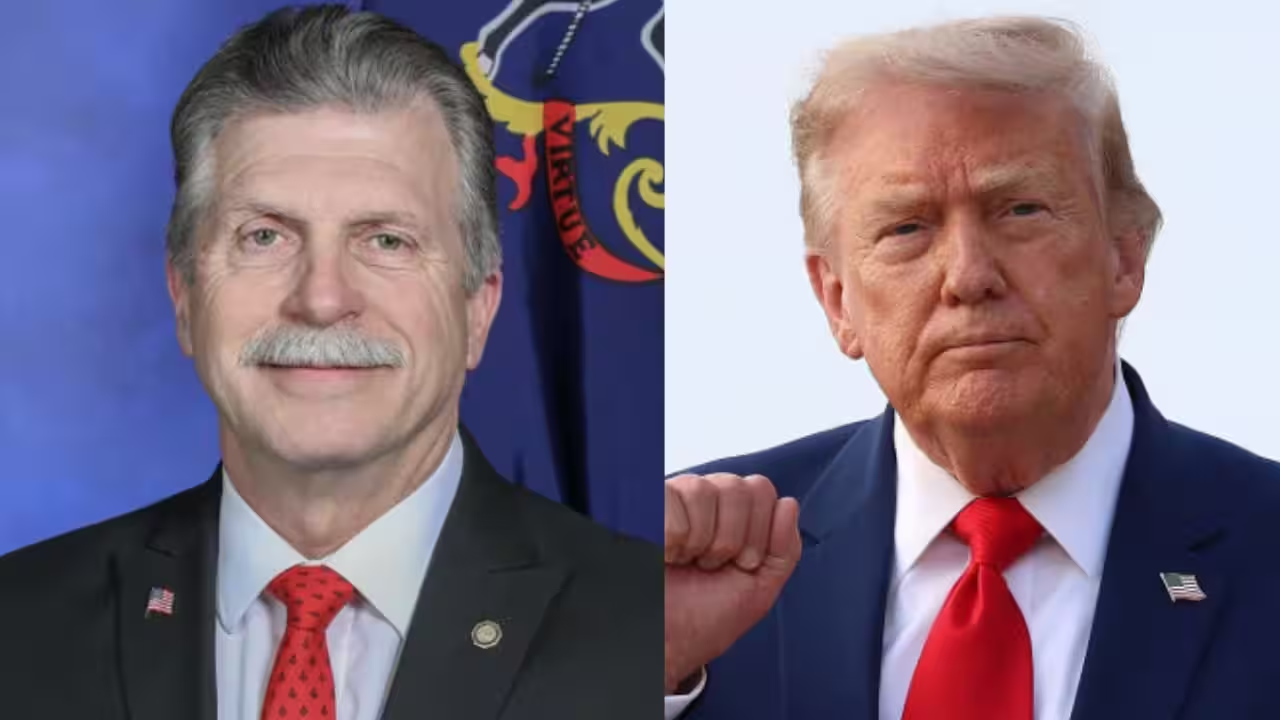
A Pennsylvania state representative is seeking to rename Lake Erie “Lake Pennsylvania,” following President Donald Trump’s recent executive order renaming Lake Ontario to “Lake America.” Republican Representative David Maloney argues the name change would reflect Pennsylvania’s economic and cultural connection to the lake, highlighting its importance for recreation and fishing. Maloney represents a district in southeastern Pennsylvania that does not border the lake and stated that Ohio, New York, and Canada already have ample Great Lakes shoreline. The proposal comes amid resistance to Trump’s renaming of Lake Ontario, which Canadian Prime Minister Mark Carney rejected, citing the lake’s Wendat origins. Several Native American tribal leaders have also condemned the Lake Ontario renaming, arguing it violates treaties and disrespects Indigenous history, with similar objections anticipated for the Lake Erie proposal.
Lake Erie, the fourth largest of the Great Lakes by surface area, is sourced from an Iroquois word for the eastern cougar. Pennsylvania stocked approximately 500,000 yearling steelhead in the lake in 2025, representing about 40% of the total stocked across the lake. Approximately 12 million people live along Lake Erie’s shores, with 10.5 million in the U.S. and 1.9 million in Canada. While the Lake Ontario renaming applies only to U.S. federal government usage, both Apple Maps and Google Maps have updated the name. Canada has not yet responded to Maloney’s proposal, but previously refused to recognize Trump’s renaming of Lake Ontario.
Our reading is that Representative Maloney’s proposal appears to be a direct response to President Trump’s recent renaming of Lake Ontario, adopting a similar tactic of asserting national claims over shared natural resources. The proposal, originating from a representative whose district does not border the lake, seems less about practical concerns and more about symbolic alignment with the President’s actions. The anticipated objections from Native American tribal leaders, mirroring those raised regarding Lake Ontario, suggest a pattern of disregarding Indigenous history and treaty rights.
Read the original coverage
💬 Comments
📜 Comment Policy