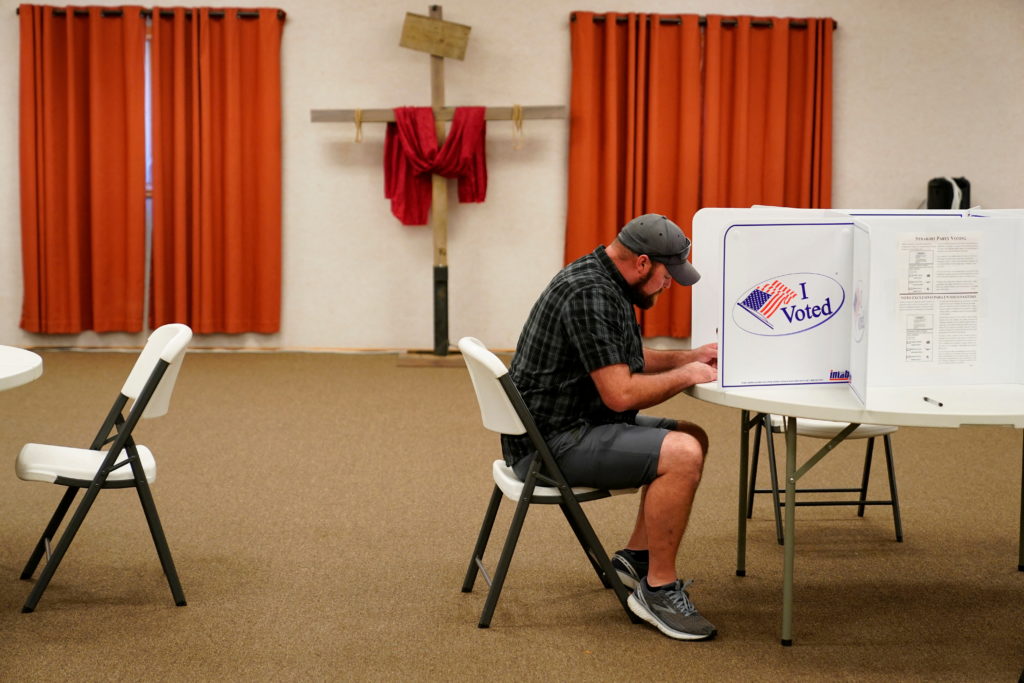
Voters in Oklahoma began casting ballots on Tuesday in primary elections that will determine the state's next U.S. senator and governor. The contests feature crowded fields of candidates competing for open seats, as neither incumbent is seeking re-election. Oklahoma is characterized as a deeply conservative state where President Donald Trump holds significant influence within the Republican Party.
The primary structure dictates that if no candidate receives at least 50% of the vote in any race, the top two vote-getters will advance to a runoff election scheduled for August 25. This threshold ensures that the eventual nominees from each party command majority support before facing off in the general election.
In the race for the U.S. Senate seat, which is currently open, multiple candidates are vying for the Republican nomination. The outcome of this primary is viewed as a critical test of President Trump's standing as a kingmaker within the party. His endorsements and public statements regarding specific candidates are expected to carry substantial weight among voters in the state.
Similarly, the gubernatorial race features a large number of contenders. The crowded nature of both primaries reflects the competitive landscape within Oklahoma's Republican Party ahead of the general elections. Political observers note that the dynamics of these open races may shift significantly depending on voter turnout and the effectiveness of candidate campaigns in securing the necessary majority.
The election process highlights the ongoing influence of national political figures on state-level outcomes. President Trump's role in shaping the Republican ticket in Oklahoma continues to be a focal point for political analysis. The results of the primary will signal which candidates have secured the party's backing and are positioned to win the general election in November.
As the voting period concludes, attention turns to the vote count and potential runoff scenarios. Should no candidate cross the 50% mark in either the Senate or governor races, the August 25 runoff will become the decisive contest. This secondary election will allow voters to choose between the two leading candidates from the initial primary.
The upcoming general election will ultimately decide who represents Oklahoma in the U.S. Senate and who leads the state government. The primaries serve as the gateway for candidates to advance, with the crowded fields indicating a high level of interest and competition within the state's political landscape.
Read the original coverage
💬 Comments
📜 Comment Policy