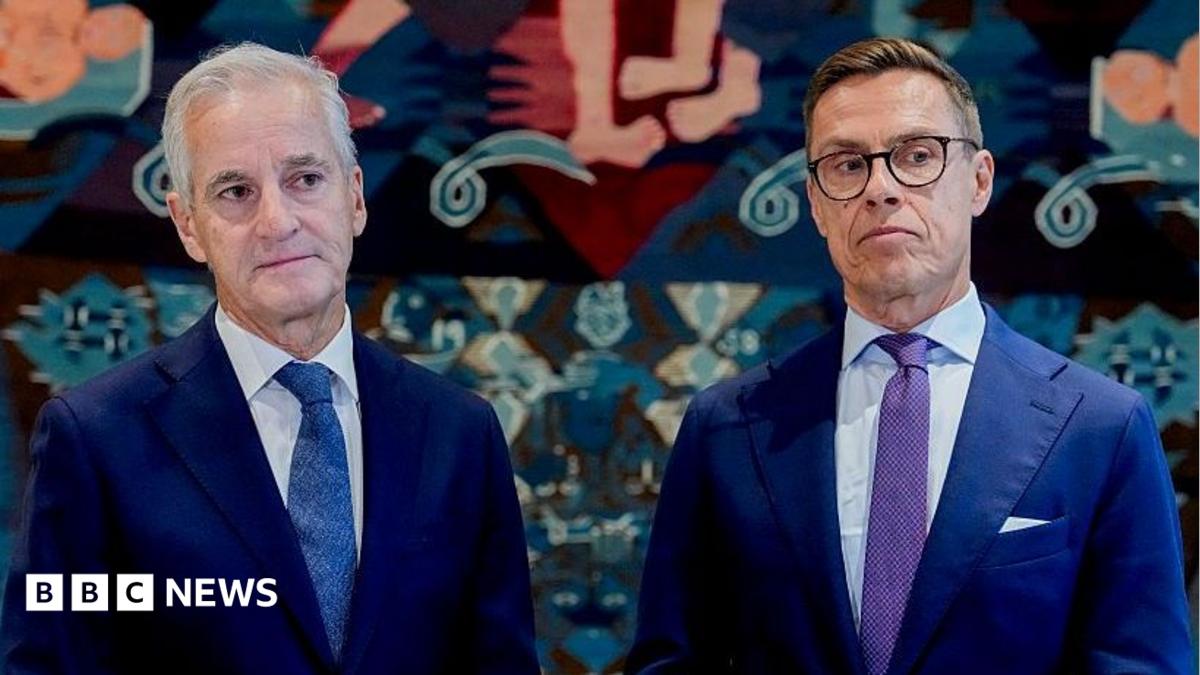
The presidents of Finland and the prime minister of Norway held a joint call with Vladimir Putin, marking a rare instance of direct contact between European leaders and the Russian president. The stated aim of the call, held from Helsinki, was to discuss potential diplomatic efforts to end the war in Ukraine and promote stability in Europe, following earlier talks in Oslo involving Ukrainian President Volodymyr Zelenskyy and US special envoy Steve Witkoff. The two Nordic leaders emphasized they were not speaking on behalf of Europe as a whole.
The call comes as the US brokers peace talks between Ukraine and Russia, with a trilateral meeting planned for November in Abu Dhabi. Following the Oslo talks on October 20th, Witkoff traveled to St. Petersburg to meet with Putin, leading to an agreement to resume three-way negotiations that had been stalled for months. Zelenskyy, who spoke with Stubb and Støre after their conversation with Putin, said the discussions centered on the upcoming Abu Dhabi talks and formats for continued European support for Ukraine’s defense and diplomacy. Putin, in response, stated that “confrontational” policies from the EU and NATO were prolonging the conflict, which began with Russia’s full-scale invasion in 2022.
The initiative from Finland and Norway has drawn some skepticism. Danish Prime Minister Mette Frederiksen said the dialogue was not coordinated with other European nations. While Moscow has previously accused Western countries of prolonging the war through arms shipments to Ukraine, Kremlin spokesperson Dmitry Peskov recently stated that a European negotiator at peace talks would be “good.” The call between Stubb and Støre is the first of its kind since French President Emmanuel Macron spoke with Putin in July 2025. The leaders of Finland and Norway stressed the importance of de-escalation and acknowledged the significant human and material costs of the war, with implications for European security and the Baltic Sea region.
Relations between the US, Ukraine, and European allies have been strained since US President Donald Trump agreed to lift some sanctions on Russia, allowing it to export oil to the US.
Our reading is that Finland and Norway are attempting a separate diplomatic track alongside US-brokered talks, likely due to skepticism about the progress or terms of those negotiations. The Nordic leaders’ explicit statement that they do not speak for all of Europe suggests a deliberate effort to maintain independence from established Western negotiating positions, potentially to offer a different approach or signal dissatisfaction with current strategies. The mixed reactions from other European leaders, particularly Denmark, underscore the lack of consensus on engaging directly with Putin.
Read the original coverage
💬 Comments
📜 Comment Policy