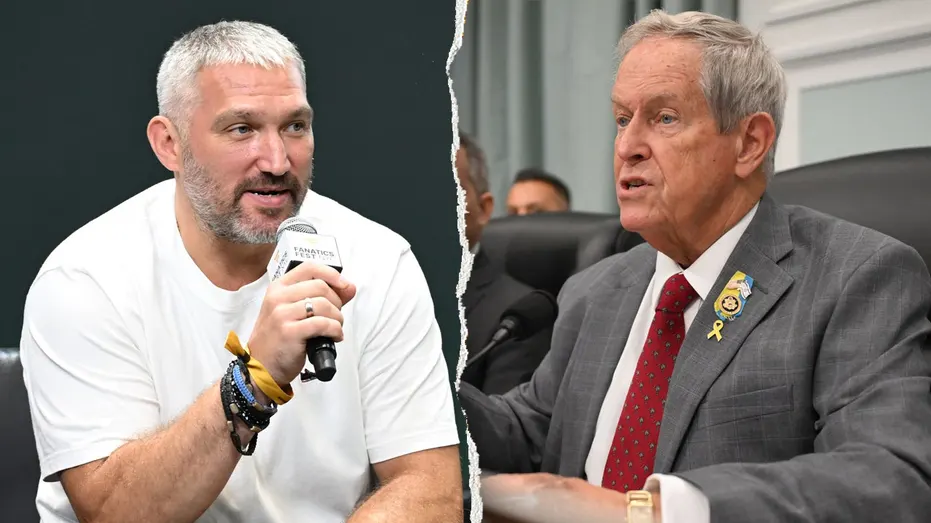
Washington Capitals captain Alex Ovechkin appeared in a video advertisement supporting United Russia, the ruling party in Russia, ahead of this week’s parliamentary elections. Ovechkin was shown standing behind Russian Foreign Minister Sergey Lavrov in the ad, which also features Margarita Simonyan, editor-in-chief of the Russian state-controlled network RT. The Capitals stated Ovechkin was “asked by his country to participate” while in Russia for the offseason. Republican Congressman Joe Wilson has called on the NHL to address Ovechkin’s participation, deeming it “shameful” and questioning the standards expected of players representing the league, though he has not called for disciplinary action.
Wilson, in a letter to NHL Commissioner Gary Bettman and Capitals owner Ted Leonsis, seeks clarification on whether the NHL has policies governing players’ participation in political advertisements for foreign parties. He also wants assurance that Ovechkin’s involvement does not reflect the league or team’s position. Wilson publicly characterized Ovechkin’s support as backing a “war criminal.” The Capitals confirmed Ovechkin was approached during his time in Russia but did not disclose who requested his participation or whether the organization was aware of the ad beforehand.
Ovechkin, who has previously expressed support for Putin and founded the “PutinTeam” social movement, issued a plea for “no more war” following Russia’s invasion of Ukraine. Despite this, he maintains a photo of himself with Putin on his Instagram profile, prompting protests from some Capitals fans. Ovechkin recently signed a one-year, $4.25 million contract to continue playing for the Capitals and has not committed to retirement.
Our reading is that the advertisement presents a complex situation for the NHL and the Washington Capitals. While the team claims Ovechkin was acting on a request from his country, his prior support for Putin and continued display of a photo with the leader raise questions about his motivations and the league’s tolerance for political endorsements. The differing emphasis across news outlets, from condemnation to contextualization, suggests a lack of consensus on how to interpret this event.
Read the original coverage
💬 Comments
📜 Comment Policy