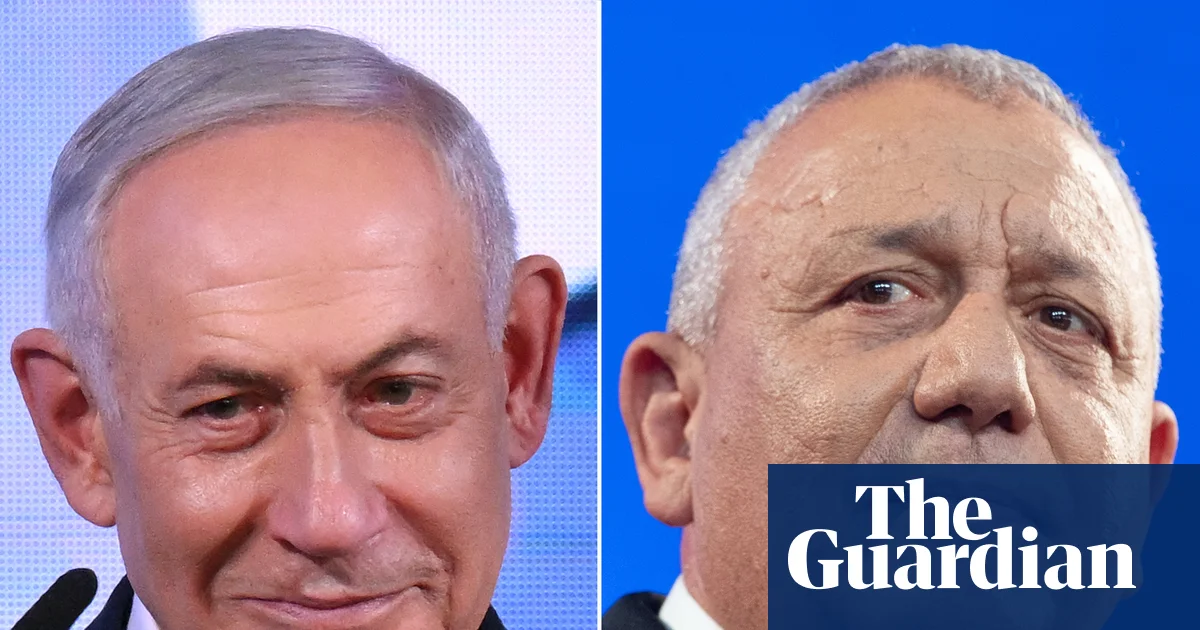
Benjamin Netanyahu’s political future hangs in the balance after his bloc edged ahead in the Israeli elections but still fell short of a majority government. With 86% of votes tallied, both his bloc and the opposing Jewish bloc led by Gadi Eisenkot are projected to fall short of the 61 Knesset seats needed to govern, forcing a choice between a pact with Arab Israeli parties or new elections. The Joint List, representing Palestinian citizens of Israel, is projected to win a record 16-19 seats, potentially becoming kingmakers. Eisenkot’s initial rejection of a coalition with these parties has created a dilemma, with some urging him to reconsider to avoid handing Netanyahu a lifeline. Donald Trump claimed his endorsement significantly boosted Netanyahu’s performance.
The Independent reported that with 85% of ballots counted, Netanyahu’s bloc was on course to win 54 seats, while Eisenkot’s grouping would take 49. The Guardian reported similar numbers, noting that approximately 14% of the total electorate’s votes, those of deployed soldiers and absentee ballots, remained uncounted. Yair Golan of the centre-left Democrats urged Eisenkot to negotiate with the Joint List and Ra’am, arguing against what he called a racist distinction between Jewish and Arab votes. Yousef Jabareen, leader of the Joint List, stated that his bloc’s strong performance meant it “can’t be ignored,” and vowed to work to remove Netanyahu’s government, citing its treatment of Arab citizens. Noa Landau, writing in Haaretz, argued that Eisenkot fell into a trap laid by Netanyahu by making Zionism a prerequisite for coalition partners. A UN report, cited by The Independent, accused Israel of committing war crimes and crimes against humanity in occupied Palestinian territory, including intentionally targeting civilians and acts of extermination, persecution, torture, rape, and sexual violence.
The choice facing the Jewish opposition is whether to partner with Arab parties to form a government or risk allowing Netanyahu to remain in power. The outcome of the remaining vote count and the willingness of parties to compromise will determine Israel’s next government.
Our reading is that Israel remains in a state of political uncertainty following the election, with neither major bloc able to immediately form a government. The potential for the Joint List to become kingmakers introduces a complex dynamic, as their support is crucial for either side but potentially opposed by key figures within the opposing bloc. The differing coverage of the UN report on alleged war crimes highlights the selective framing of information by different news outlets.
Read the original coverage
💬 Comments
📜 Comment Policy