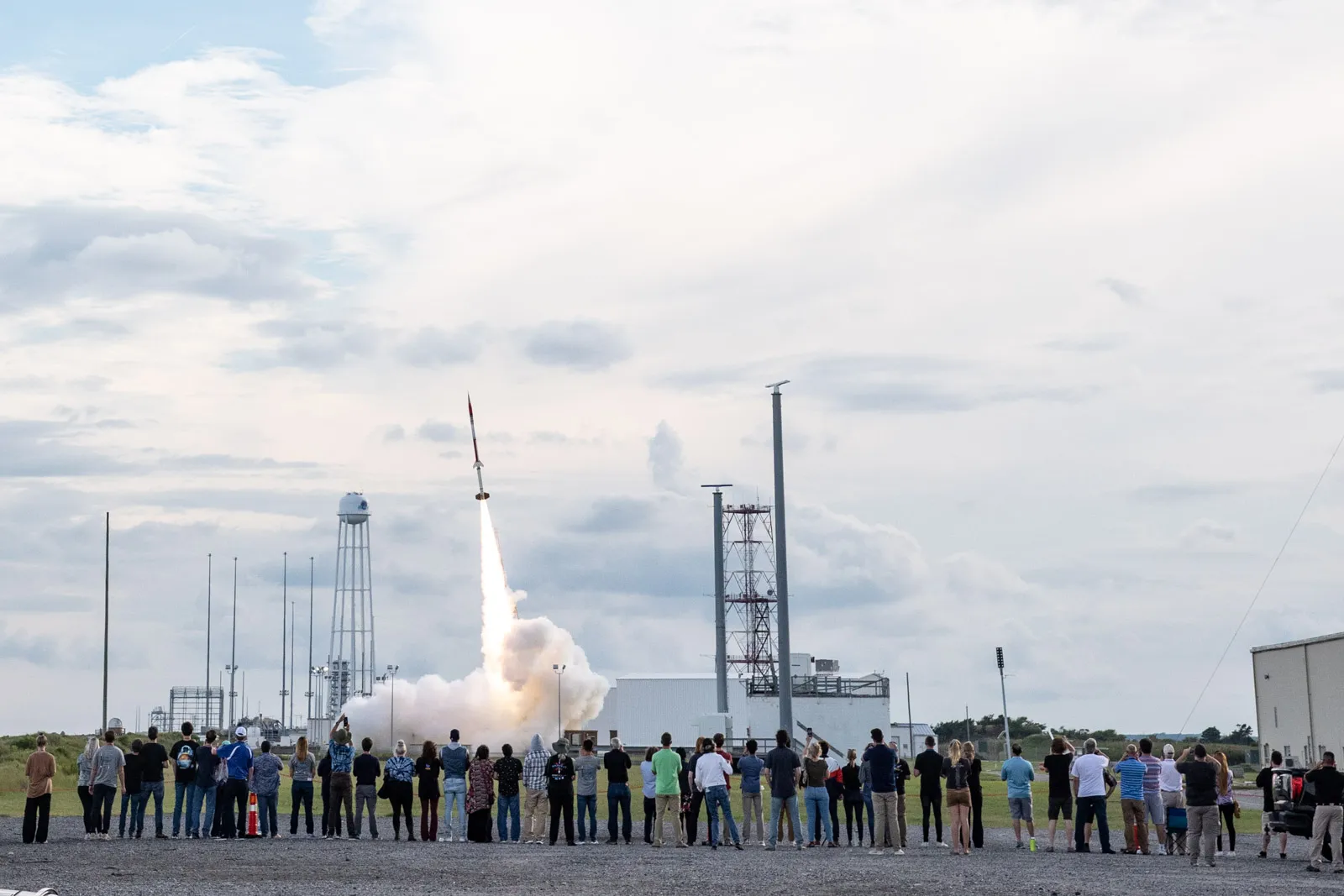
NASA’s Wallops Flight Facility in Virginia is scheduled to launch a sounding rocket carrying student-developed experiments for the agency’s RockSatX and RockOn programs. The launch is set for Wednesday, June 24, between 5:30 and 9:30 a.m. EDT. If weather conditions prevent the initial launch window from being met, a backup day has been designated for Thursday, June 25.
The RockSat and RockOn programs are designed to provide technical training and hands-on experiences that prepare and equip students for careers in aerospace and scientific research. These initiatives allow participants to engage directly with space exploration technologies, offering them practical skills that complement their academic studies.
By utilizing sounding rockets, NASA provides a cost-effective platform for testing new technologies and conducting microgravity experiments. This method allows student teams to validate their designs and data collection methods in a real-world space environment before potentially scaling up to larger orbital missions. The involvement of students in these programs highlights NASA’s commitment to fostering the next generation of scientists and engineers.
The specific details of the experiments carried on this flight were not fully disclosed in the initial summary, but the focus remains on the educational value and technical preparation provided by the RockSatX and RockOn frameworks. These programs serve as critical stepping stones for students interested in pursuing advanced studies or careers within the space industry.
Wallops Flight Facility has a long history of supporting suborbital research and launch services. Its location on the East Coast provides favorable trajectories for sounding rocket missions, allowing for efficient data recovery and analysis. The facility’s infrastructure supports a wide range of scientific payloads, making it a key site for both government and academic research initiatives.
The upcoming launch represents another opportunity for students to contribute to the broader understanding of space science. Through these programs, participants gain insight into the complexities of rocket design, payload integration, and data analysis. The experience is intended to bridge the gap between theoretical classroom learning and practical application in a high-stakes environment.
We don't rate truth. We strip the spin and show you which perspectives covered the story. You decide.
Read the original coverage
💬 Comments
📜 Comment Policy