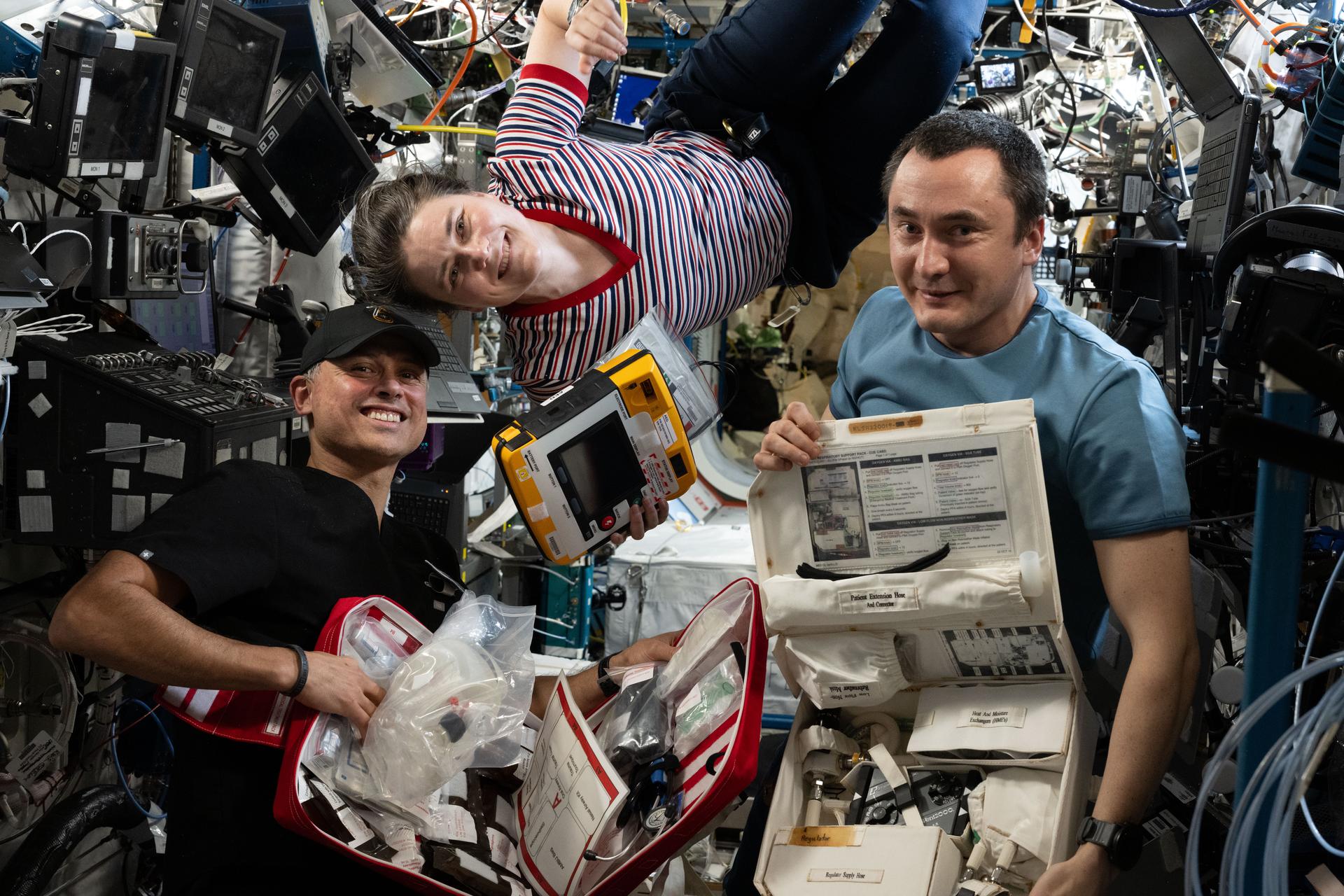
NASA has created the Integrated Medical Model (IMM) to proactively assess and mitigate health risks for astronauts on long-duration space missions to the Moon and Mars. The IMM uses decades of medical data and computational modeling to predict potential medical events and optimize onboard medical resources.
The IMM addresses the unique health challenges posed by space travel, including cosmic radiation, microgravity, and the extended distance from Earth, which limits rapid medical evacuation. The model draws upon NASA’s Integrated Medical Evidence Database (iMED), which contains decades of flight records and clinical research. It employs Monte Carlo simulations to model thousands of potential mission scenarios, factoring in crew size, flight duration, spacewalks, and the spacecraft environment.
The IMM evaluates over 100 medical conditions, ranging from common ailments like infections and kidney stones to spaceflight-specific hazards such as decompression sickness and radiation sickness. It generates several key metrics to aid mission planning, including Total Medical Events (TME), Crew Health Index (CHI), Quality-Adjusted Time Lost (QTL), Probability of Evacuation and Loss of Crew Life (EVAC / LOCL), and projections for resource utilization. These outputs directly inform the composition of onboard medical kits (MedCap), balancing medical coverage with spacecraft mass and volume constraints.
On the International Space Station, medical evacuation to Earth can occur within hours. However, deep-space missions eliminate this option, necessitating self-sufficient medical systems. The IMM provides flight surgeons and engineers with the data needed to build these resilient systems, preparing for the medical realities of extended space travel.
Read the original coverage
💬 Comments
📜 Comment Policy