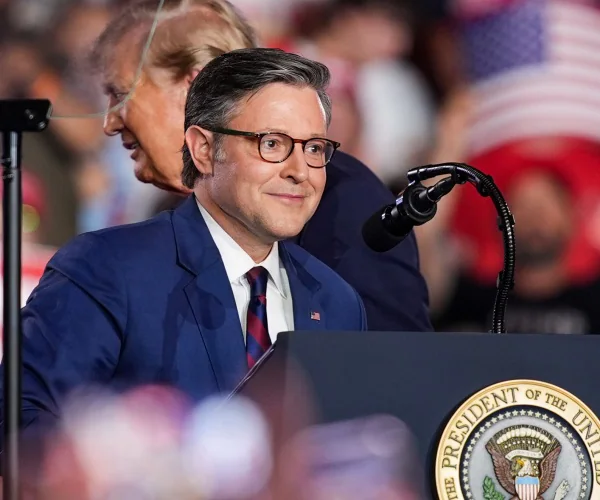
House Speaker Mike Johnson will not seek to lead House Republicans in the next Congress, following a midterm election in which Republicans lost their majority. Johnson, who served two terms as speaker after ousting Kevin McCarthy in 2023, acknowledged the historical difficulty for a sitting president's party to gain or hold seats in midterm elections, noting that it has only happened twice in the last 90 years. He indicated that Republicans knew defying this history would be difficult, and it appears history held true this election cycle. The November 10th leadership elections will open the role of top House leadership to the minority, with Representative Hakeem Jeffries of New York poised to become the next Speaker. Jeffries’ margin of victory will likely allow him to achieve his priorities, even with some defections, a dynamic Johnson did not enjoy with his razor-thin majority. Johnson’s tenure involved close collaboration with the Trump administration and the challenge of uniting a narrowly divided conference.
Newsmax reported Johnson told staff Wednesday of his decision, while NPR noted the leadership elections are scheduled for November 10th. The sources agree that Republicans lost their majority in Tuesday’s midterm elections.
Our reading is that Speaker Johnson’s decision not to seek re-election as Speaker reflects an acknowledgement of the Republican party’s diminished standing following the midterm losses. The article suggests a realistic assessment by Johnson, recognizing the historical headwinds against his party and the likely ascension of Hakeem Jeffries to the speakership. The contrast between Johnson’s constrained majority and the anticipated margin of victory for Jeffries highlights a shift in power dynamics, suggesting a more decisive legislative environment ahead.
Read the original coverage
💬 Comments
📜 Comment Policy