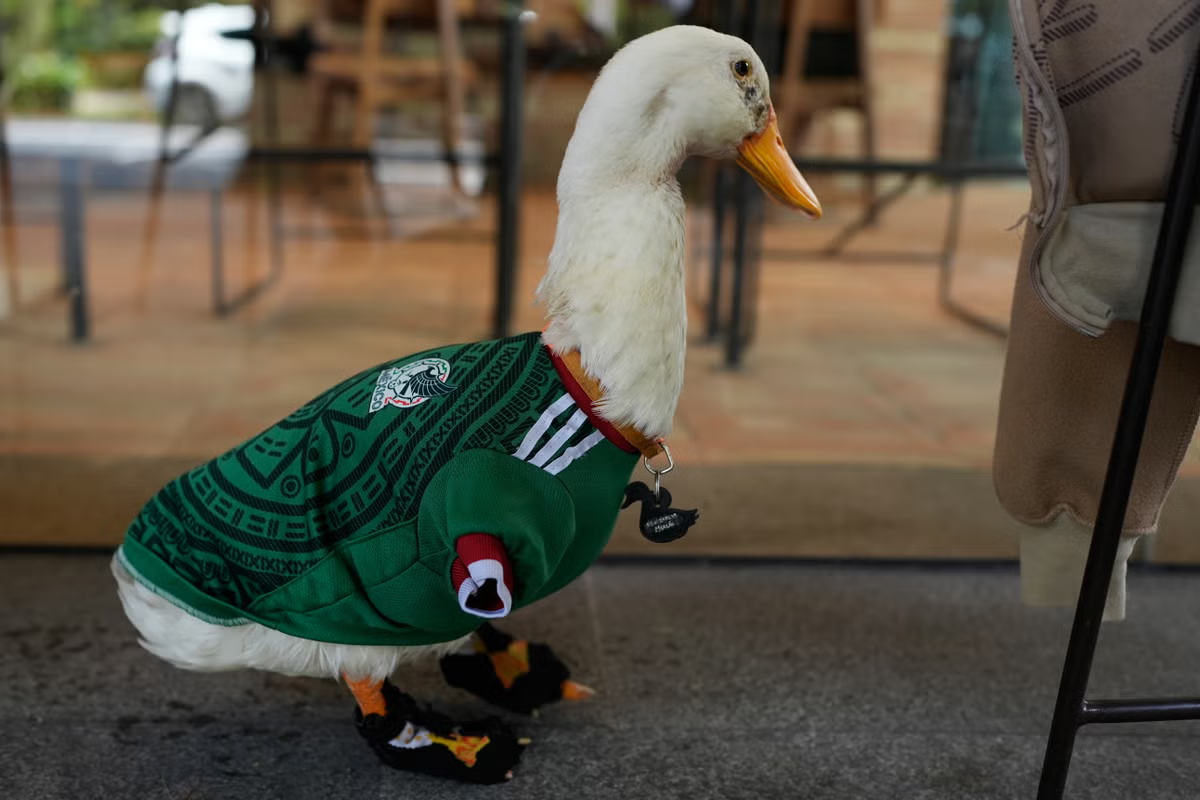
During Mexico's recent participation in the FIFA World Cup, a white duck named Merlin emerged as an unexpected focal point of public attention, gaining significant viral status alongside the national team's athletic performance. While Mexican players Julián Quiñones and Raúl Jiménez contributed goals to the team's campaign, media reports indicate that Merlin captured widespread online engagement and public interest, effectively becoming an unofficial mascot for the nation's efforts.
The duck's rise to prominence occurred in parallel with Mexico's matches, where the team sought to advance through the tournament stages. The juxtaposition of serious athletic competition with the whimsical presence of a domestic bird created a unique narrative arc that resonated with global audiences. Social media platforms saw a surge in content featuring Merlin, with users sharing images and videos of the duck in various settings associated with the World Cup events. This digital proliferation transformed Merlin from a local animal into an international symbol of support for Mexico.
Reports from Yahoo Sports and The Independent UK highlight the contrast between the traditional sports narrative and this new cultural phenomenon. The outlets noted that while the focus of professional sports coverage typically remains on player statistics, tactical decisions, and match outcomes, the inclusion of Merlin added a layer of lightheartedness to the tournament's atmosphere. The duck did not participate in the games but was present in the public sphere surrounding them, often appearing in crowds or near team facilities.
The viral nature of Merlin's story underscores the evolving way in which sports events are consumed and discussed in the digital age. Traditional mascots are usually costumed characters or animals bred for specific ceremonial roles, but Merlin's status was organic, driven by user-generated content rather than official marketing campaigns. This spontaneous adoption by fans illustrates how modern sporting events can generate multiple simultaneous narratives, ranging from competitive analysis to cultural curiosity.
As the World Cup progressed, Merlin's image continued to circulate across various online communities. The duck became a shorthand for Mexican pride and joy among supporters, transcending language barriers through visual appeal. Analysts of social media trends have pointed to this event as an example of how non-traditional figures can achieve global recognition during major international events, often overshadowing more conventional aspects of the coverage in terms of pure engagement metrics.
The story of Merlin the duck remains a notable footnote in the history of World Cup fandom, representing a moment where humor and animal companionship intersected with high-stakes international competition. While the ultimate outcome of Mexico's matches depended on the players' performance on the field, the cultural impact of Merlin was felt in the digital spaces where fans gathered to celebrate, critique, and share their experiences. The duck's legacy is one of viral connectivity, demonstrating the power of unexpected imagery to unite audiences across different platforms and geographies during global sporting spectacles.
Read the original coverage
💬 Comments
📜 Comment Policy