Mathematician Claims AI Helped Solve Riemann Hypothesis
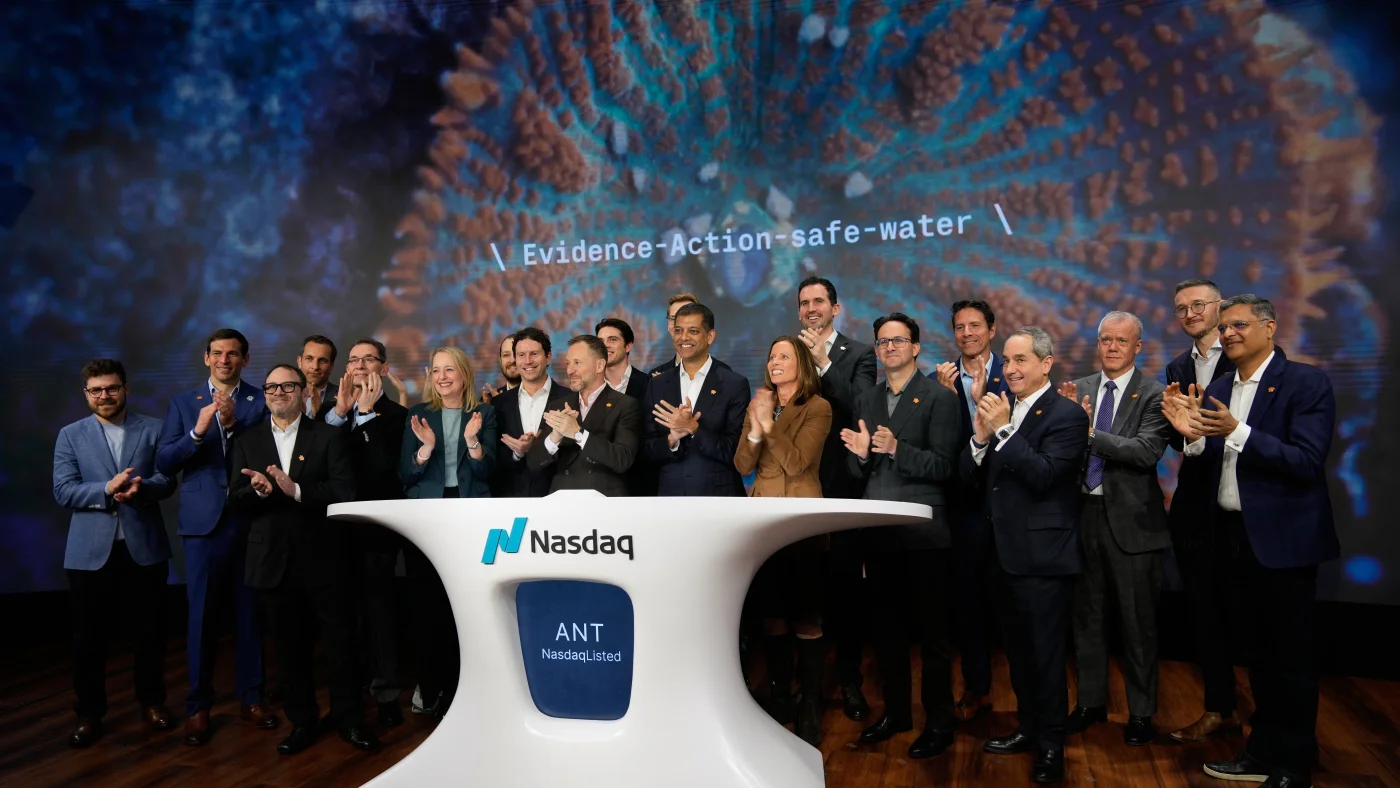
Levent Alpöge, a mathematician working for Anthropic, claims to have solved the Riemann Hypothesis, a major unsolved problem in mathematics, with the assistance of the company’s AI chatbot, Claude. The claim, announced Friday, follows similar recent announcements of AI-assisted mathematical breakthroughs. The proof consists of over 17 million lines of Lean code and has been released publicly, though independent verification is still underway.
Alpöge stated that Claude “far outpaced” him near the completion of the proof, describing the AI’s performance as “flying, and dancing, and sparkling.” He revealed the discovery shortly after Anthropic’s initial public offering, messaging CEO Dario Amodei to ask about announcing the results. The complete textual proof exceeds 250,000 pages.
Mathematicians acknowledge the complexity of verifying such a proof. Alex Kontorovich of Rutgers University noted the computer’s pickiness is reassuring, but thorough understanding requires human review. Terrance Tao stated that digesting the proof will take time, but the presence of a human author will aid the process. Martin Bridson, president of the Clay Mathematics Institute, which offers a $1 million prize for solving the Riemann Hypothesis, described the announcement as historically significant, but cautioned that real understanding will require extensive work.
This announcement comes amid a growing trend of AI tools contributing to mathematical research. OpenAI previously claimed its AI solved a portion of the Navier-Stokes equations, though that proof remains unconfirmed. Anthropic has also reported other AI-driven progress in mathematics. The Riemann Hypothesis, formulated in 1859, concerns the distribution of prime numbers and is considered one of the most important unsolved problems in mathematics.
Where they differ
- BBC and DW both highlighted this is the latest in a string of AI-assisted mathematical breakthroughs this year, while NPR focused primarily on Alpöge’s individual claim.
- DW emphasized the historical significance of the Riemann Hypothesis and its impact on broader mathematical work, while BBC focused more on the technical details of the proof.
- BBC included a direct quote from Alpöge about the timing of the announcement being 'horrible' due to Anthropic's stock listing, a detail not present in the other reports.
What is not yet known
- Whether the proof will withstand independent verification by the mathematical community.
- The extent to which Claude, the AI, independently contributed to the proof versus simply executing Alpöge’s instructions.
Read the original coverage
💬 Comments
📜 Comment Policy