Japan Launches Mission to Explore and Retrieve Samples from Mars’ Moon Phobos
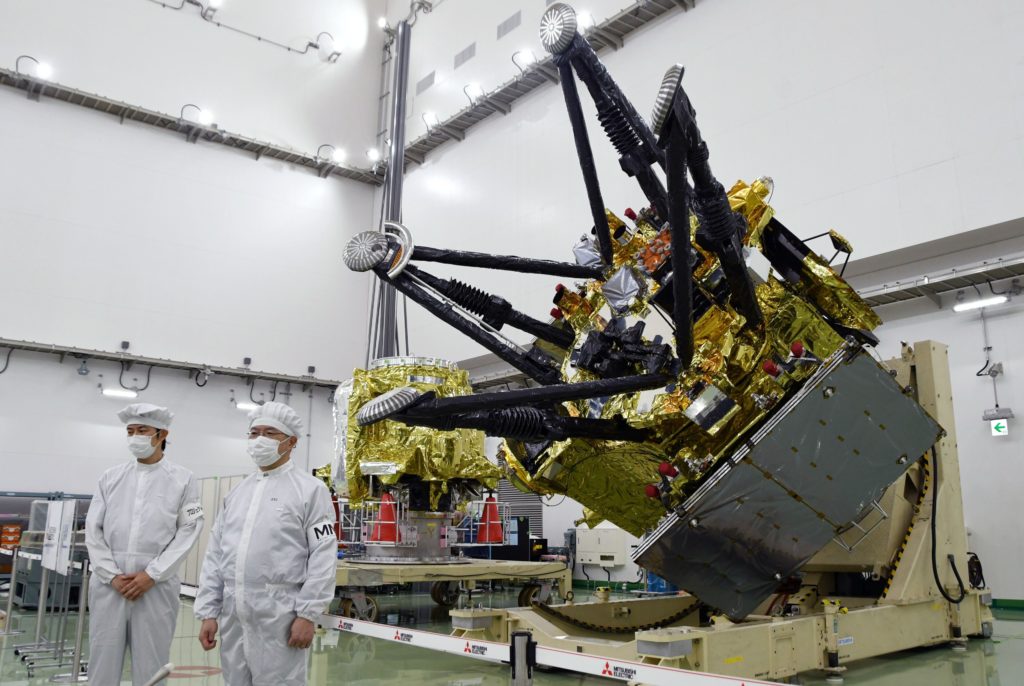
Japan launched the Martian Moons eXploration (MMX) spacecraft Tuesday on a five-year mission to Phobos, one of Mars’ two moons, with the goal of returning samples to Earth by 2031. The $578 million mission, a collaboration between five space agencies including NASA, aims to determine the origin of Phobos, whether it formed from debris after a collision with Mars or was captured as an asteroid. The spacecraft lifted off from Tanegashima Space Center and will deploy a rover to explore Phobos’ surface before collecting at least 10 grams of material using two sampling methods. Researchers will analyze the samples for elemental composition, particularly volatile elements like hydrogen and potassium, using instruments such as MEGANE, a spectrograph contributed by NASA, to help resolve the debate over the moon’s formation.
Previous attempts to reach Phobos have failed, including three Russian probes since the 1980s. The mission will also test technologies for future Mars exploration, including landing on small celestial bodies and long-distance communication, with communication delays of up to 44 minutes each way. NASA is contributing instruments, including the MEGANE spectrograph and a pneumatic sampler, as well as communication and navigation support. The mission’s success could provide insights into the early solar system, the formation of planetary bodies, and how materials like water and organic compounds were distributed. Some scientists believe studying Phobos’ composition could shed light on the early history of Mars and the processes that shaped the planet, while others see parallels to the formation of Earth’s moon.
While the mission is primarily focused on Phobos, MMX will also observe Deimos, Mars’ other moon. The spacecraft is expected to reach the Martian system in late summer 2027.
Read the original coverage
💬 Comments
📜 Comment Policy