Lula Wins Fourth Term as Brazil's President, Defying Right-Wing Trend
AI-synthesized · Bias removed · Facts only
3 sources: 2 left · 1 center · 0 right
Facts are sacred. Opinion is labelled.
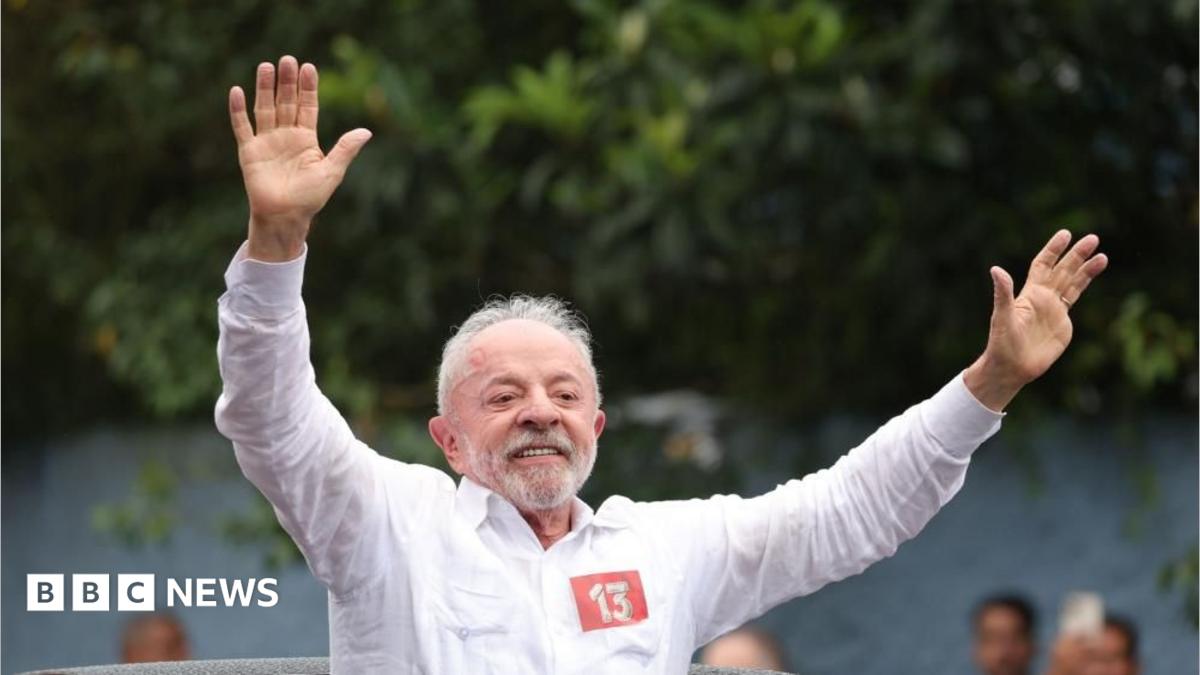
Image: Bbc Us
Luiz Inácio Lula da Silva has secured a fourth non-consecutive term as Brazil’s president, defeating Senator Flávio Bolsonaro in a runoff election. The victory marks a departure from the rightward shift seen in other Latin American nations, leaving Brazil and Mexico as the region’s two most populous countries with left-of-center leaders. Lula’s win, confirmed with over 51% of the vote, came after a closely contested first round where Bolsonaro held a narrow lead. The election was marked by challenges, including a last-minute extension of voting hours ordered by a Supreme Court justice, which may face legal challenges.
Lula, who previously served as president from 2003 to 2010, faced a challenging political landscape, with a hostile Congress expected to constrain his agenda. His campaign gained momentum following the first round through street demonstrations and a significant social media push. The 80-year-old’s victory is seen as a relief for environmentalists, who feared increased deregulation of the Amazon rainforest under Bolsonaro. Brazil’s $2.6 trillion economy, rich in oil and rare earth minerals, will remain largely independent of the U.S., despite pressure from Washington to align with its policies.
While the White House did not directly endorse Bolsonaro, it reportedly preferred a conservative leader in Brazil, viewing Latin America as a sphere of US influence. Lula, in turn, warned against US interference in the election. The result also comes after Lula was released from prison after 580 days and had his sentence annulled due to evidence of bias in his conviction. He will begin his term on January 5, 2027, becoming the first candidate since Brazil’s return to democracy in 1985 to win the presidency after placing second in the first round. Bolsonaro has yet to address his supporters following the result.
Where they differ
- ABC News, NPR, and CBS News emphasized Lula’s criticism of Donald Trump and the potential for strained US-Brazil relations, while Bloomberg and the New York Post focused more on the economic implications of Lula’s victory.
- Left-leaning outlets (ABC, NPR, BBC) highlighted the mobilization of Lula’s supporters following the first round, while right-leaning outlets (NY Post) focused on the challenges to the election process, such as the extension of voting hours.
- Mercopress provided specific vote totals (64.2 million for Lula, 59.8 million for Bolsonaro), a level of detail not consistently present in other reports.
- CBS News noted security and cost-of-living concerns as key issues in the election, while other sources focused more on broader ideological clashes.
What is not yet known
- The extent to which Lula will be able to overcome the constraints of a hostile Congress remains unclear.
- The specific legal challenges to the extension of voting hours are still unfolding.
- Bolsonaro’s future political role and whether he will attempt to pardon his father are yet to be determined.
Background
- Flávio Bolsonaro led the first round of the presidential election with 47.1% of the vote, necessitating a runoff against Luiz Inácio Lula da Silva [Fact Refinery, 2026-10-05].
- Jair Bolsonaro, father of Flávio Bolsonaro, is currently under house arrest following a conviction for plotting a coup after his 2022 loss to Lula [Fact Refinery, 2026-10-04].
- Lula previously served as president of Brazil from 2002-2010 and again from 2022, and warned voters this election was a choice between democracy and “barbarism” [Fact Refinery, 2026-10-04].
- Brazil’s electronic voting system is expected to deliver a final result within hours, though the race is anticipated to be tight [Fact Refinery, 2026-10-25].
Our reading
Our reading is that Lula’s victory represents a significant break from the rightward trend observed in other Latin American nations, despite a challenging political climate. The article highlights the mobilization of Lula’s supporters and the concerns of environmental groups, suggesting a clear ideological shift. While the election was contested, with challenges to the process and a closely contested first round, Lula ultimately secured a majority, indicating a strong mandate despite the expected opposition in Congress.
What to watch
- The legal challenges to the extension of voting hours ordered by the Supreme Court justice, to see if the election results are further contested [article text].
- The composition of the new Congress and how Lula navigates a potentially “hostile” legislative environment, to gauge his ability to enact his agenda [article text].
- Whether Bolsonaro will address his supporters or attempt to pardon his father, to understand his next steps and potential influence on Brazilian politics [article text].
💬 Comments
📜 Comment Policy