Lula Wins Brazil's Presidential Runoff Amid Rightward Shift in Legislature
Politics
◐ Left-leaning sources only●○○
48m ago

Lula Wins Brazil's Presidential Runoff Amid Rightward Shift in Legislature

AI-synthesized · Bias removed · Facts only
2 sources: 2 left · 0 center · 0 right
Image: Guardian Us

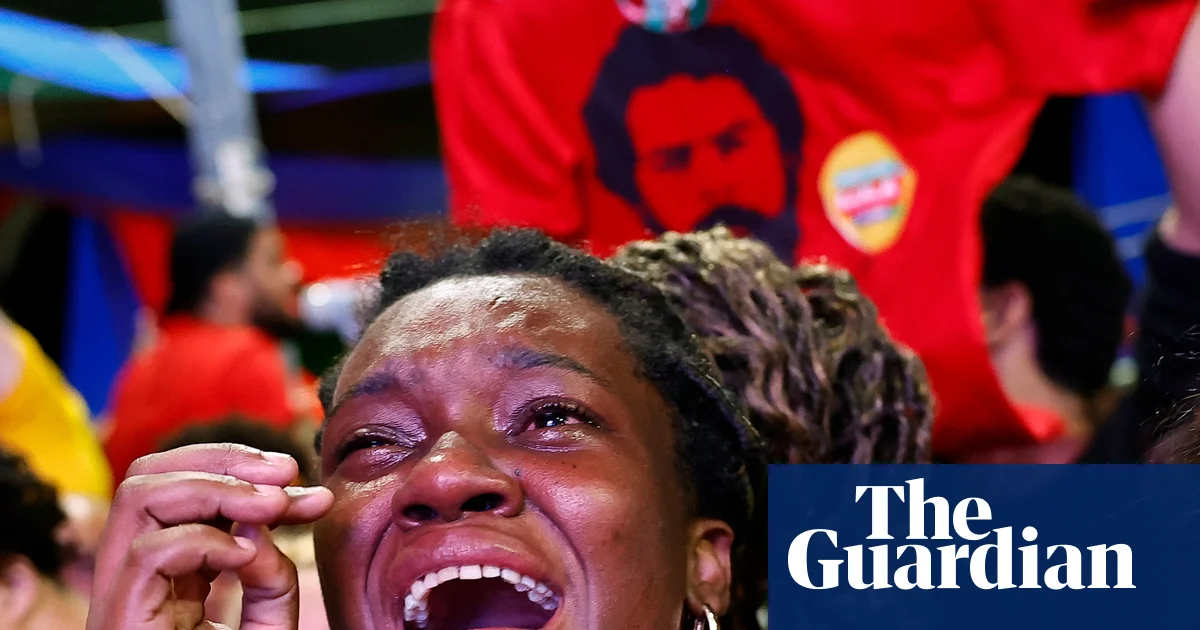
Luiz Inácio Lula da Silva secured a fourth, non-consecutive term as president of Brazil, defeating Flavio Bolsonaro in a runoff election on October 30th. Lula won 51.76% of the vote to Bolsonaro’s 48.24%, marking a narrow victory for the left in a deeply divided country. The result is seen as a rejection of Bolsonaro’s attempt to remain in power, but also reveals the enduring strength of right-wing political forces within Brazil. While Lula’s win is a boost for Brazil’s engagement with the Global South and multilateral institutions, and offers hope for renewed environmental protections, particularly in the Amazon, he faces a conservative-dominated Congress that will likely challenge his agenda.

The victory comes after a record fall in deforestation in the Amazon and Cerrado regions, raising hopes that Brazil can achieve its goal of zero deforestation by 2030. However, Bolsonaro’s party now controls a majority in Congress, with a strengthened position in both the lower house and the Senate, and holds the governorships of seven of nine Amazonian states. These forces are expected to push for policies that favor agribusiness and mining interests, potentially weakening environmental protections and attempting to expand extractivist industries into indigenous lands.

Lula’s administration will also navigate a complex geopolitical landscape, facing pressure from the United States to prioritize resource access over partnerships with China and Europe. Brazil is an agricultural superpower and a leader in renewable energy, generating 89% of its electricity from renewable sources, and is poised to surpass the US as the world’s largest agricultural exporter. Despite this potential, the country continues to struggle with converting its advantages into broad-based prosperity, a paradox that has earned it the label “the country of the future, and always will be.”

Where they differ

  • The Guardian emphasized the potential for Lula’s victory to inspire political change in other countries facing elections, framing it as a lesson for campaigners.
  • Daily Maverick highlighted the narrowness of Lula’s victory and the enduring appeal of Bolsonaro’s movement, stressing that the result was a rejection of a succession attempt rather than a full endorsement of the left.
  • The Guardian focused on Lula’s potential to lead on climate change and strengthen environmental protections, while Daily Maverick underscored Brazil’s existing position as an agricultural and energy leader.

What is not yet known

  • The extent to which Lula will be able to negotiate and compromise with the conservative-dominated Congress remains unclear.
  • The specific pressures Lula will face from the United States regarding access to Brazil’s natural resources are not detailed.

Background

  • Luiz Inácio Lula da Silva previously served as President of Brazil from 2003 to 2010, completing two terms [background knowledge].
  • Jair Bolsonaro served as President of Brazil from 2019 to 2022, losing the 2022 election and facing investigations into his conduct in office [Fact Refinery, 2026-10-28].
  • Flávio Bolsonaro, son of Jair Bolsonaro, lost the 2026 presidential runoff election and is currently under investigation for alleged financial crimes, prompting his departure from Brazil [Fact Refinery, 2026-10-27].
  • The United States issued visas to both Jair and Flávio Bolsonaro following their respective election losses, with reports suggesting potential asylum for Flávio [Fact Refinery, 2026-10-28].

Our reading

Our reading is that Lula’s victory, while significant, is tempered by the strong showing of right-wing forces in the legislature and the continued flight of Bolsonaro family members. The article suggests a complex political landscape where Lula will face substantial opposition despite winning the presidency. We interpret the emphasis on Brazil’s economic potential alongside its historical struggles as highlighting the challenges Lula faces in translating political victory into tangible improvements for the population.

What to watch

  • The composition of Lula’s cabinet and the negotiations he undertakes with conservative lawmakers to secure legislative support for his agenda [Brazilian government official announcements].
  • The outcome of the investigations into Flávio Bolsonaro’s alleged financial crimes and any potential legal challenges to his departure from Brazil [Brazilian Federal Police reports].
  • Figures on deforestation rates in the Amazon and Cerrado regions released by the Brazilian government, to assess whether Lula’s administration can achieve its environmental goals [Brazilian Institute of Environment and Renewable Natural Resources].
Was this useful?

Read the original coverage

💬 Comments

📜 Comment Policy