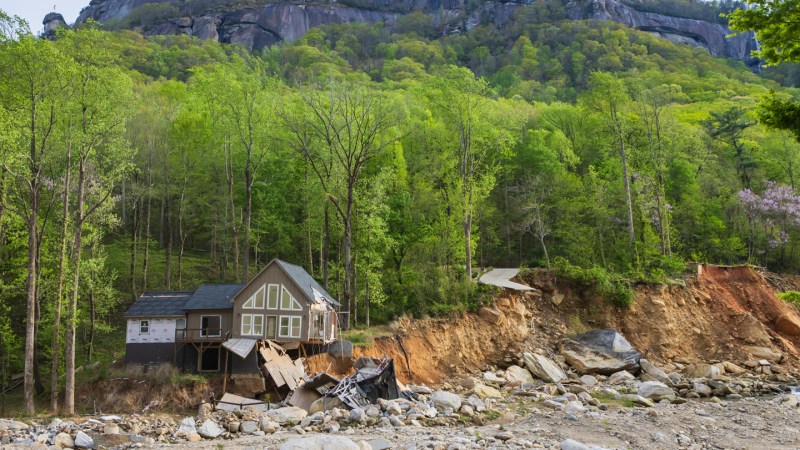
A new study reveals that those most vulnerable to landslides in the United States are often those least equipped to mitigate the risks, with Appalachia particularly affected.
A study published July 29 in *Earth’s Future* examines the socioeconomic factors related to landslide hazards in the U.S. Researchers found at least 6.5 million people live in areas with high landslide risk, a conservative estimate that rises with the inclusion of medium-risk zones. The study overlaid landslide susceptibility maps with residential areas and assessed the socioeconomic status of those locations.
Joe Wartman, a geotechnical engineer at the University of Washington in Seattle, and his colleagues discovered the highest risk in densely populated areas with steep slopes. The research highlights a stark disparity: in Appalachia, 3.6 million people – including a high concentration of lower-income residents – live in landslide-prone areas, representing 55 percent of the national total. West Virginia is particularly vulnerable, with 20 percent of its population residing in high-risk zones, compared to a 2 percent national average.
Conversely, residents in high-risk cities like Los Angeles and Seattle are often wealthier and have greater access to engineering solutions or the means to relocate after a landslide. Ben Mirus, a geologist with the U.S. Geological Survey in Golden, Colo., who led the agency’s 2024 landslide mapping, called the study “a really important advance,” noting the need to understand *why* and *where* landslides matter. “Once you have a map of where landslides are, you want to look at why and where they matter.” Wartman added that the new map “gives us the ability to really hyper-localize and focus, to an extraordinary degree, on those who are most in danger.”
Read the original coverage
💬 Comments
📜 Comment Policy