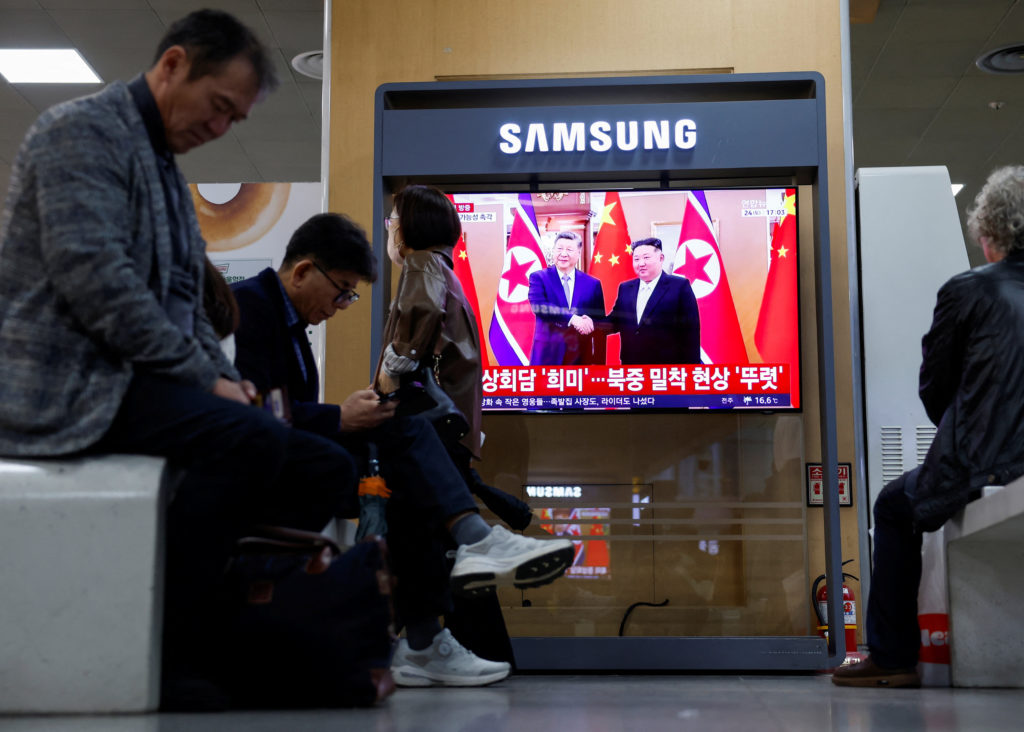
North Korean leader Kim Jong Un traveled to China via the newly opened New Yalu River Bridge on Saturday, marking his first visit in a year and a move toward bolstering ties with Beijing. He was met by China’s top political adviser, Wang Huning, who conveyed greetings from President Xi Jinping. Both countries pledged to strengthen strategic communication and cooperation, safeguarding their sovereignty, security, and development interests, and to expand economic and trade cooperation through the new bridge.
The four-lane bridge, completed in 2014, remained unused for twelve years due to a lack of connecting roads and customs facilities on the North Korean side. Its recent opening, along with a similar bridge inaugurated last month between North Korea and Russia, signals Pyongyang’s efforts to forge closer relationships with China and Russia. While trade with Russia largely involves military supplies, trade with China could support the development of North Korea’s civilian economy.
Kim’s trip coincides with the anniversary of China’s entry into the Korean War and precedes a key political meeting in Beijing on Monday. The visit is seen as part of Kim’s increasingly assertive foreign policy, aiming to align Pyongyang with Beijing and Moscow in what he portrays as a “new Cold War” against the United States. Kim waved to crowds as he crossed the bridge, a symbolic gesture highlighting the strategic link between the two nations.
Our reading is that Kim Jong Un’s visit to China is a deliberate demonstration of alignment with Beijing, reinforcing a growing bloc against what Pyongyang perceives as a hostile United States. The symbolic crossing of the newly opened bridge, coupled with pledges of strengthened ties, suggests a calculated effort to project unity and signal a shift in regional alliances. The timing, coinciding with the anniversary of the Korean War and a political meeting in Beijing, further emphasizes the strategic nature of this visit.
Read the original coverage
💬 Comments
📜 Comment Policy