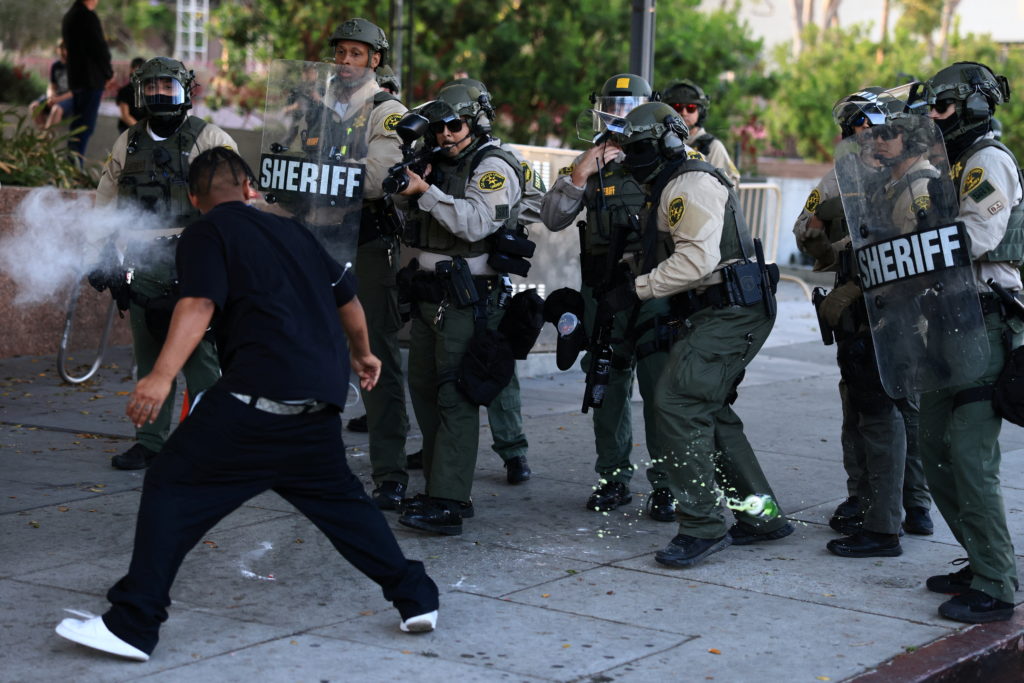
The U.S. Justice Department secured felony convictions in fewer than half of 102 arrests made during protests in Los Angeles, Chicago, Portland, and Washington, D.C. last summer and fall, according to an Associated Press analysis. The arrests involved charges of assaulting federal authorities, a pattern occurring in cities where President Donald Trump deployed or sought to deploy the National Guard. The AP found juries and judges were largely unconvinced by the evidence presented in these cases. The Washington Times reported that the failure rate in securing convictions was far below the norm for federal assault prosecutions.
Prosecutors pursued felony assault charges, but juries and judges frequently reduced the charges to misdemeanors or acquitted protesters altogether. The AP analysis revealed a significant disparity between the initial felony charges and the final outcomes. While the Justice Department pursued aggressive prosecution, the results suggest challenges in proving intent and establishing the severity of the alleged assaults.
Left-leaning outlets and the Washington Times both reported on the low conviction rate. Not in dispute is the fact that the Justice Department’s efforts to secure felony convictions against protesters were largely unsuccessful. The AP noted these cities saw significant protests and National Guard deployments under President Trump. The Washington Times highlighted the contrast with typical federal assault prosecution success rates.
The reasons for the low conviction rate remain complex, potentially involving evidentiary challenges, jury skepticism, or prosecutorial overreach. The AP analysis does not establish a direct link between the National Guard deployments and the prosecution outcomes, but notes the timing coincided with increased federal involvement in protest response.
Our reading is that the Justice Department’s efforts to secure felony convictions against protesters were notably unsuccessful, despite an aggressive approach to prosecution. The article suggests a disconnect between the charges initially brought and the outcomes in court, with juries and judges frequently reducing charges or acquitting protesters. While a causal link isn’t established, the timing of these prosecutions coincided with increased federal involvement, including National Guard deployments, in responding to protests.
Read the original coverage
💬 Comments
📜 Comment Policy