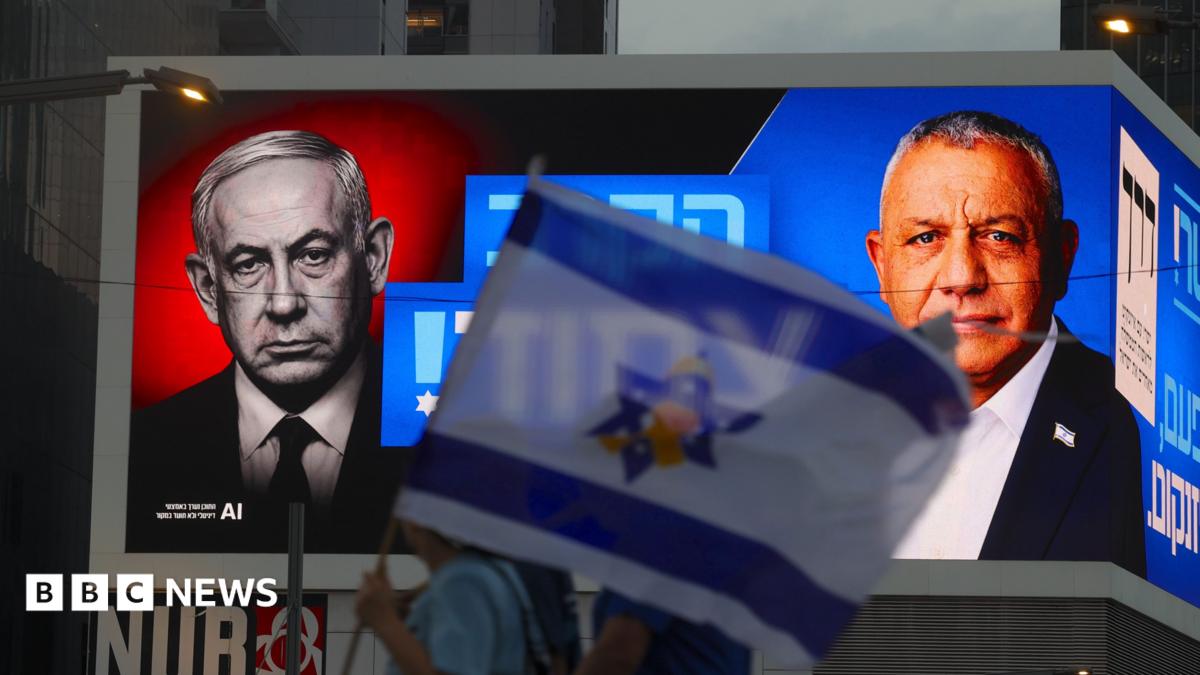
Israelis will vote on Tuesday in a deeply divisive election following three years of regional war, with polls showing a tight race between the governing coalition and the opposition. The election is occurring against a backdrop of ongoing conflict in Gaza and Lebanon, and a fractured political landscape where coalition-building is paramount. Former military chief of staff Gadi Eisenkot has emerged as a leading opposition candidate, appealing to voters with a focus on security and a background outside of Israel’s urban elite.
The campaign has been marked by new tactics, including AI-generated videos, and by a contentious debate over military service. A key point of contention is the disqualification of Palestinian candidate Sami Abu Shehadeh by the Central Elections Committee, based on a statement describing the October 7th Hamas attack as a “significant historical event.” This decision was upheld by the Supreme Court, despite criticism that Jewish candidates who have made inflammatory statements regarding Palestinians have not faced similar disqualification. Every Jewish party in the Knesset supported Abu Shehadeh’s disqualification, highlighting divisions over Jewish supremacy.
Polls published Friday show the governing coalition and the main opposition bloc nearly tied, with an estimated 500,000 first-time voters and 70,000 Israelis traveling from abroad to cast ballots. The anti-Netanyahu bloc requires the support of Arab parties to reach a majority in the Knesset, but appears hesitant to fully embrace their backing. One incident during the campaign involved a pro-Netanyahu speaker using a racist slur to refer to Eisenkot, highlighting the ethnic tensions at play. Netanyahu’s critics hope to defeat him, but the Israeli opposition is far from unified, and an absolute majority is unlikely.
The election follows a period of political instability, with Israelis having gone to the polls five times in less than four years. The current election is also the first since the Hamas attack on October 7, 2023, and the subsequent wars in Gaza, Lebanon, and Iran. Israel’s relationship with the U.S. is under strain, and the Israeli-occupied West Bank has seen increased violence from Jewish settlers against Palestinians.
Our reading is that this election is less about ideological differences and more about a deeply fractured electorate responding to recent crises and a long-serving Prime Minister. The disqualification of a Palestinian candidate and the divisions over Jewish supremacy, as highlighted by The Nation, suggest underlying tensions that are being exposed during the campaign. The tight polling numbers and the need for coalition-building indicate a precarious political situation, with no clear path to a stable government.
Read the original coverage
💬 Comments
📜 Comment Policy