Israeli Election Results Remain Undecided as Vote Count Continues
AI-synthesized · Bias removed · Facts only
3 sources: 2 left · 1 center · 0 right
Facts are sacred. Opinion is labelled.
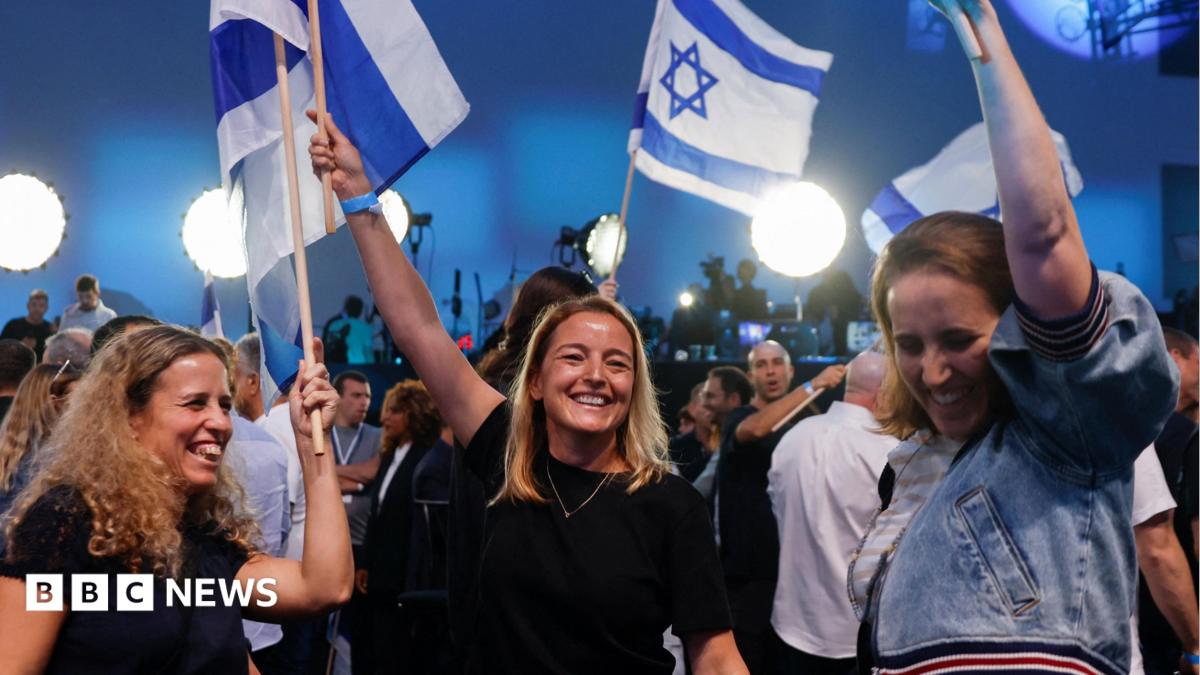
Image: Bbc Us
Israel’s election has concluded with neither Prime Minister Benjamin Netanyahu nor his rivals securing a clear path to a governing majority, according to exit polls. Initial projections gave an edge to a bloc led by former army chief Gadi Eisenkot, but the two main political camps are now estimated to have around 51 seats each in the 120-member Knesset. Benjamin Netanyahu’s Likud party is projected to be the largest single party in parliament. The BBC, Financial Times, and South China Morning Post all report that 61 seats are needed to form a government, a threshold neither side has yet reached. The South China Morning Post notes that this year’s election saw the highest voter turnout in decades. Israeli Arab lists are projected to gain strength, potentially winning 17 or 18 seats between them, according to exit polls. The outcome leaves several scenarios open as parties negotiate potential coalitions.
Background
- Israel’s parliamentary election takes place in the 120-member Knesset, with 61 seats needed to form a government [background knowledge].
- The October 7, 2023 attacks by Hamas and the subsequent conflict in Gaza have significantly shaped this election cycle, leading to record voter turnout [Fact Refinery, 2026-10-27].
- Prior to this election, Benjamin Netanyahu had been in power for nearly 19 years [Fact Refinery, 2026-10-27].
- Exit polls in the 2026-10-27 election initially indicated a narrow lead for the opposition bloc led by Gadi Eisenkot, with 52 seats projected against Netanyahu’s 50 [Fact Refinery, 2026-10-27].
- Arab-led parties were projected to win between 17 and 18 seats, potentially becoming key players in coalition negotiations [Fact Refinery, 2026-10-27].
Our reading
Our reading is that this election has resulted in a stalemate, despite projections of a slight advantage shifting between the two main blocs. The high voter turnout suggests a deeply engaged electorate, but the near-equal seat count indicates a significant division within the country. The potential for Arab parties to play a kingmaker role highlights the complex dynamics of Israeli coalition politics and the difficulty of forming a stable government.
What to watch
- The official tally of votes to confirm whether the seat projections hold and to see if any party significantly gains or loses seats [South China Morning Post].
- President Herzog’s decision on which party leader to task with forming a government, and the timeframe for that process [Fact Refinery, 2026-10-27].
- Whether parties begin formal coalition negotiations, and any public statements regarding potential alliances or red lines [Financial Times].
💬 Comments
📜 Comment Policy