Israeli Election Results in Deadlock, Netanyahu’s Fate Uncertain
AI-synthesized · Bias removed · Facts only
3 sources: 1 left · 2 center · 0 right
Facts are sacred. Opinion is labelled.
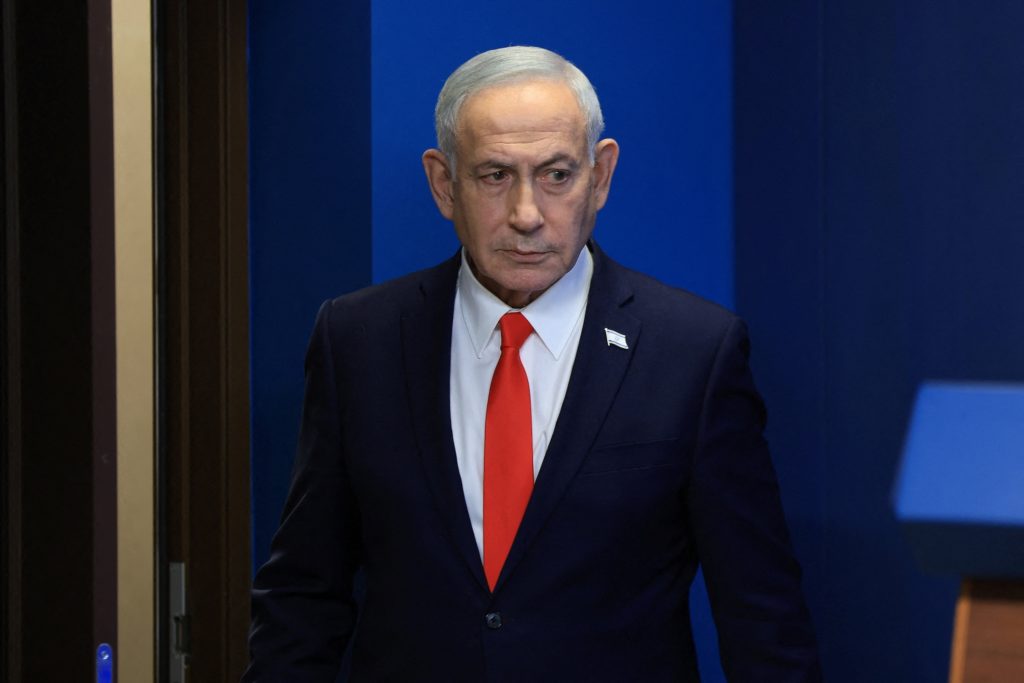
Image: Pbs Newshour
Israel’s parliamentary election concluded Tuesday with exit polls indicating a loss of seats for Prime Minister Benjamin Netanyahu’s right-wing coalition, but without a clear path to a majority for his opponent, Gadi Eisenkot. Voting saw record turnout, with polls closing at 10 p.m. local time. According to exit polls, Eisenkot’s bloc is projected to win 52 to 53 seats, while Netanyahu’s alliance is expected to secure 50. Arab parties are on pace to win 17 to 18 seats, potentially becoming kingmakers. Neither bloc has reached the 61 seats needed to form a government. The New York Post reports that if the exit polls hold, Eisenkot would need to rely on support from Arab parties, a move he may have pledged against. Final results are expected in the coming days, with a coalition potentially taking weeks or even a month to establish. President Isaac Herzog will then task a party leader with forming a government, and if unsuccessful, new elections could be held. Netanyahu will remain in office as acting prime minister until a successor is chosen. El Pais notes this election is the first held in Israel since the October 7th Hamas-led attacks, and many Israelis are seeking change after Netanyahu’s nearly 19 years in power. The Financial Times and PBS Newshour report that neither Netanyahu nor Eisenkot is forecast to secure a majority, creating a political stalemate. The South China Morning Post highlights that this deadlock could allow Netanyahu to remain in power in a caretaker capacity while coalition negotiations proceed.
Where they differ
- El Pais emphasizes the historical significance of the election as the first since the October 7th attacks and the widespread desire for change among Israeli voters.
- The New York Post focuses on the potential role of Arab parties as kingmakers and the possibility of Eisenkot breaking a campaign promise to secure their support.
- Axios highlights the specific seat projections, 52-53 for Eisenkot, 50 for Netanyahu, and 17-18 for Arab parties, providing a concise numerical overview.
- The South China Morning Post frames the deadlock as potentially beneficial for Netanyahu, allowing him to remain in power while negotiations continue.
What is not yet known
- The final official results and whether they will align with the exit polls remain uncertain.
- Whether any party will be able to successfully form a governing coalition is currently unresolved.
- The extent to which Arab parties will be willing to cooperate with either bloc is still to be determined.
Background
- Israel is a parliamentary democracy with a 120-member Knesset [background knowledge].
- Benjamin Netanyahu has been prime minister of Israel for nearly 19 years, making this election a referendum on his long tenure [Fact Refinery, 2026-10-24].
- The election is taking place against the backdrop of the October 7th, 2023 Hamas-led attacks and the subsequent conflict in Gaza, with a record turnout reported [Fact Refinery, 2026-10-27].
- Gadi Eisenkot is Netanyahu’s main challenger in this election, campaigning on a platform of “integrity” and a commission of inquiry into the October 7th failures [Fact Refinery, 2026-10-27].
- To form a government, a party or bloc needs to secure at least 61 seats in the 120-member Knesset [Fact Refinery, 2026-10-27].
Our reading
Our reading is that the Israeli election has resulted in a stalemate, leaving the future government uncertain. While Netanyahu’s coalition lost seats, neither he nor his primary opponent, Eisenkot, can currently command a majority. This deadlock creates a complex political situation, potentially prolonging negotiations or even leading to new elections, and may allow Netanyahu to remain in power in the interim. The potential reliance on Arab parties to break the tie introduces a further complication, given Eisenkot’s prior statements.
What to watch
- The release of the final official election results to confirm whether the exit polls accurately reflect the seat distribution [Central Elections Committee website].
- Whether President Herzog tasks a party leader with forming a government, and the deadline for that leader to succeed [Israeli President’s Office announcements].
- Any statements from Arab parties regarding their willingness to negotiate with either Netanyahu or Eisenkot [Arab party press releases/statements].
💬 Comments
📜 Comment Policy