Israel Votes as Netanyahu Faces Scrutiny Over October 7th Security Failures
AI-synthesized · Bias removed · Facts only
3 sources: 2 left · 0 center · 1 right
Facts are sacred. Opinion is labelled.
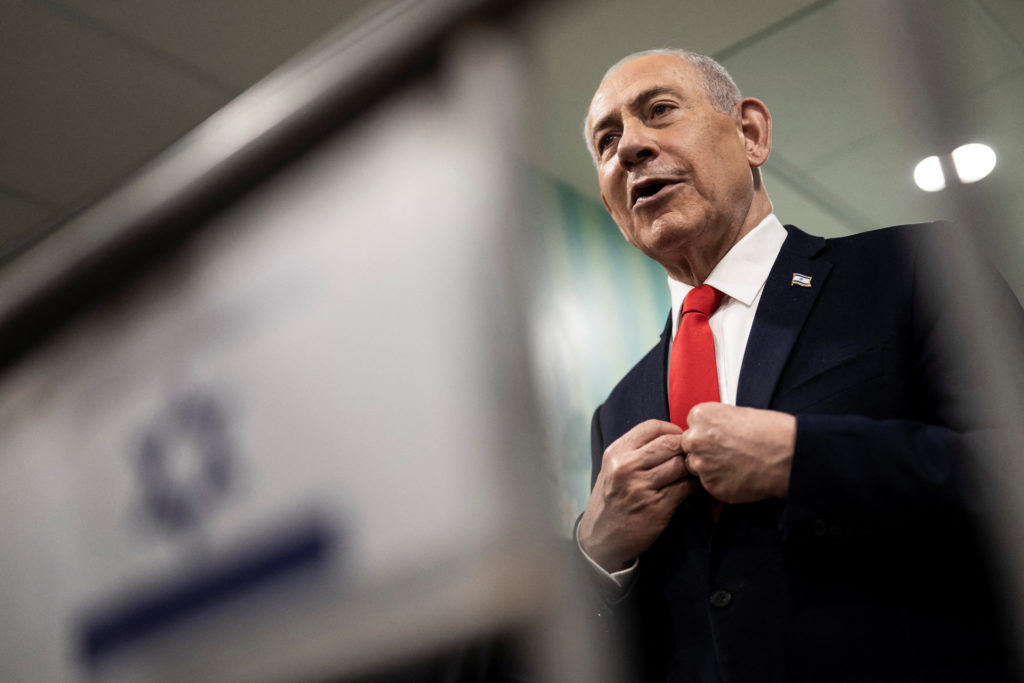
Image: Pbs Newshour
Israelis are voting in their first nationwide election since the October 7, 2023 attacks by Hamas, a contest largely viewed as a referendum on Prime Minister Benjamin Netanyahu’s leadership. Turnout is at a five-decade high, with 31.5% of voters having cast ballots by noon, the highest rate at that time since 1973. The election comes amid unresolved wars, lingering grief over the Hamas attack, and deep divisions over Netanyahu’s long tenure. Critics, including former general Gadi Eisenkot, now Netanyahu’s primary challenger, are focusing on security failures leading up to the October 7th attacks, questioning whether warnings from Egypt were ignored. Netanyahu defends his record, citing his aggressive stance during the Gaza War and Iran crisis, and denies reports he planned to fire IDF Chief of Staff Lt. Gen. Eyal Zamir, alleging interference from Iran. Reports suggest a political disagreement between Netanyahu and Zamir over potential military action against Iran, with Mossad reportedly siding with the prime minister. Eisenkot has pledged to maintain a strong security posture while promising a commission of inquiry into the October 7th failures, a step Netanyahu resists. The outcome of the election, in a 120-member Knesset, is uncertain, with neither Netanyahu’s allies nor the opposition currently assured of a majority, potentially leading to protracted coalition negotiations. Voter turnout among IDF soldiers currently engaged in conflict is almost four points higher than in 2022.
Where they differ
- Right-leaning outlets (Breitbart, Newsmax, RT) emphasized public discontent with Netanyahu stemming from security failures surrounding the October 7th attacks, while left-leaning sources (PBS Newshour, NBC News) framed the election more broadly as a response to unresolved wars and divisions.
- Breitbart and RT highlighted allegations that Netanyahu ignored warnings about the Hamas attack from Egypt, while other sources mentioned this claim without the same level of emphasis.
- RT noted the high voter turnout, the highest since 1973, drawing a parallel to the Yom Kippur War and a wartime prime minister attempting to retain power, a comparison not made by other sources.
- Africa News highlighted Eisenkot’s meeting with former hostages, a detail absent from other reports.
What is not yet known
- Whether either Netanyahu’s allies or the opposition will secure the 61 seats needed for a majority in the Knesset remains unresolved, suggesting a period of coalition negotiations.
- The extent to which Iran attempted to interfere in the elections, as alleged by Netanyahu, is not fully established.
Background
- Israel is a parliamentary democracy with a 120-member Knesset, requiring 61 seats to form a governing coalition [background knowledge].
- Benjamin Netanyahu has been prime minister of Israel for a combined total of over 15 years, beginning his first term in 1996 [Fact Refinery, 2026-10-24].
- The October 7, 2023 attacks by Hamas resulted in nearly 1,200 deaths in Israel and the taking of 251 hostages to Gaza, significantly impacting the current election [Fact Refinery, 2026-10-27].
- Gadi Eisenkot is a former Israeli Chief of Staff running against Netanyahu, campaigning on a platform of “integrity” and promising a commission of inquiry into the October 7th failures [Fact Refinery, 2026-10-27].
- Voter turnout was exceptionally high in the 2026 election, reaching levels not seen since 1981 [Fact Refinery, 2026-10-27].
Our reading
Our reading is that this election is fundamentally a reckoning for Netanyahu’s leadership, specifically regarding the security failures surrounding the October 7th attacks. The unprecedented voter turnout suggests a highly engaged electorate, motivated by both grief and a desire for change or continued stability. The framing of the election as a referendum on Netanyahu, coupled with Eisenkot’s focus on accountability, indicates a deep level of public scrutiny regarding the prime minister’s long tenure and handling of national security.
What to watch
- The final seat count in the 120-member Knesset to determine if either Netanyahu’s allies or the opposition can secure a majority, expected in the coming days [Fact Refinery, 2026-10-27].
- Whether a commission of inquiry into the October 7th failures is established, as promised by Eisenkot, and if Netanyahu will resist such a move [Fact Refinery, 2026-10-27].
- Any further reports regarding alleged Iranian interference in the election, and if any evidence supporting Netanyahu’s claims emerges [Fact Refinery, 2026-10-27].
💬 Comments
📜 Comment Policy