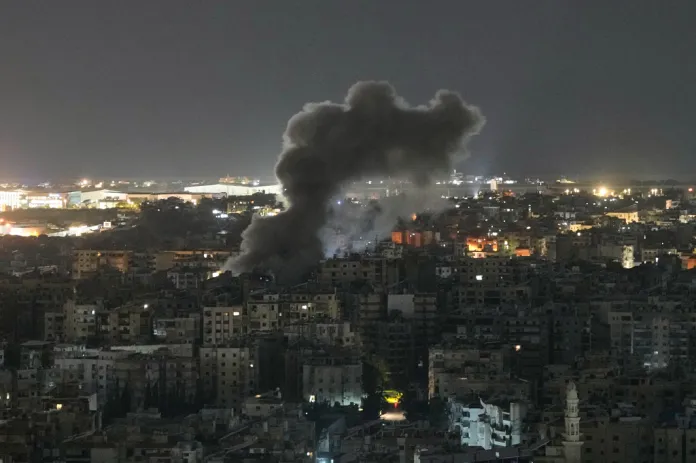
Israel launched an airstrike on Beirut’s southern suburbs on Wednesday, marking the first attack on the Lebanese capital since a ceasefire with Hezbollah took effect in April. Israeli authorities said the strike targeted a commander of Hezbollah’s elite Radwan force in the Haret Hreik neighborhood.
The Israeli military stated that the operation aimed at a senior figure within the Radwan unit, which is described as Hezbollah’s battle-hardened fighting force. The strike represents a significant escalation, as Israeli forces had previously limited their post-ceasefire operations to targets in southern Lebanon.
The ceasefire, which ended months of hostilities, was agreed upon last month. However, reports differ on the exact date it came into effect. Some sources cite April 8, while others point to April 17 or simply “mid-April.” Despite the truce, Israel had continued to conduct strikes in southern Lebanon, but had refrained from attacking Beirut until now.
Israeli Prime Minister Benjamin Netanyahu and Defense Minister Israel Katz confirmed the operation, according to reports. The Washington Examiner noted that Netanyahu and Katz made statements regarding the strike. The BBC reported that Israel said it targeted a senior Hezbollah figure.
The strike hit the southern suburbs, a known Hezbollah stronghold. Al Jazeera’s headline stated “Israel bombs Beirut’s southern suburbs” and placed the word “ceasefire” in quotation marks, reflecting skepticism about the truce’s durability. The Latin Times described the attack as a major escalation.
The Financial Times highlighted that Israeli forces had not attacked the Lebanese capital since April 8, underscoring the breach of the previous pattern. The South China Morning Post and The Straits Times both reported that the target was a commander of the Radwan force.
The Washington Post noted that the airstrike threatened the already shaky ceasefire. The attack came amid ongoing tensions and mutual accusations of violations. Hezbollah had previously warned against Israeli strikes on Lebanese territory.
No immediate casualty figures were available from the strike. The Israeli government maintained that the operation was necessary to counter threats from Hezbollah, which it considers a terrorist organization. Lebanese authorities condemned the strike as a violation of sovereignty.
The international community has called for restraint, with concerns that the renewed violence could unravel the fragile truce. The United Nations had brokered the ceasefire, and its representatives urged both sides to adhere to the agreement.
As of now, the situation remains tense, with the potential for further escalation. Israel has signaled that it will continue to act against what it describes as imminent threats, while Hezbollah has vowed to respond to any aggression.
Read the original coverage
💬 Comments
📜 Comment Policy