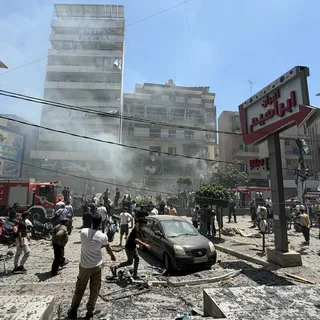
An initial deal to end the war and open the Strait of Hormuz was expected to be signed this week, but the diplomatic process faces new complications following military escalation in the region. A drone strike on northern Israel set off a chain reaction Sunday: Israel hit Hezbollah targets in Beirut in retaliation, and Iran is now threatening to strike back.
The Israeli military stated that it launched strikes on Beirut on Sunday targeting Hezbollah infrastructure. These actions occurred despite ongoing efforts to negotiate an end to the U.S.-Iran war. Smoke could be seen rising over the Lebanese capital as a result of the strikes. The military specified that the targets were related to Hezbollah, indicating a direct response to the initial drone attack.
In response to these developments, Iran has warned that Israel's strike on Beirut could derail the anticipated U.S. deal. The warning underscores the fragility of the diplomatic efforts currently underway. The timing of the Israeli military operation, occurring in the lead-up to an anticipated agreement between the United States and Iran, suggests a complex interplay between military retaliation and diplomatic negotiation.
Reports indicate that the expected signing of the peace deal was scheduled for this week. However, the retaliatory strikes by Israel against Hezbollah targets in Beirut have introduced significant uncertainty into the process. Iran's threat to strike back further complicates the situation, as both military and diplomatic tracks are now active simultaneously.
The sequence of events began with a drone strike on northern Israel. This initial attack prompted Israel to launch its own strikes on Hezbollah targets in Beirut. The Israeli military confirmed the launches, describing them as targeting Hezbollah infrastructure. Observers noted smoke rising over the city, providing visual confirmation of the intensity of the strikes.
While the U.S. and Iran were engaged in negotiations aimed at ending the war and opening the Strait of Hormuz, the military actions on the ground proceeded. The Israeli military's decision to strike Beirut suburbs highlights the tension between the diplomatic goals of the United States and the security concerns driving Israel's military responses.
Iran's warning that the U.S. deal could be derailed by Israel's actions points to potential friction among the key parties involved. The anticipated deal was viewed as a significant step toward de-escalation, but the continued hostilities suggest that the path to peace remains obstructed by immediate security threats and retaliatory cycles.
Current status indicates that the diplomatic timeline is under pressure. The expected signing of the deal this week is now in question due to the escalating military exchanges. Iran's threat of further retaliation and Israel's confirmation of strikes on Hezbollah infrastructure create a volatile environment for the ongoing negotiations. The outcome of these events will likely determine whether the U.S.-Iran agreement can proceed as planned or if it will be abandoned in favor of continued military engagement.
Read the original coverage
💬 Comments
📜 Comment Policy