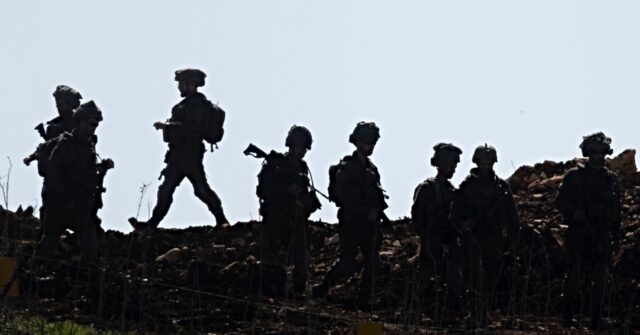
Israeli Defense Minister Israel Katz announced on Monday that Israeli military forces will not withdraw from southern Lebanon, explicitly rejecting the notion that their presence is contingent upon a recently reported peace agreement between the United States and Iran. This statement was issued despite reports indicating that Lebanon had been included in the terms of the diplomatic deal brokered by Washington and Tehran.
The announcement came as U.S. President Joe Biden departed for the G7 summit. Prior to his departure, the President hosted a separate event described as distinct from the diplomatic negotiations involving Iran. The timing of Katz’s declaration highlights a divergence between Israeli military policy and the broader geopolitical developments occurring simultaneously in the Middle East.
According to reports, the peace deal between the United States and Iran included provisions or acknowledgments regarding Lebanon. However, the Israeli government has maintained that its security objectives in the region are independent of this specific bilateral agreement. Katz’s refusal to order a withdrawal signals that Israel views its military posture in southern Lebanon as a matter of national defense strategy rather than a variable subject to adjustment based on U.S.-Iran diplomatic outcomes.
The situation underscores the complex and often fragmented nature of international diplomacy in the region. While the United States and Iran are engaged in negotiations aimed at reducing tensions, Israel has positioned itself as an independent actor with its own security red lines. The inclusion of Lebanon in the reported U.S.-Iran deal suggests that Tehran may have sought to address concerns regarding Iranian influence or proxy activities in Lebanon as part of the broader agreement. However, Jerusalem’s response indicates that Tel Aviv does not consider these diplomatic assurances sufficient to justify a pullback of its troops.
Observers note that the Israeli military presence in southern Lebanon has been a persistent point of contention in regional security dynamics. The refusal to withdraw, despite external diplomatic progress, may complicate efforts to stabilize the border region. It also raises questions about the extent to which U.S. agreements with Iran can influence the actions of its allies in the region, particularly when those allies have distinct strategic interests.
As the G7 summit proceeds, attention remains focused on whether the U.S.-Iran deal will hold and how it will impact regional stability. Meanwhile, Israel’s stance reinforces its commitment to maintaining a military buffer zone along its northern border, regardless of the diplomatic status between Washington and Tehran. The divergence in approaches between the U.S., Iran, and Israel illustrates the challenges of coordinating security policy across multiple actors with differing priorities.
No right-leaning sources reported on this story.
Read the original coverage
💬 Comments
📜 Comment Policy