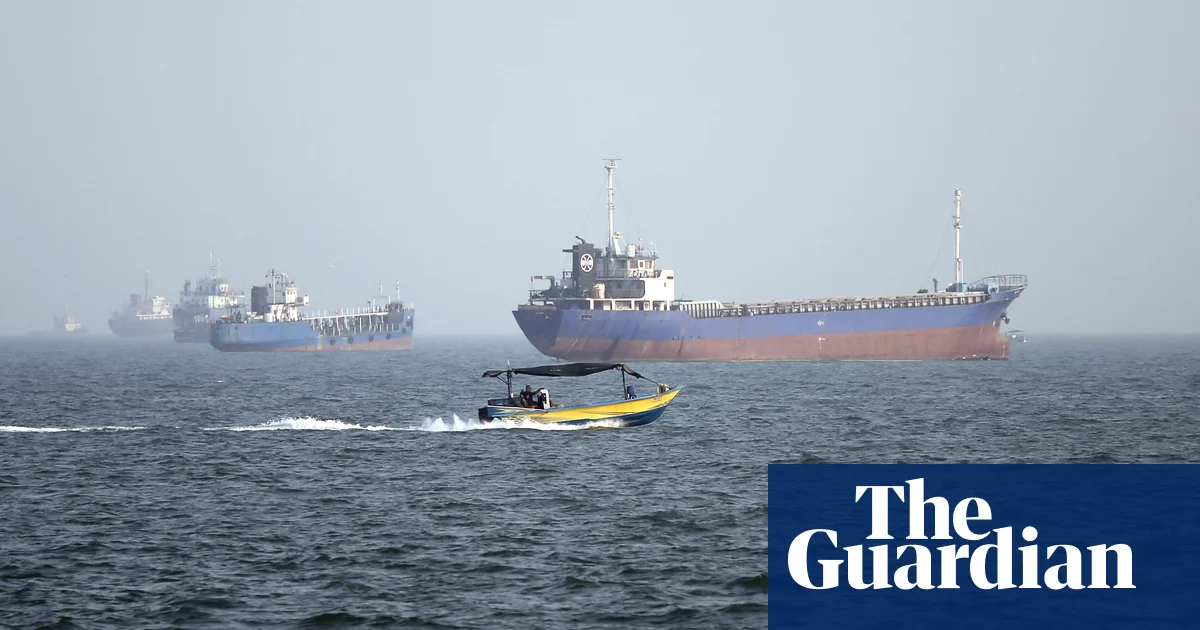
Iranian forces claimed to have captured an American underwater drone in the Strait of Hormuz, but the US military stated the drone “malfunctioned” more than a day prior. US Navy Captain Tim Hawkins, a United States Central Command spokesperson, said the submersible was surveilling regional waters when it malfunctioned, describing it as “defective” and an older model that did not carry classified equipment. The Islamic Revolutionary Guard Corps (IRGC) described the capture as a “complex intelligence and operational action at dawn,” and said images would be released. The incident occurs as Iran maintains a blockade of the Strait of Hormuz, which carries approximately one-fifth of the world’s oil and gas, and the US has imposed its own blockade of Iranian ports. After a period of relative calm, Iran and the US have resumed exchanges of fire, impacting global oil prices.
Bloomberg reported the US dismissed the drone as “defective and malfunctioning,” and confirmed it did not have any classified equipment onboard. The Washington Examiner confirmed CENTCOM’s statement that the drone malfunctioned while operating near Iran, and that it did not carry sensitive information. The Guardian noted that the incident follows a month of relative calm in August, and that the war has claimed the lives of 18 US service members, with Iranian authorities claiming the overall death toll from US and Israeli strikes is in the thousands—a figure corroborated by US-based monitoring groups.
Left outlets emphasize the resumption of conflict and the potential impact on global oil prices, while right-leaning coverage focuses on the US confirmation of the drone’s malfunction and lack of sensitive equipment. Not in dispute is the Iranian claim of capture and the US acknowledgement of the drone’s operational failure.
The extent to which the drone’s malfunction contributed to its capture, and whether this incident will escalate tensions further, remains unsettled.
Our reading is that both the U.S. and Iran are presenting narratives that serve their interests while acknowledging the core event – the capture of a U.S. drone. The U.S. framing of the drone as “defective” and lacking sensitive equipment appears intended to downplay the incident’s significance, while Iran’s description of a “complex intelligence and operational action” serves to highlight its capabilities. The differing emphasis in media coverage, with left outlets focusing on escalation and right outlets on malfunction, reflects this polarized presentation of events.
Read the original coverage
💬 Comments
📜 Comment Policy