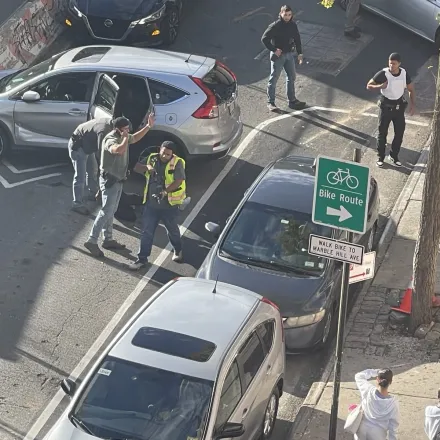
An Immigration and Customs Enforcement officer shot 28-year-old Oscar Belgal in Manhattan on Thursday, in front of his five-year-old child, sparking protests and criticism of New York City Mayor Zohran Mamdani’s approach to policing and federal immigration enforcement. Mamdani has stated, “We know that ICE is rotten to its core,” and announced the city will investigate the shooting. Despite this, advocates argue the mayor must take further action to limit ICE’s operations within the city, citing legal constraints on his ability to directly prevent federal agents from operating in New York. The NYPD’s response to protests Thursday night drew scrutiny, with rapid responders alleging coordination between police and Homeland Security Investigations personnel, including Pete Gizas, director of the White House National Security Council and Acting Special Agent in Charge of HSI New York, who was observed speaking with NYPD officers and directing HSI personnel.
Mamdani faces criticism from both the left and right. The left argues he has not pursued aggressive NYPD reforms, while the right questions his commitment to supporting the department. Murad Awawdeh, executive director of the New York Immigration Coalition, stated that while Mamdani’s rhetoric is “a great first step,” the city needs to outline “actionable ideas” to prevent similar incidents. Legally, Mamdani’s ability to prevent ICE from operating in New York is limited, though he has taken steps to restrict access to city property and data. Advocates suggest greater control over the NYPD could hinder ICE operations. The department’s presence at Thursday’s protests, and reports of interaction with federal agents, have fueled these concerns.
Our reading is that Mayor Mamdani is facing a complex political situation, caught between demands for stronger action from the left regarding ICE and scrutiny from the right regarding his support for the NYPD. The article highlights a lack of consensus on how to address the situation, with legal limitations hindering Mamdani’s ability to directly control federal agents, and differing interpretations of the shooting itself. The focus on media framing, The Intercept versus Bloomberg, suggests a polarized narrative surrounding the event.
Read the original coverage
💬 Comments
📜 Comment Policy