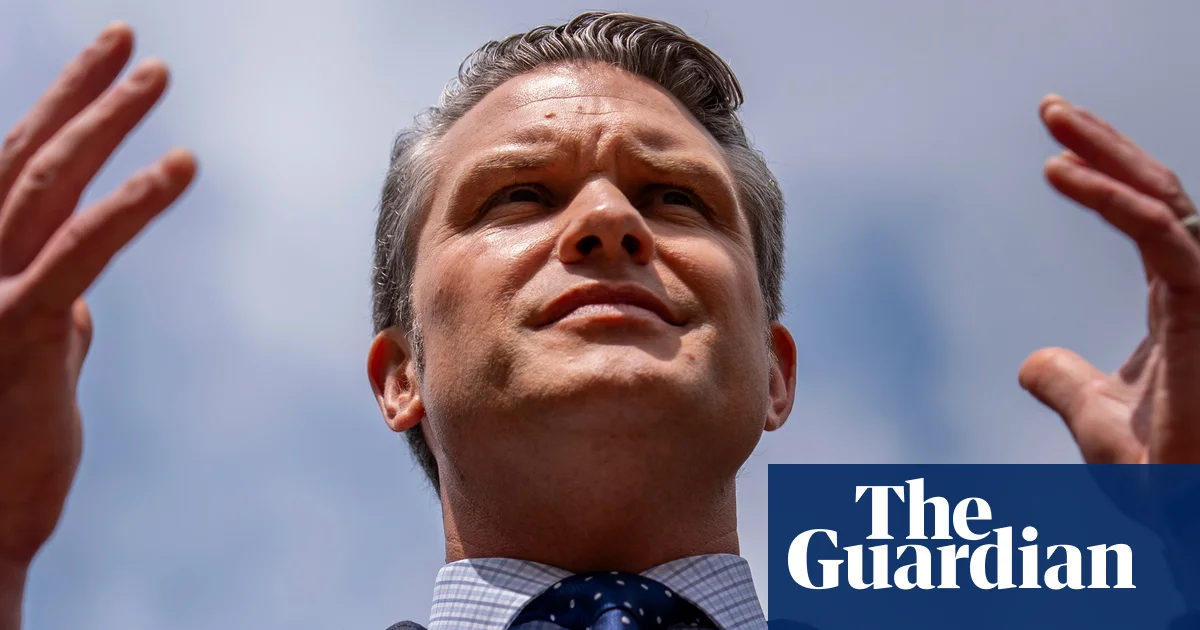
Donald Trump canceled plans by Pete Hegseth to livestream the execution of Nidal Hasan, who killed 13 people and wounded 32 at Fort Hood in 2009, citing concerns about public reaction. Hegseth had announced the planned December 3rd livestream, envisioning a firing squad execution as a response to Hasan’s 2009 attack, which he described as a “radical Islamist attack in uniform.” The proposal drew opposition from multiple sources, including a Catholic archbishop for the military and one of Hasan’s victims, while receiving support from some within Hegseth’s religious network.
Douglas Wilson, the de facto leader of Hegseth’s Communion of Reformed Evangelical Churches (CREC), welcomed the announcement, stating a preference for public executions, aligning with his decades-long advocacy for capital punishment authorized by scripture. Wilson told the Guardian he supports Hasan’s execution and prefers public executions to private ones, citing historical precedent. He acknowledged potential challenges with a livestream, specifically “ghoulish behavior,” but maintained the Pentagon could mitigate it. Wilson stated he had not discussed the plan with Hegseth or anyone in his department.
CREC pastors have long advocated the death penalty for perceived moral infractions, and some have expressed hostility towards Muslims, with one calling Allah a “demon God.” Julie Ingersoll, a professor of philosophy and religion at the University of North Florida, explained that “there was a consensus among the early Christian reconstructionists that the death penalty for certain crimes was part of the Old Testament that is still applicable, and that executions should be public.”
Opposition to the livestream also came from Pope Leo and the archbishop to the US military, Timothy Broglio. A retired general also spoke out against the plan.
Our reading is that the cancellation of the livestream reflects a tension between a desire for strong punishment, and public demonstration of it, and concerns about the potential for negative repercussions. The article highlights a clear division of opinion, with Hegseth and his religious network supporting the broadcast while multiple other groups, including victims and religious leaders, opposed it. Trump’s ultimate decision suggests he weighed these competing pressures and prioritized avoiding a potentially damaging public relations outcome.
Read the original coverage
💬 Comments
📜 Comment Policy