Germany's Ruling Coalition Faces Pressure After State Election Losses
AI-synthesized · Bias removed · Facts only
3 sources: 2 left · 1 center · 0 right
Facts are sacred. Opinion is labelled.
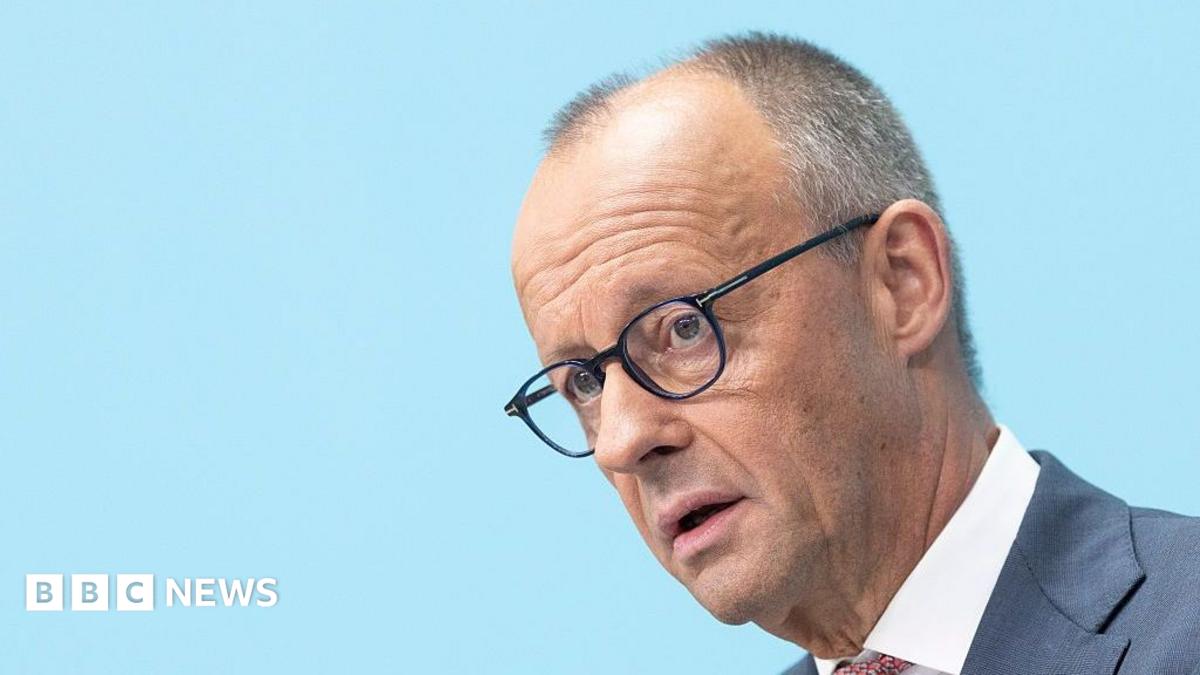
Image: Bbc Us
German Chancellor Friedrich Merz is vowing to maintain his governing coalition following significant losses for his Christian Democratic Union (CDU) in two state elections on Sunday. The hard-right Alternative for Germany (AfD) party achieved its strongest result yet in Mecklenburg-Vorpommern, winning the most votes and preventing the CDU from entering the state parliament. In Berlin, the CDU came second to the hard-left Die Linke party, with the AfD also gaining ground. Merz described the results in Mecklenburg-Vorpommern as “a heavy blow” and a “profound turning point” for the CDU, but insisted the defeats were not solely attributable to his own unpopularity. He pledged to press on with government reforms despite the setbacks.
The election results follow a recent CDU defeat in Saxony-Anhalt, where the AfD also secured a major victory. Alice Weidel, co-leader of the AfD, suggested Merz’s time in office may be limited. While Merz intends to keep the coalition, between the CDU and the Social Democratic Party (SPD), intact for the sake of Germany’s “democratic future,” the recent electoral defeats have fueled speculation about a potential mid-term “chancellor swap.” Merz has faced months of poor approval ratings, and the CDU’s vote share was halved in Saxony-Anhalt two weeks prior to the latest elections.
Where they differ
- BBC and France24 both emphasized Merz’s vow to hold the coalition together, while RFI focused on his commitment to pushing forward with reforms.
- BBC included a direct quote from AfD co-leader Alice Weidel predicting Merz’s departure, a detail not present in the other reports.
- RFI highlighted that the planned reforms could be 'painful', a characterization absent from the BBC and France24 coverage.
What is not yet known
- The extent to which Merz's low approval ratings contributed to the election results remains unclear, as Merz himself downplayed their significance.
- The specific nature of the government’s planned reforms, and the potential impact of those reforms, were not detailed.
Background
- The Alternative for Germany (AfD) is a hard-right party that has been gaining support in recent years, particularly in eastern Germany [Fact Refinery, 2026-09-07].
- Friedrich Merz is the current Chancellor of Germany and leader of the Christian Democratic Union (CDU), and has been in power for 16 months [Fact Refinery, 2026-09-20].
- In the recent Saxony-Anhalt state election, the AfD achieved a historic victory, winning 43.8% of the vote, while the CDU suffered a significant loss, receiving only 17.2% [Fact Refinery, 2026-09-07].
- Prior to these recent losses, the CDU had governed Saxony-Anhalt for 24 years [Fact Refinery, 2026-09-07].
- Germany’s domestic intelligence agency classifies the AfD in Saxony-Anhalt as a right-wing extremist group, a designation the party rejects [Fact Refinery, 2026-09-06].
Our reading
Our reading is that Chancellor Merz’s position is increasingly precarious. While he publicly vows to maintain the governing coalition, the repeated electoral defeats, particularly the AfD’s win in Mecklenburg-Vorpommern, demonstrate a clear erosion of public support for the CDU. The mentions of a “chancellor swap” and Alice Weidel’s prediction suggest a growing expectation, both within and outside the CDU, that Merz may not be able to lead the party much longer.
What to watch
- The outcome of the CDU’s internal crisis meeting, scheduled in response to the election results, for signs of internal dissent or a formal challenge to Merz’s leadership [News outlets reporting on CDU internal meetings].
- The official results of government formation talks in Mecklenburg-Vorpommern, to see if the AfD can overcome the “firewall” and form a governing coalition [State election authorities in Mecklenburg-Vorpommern].
- Chancellor Merz’s approval ratings in the coming weeks, to gauge whether the recent election results have further damaged his standing with the public [Regular polling data from German polling agencies].
💬 Comments
📜 Comment Policy