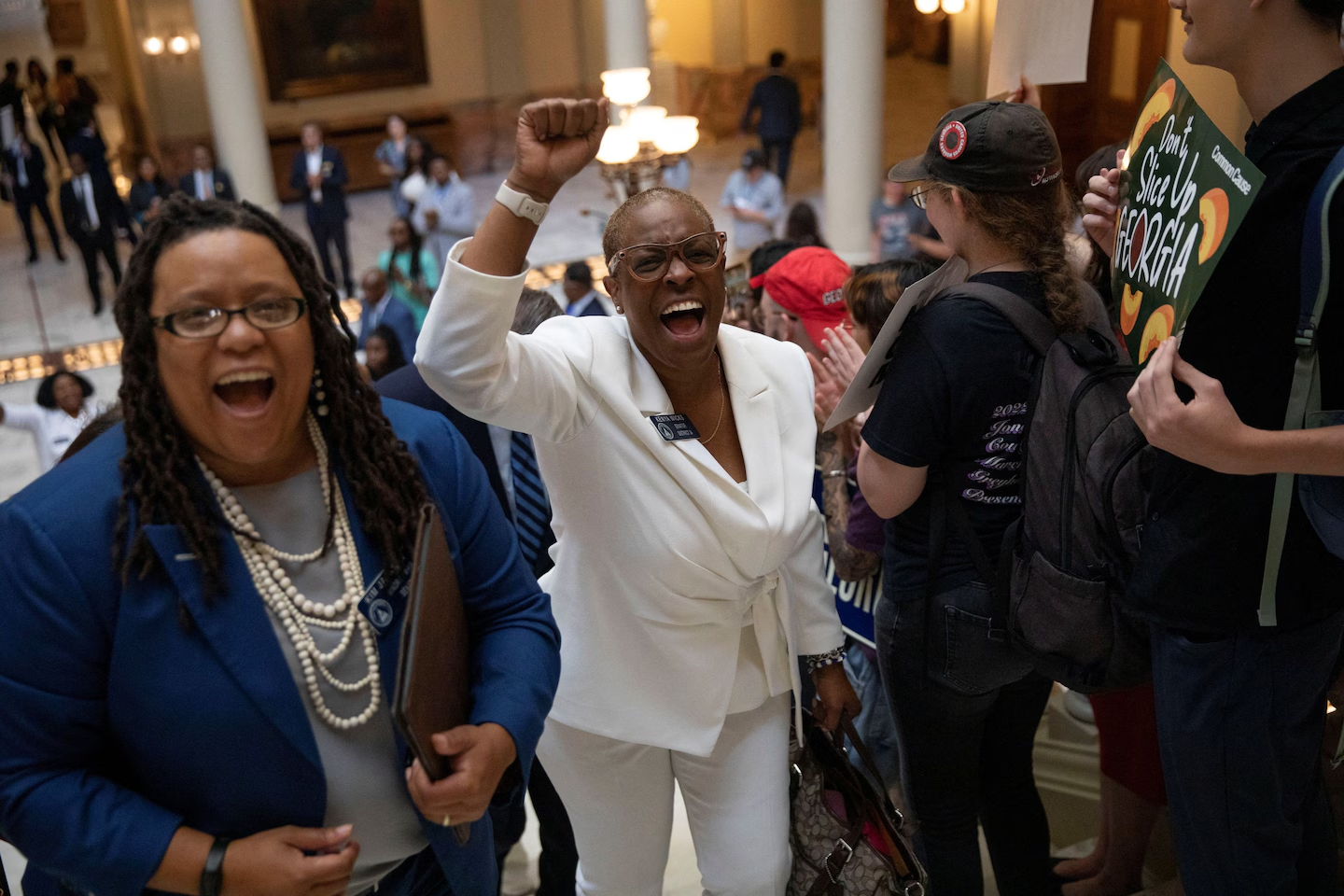
Georgia lawmakers have abandoned a legislative plan that would have redrawn state House districts, a move that effectively ends the Republican effort to secure additional seats in the upcoming elections. The decision comes after Governor Brian Kemp called a special session for the purpose of allowing Republicans to potentially gain one or more additional House seats ahead of the 2028 elections. However, during this special session, lawmakers ultimately pulled the plug on the initiative.
The redistricting effort had drawn significant attention and criticism regarding its potential impact on minority representation. A report from The Washington Post highlighted that the proposed plan would have hurt Black representation within the state's legislative body. This concern was a central point of contention surrounding the special session, which was convened specifically to address the partisan balance of power in the Georgia House.
Conversely, perspectives from right-leaning outlets framed the issue differently. The Federalist published an exclusive report titled "Exclusive: Redistricting Initiative Calls On ‘Pathetic’ Georgia GOP To Redraw Affirmative Action Map." In this coverage, the outlet criticized the current state of the Georgia Republican Party, using strong language to describe their actions or inactions regarding the redistricting map. The Federalist's reporting focused on the internal dynamics within the GOP and the specific arguments made by proponents of the redistricting effort who viewed the existing maps as problematic.
The divergence in coverage highlights the differing priorities attached to the special session. While Governor Kemp’s initial call for the session was explicitly tied to the strategic goal of securing additional Republican seats, the subsequent withdrawal of the plan suggests a lack of consensus or sufficient support among lawmakers to proceed with the redraw. The Washington Post’s framing emphasized the civil rights implications, specifically noting the negative effect on Black representation. Meanwhile, The Federalist’s framing focused on the political maneuvering and the perceived failures of the Georgia GOP leadership.
No further details were provided in the source cluster regarding specific vote counts, individual lawmaker statements beyond the attributions to the outlets, or alternative proposals that may have been discussed during the special session. The primary factual outcome remains that the redistricting plan was dropped by lawmakers, preventing the intended change in House seat allocation for the 2028 elections.
The abandonment of the plan marks the end of this specific legislative attempt to alter the political landscape of Georgia’s House districts. Governor Kemp’s special session concluded without the adoption of the new maps. The implications for the 2028 elections will now be based on the existing district boundaries, as the Republican effort to expand their majority through redistricting has been halted by the lawmakers themselves.
The story illustrates the complex interplay between partisan strategy and representation concerns in state-level politics. While the Republican leadership sought to leverage a special session for electoral gain, the ultimate decision to drop the plan indicates internal constraints or strategic recalculations within the Georgia GOP. The contrasting narratives from The Washington Post and The Federalist provide insight into how different political spectrums interpret the same legislative event: one focusing on the loss of minority representation opportunities and the other on the perceived ineptitude of the party leadership.
Read the original coverage
💬 Comments
📜 Comment Policy