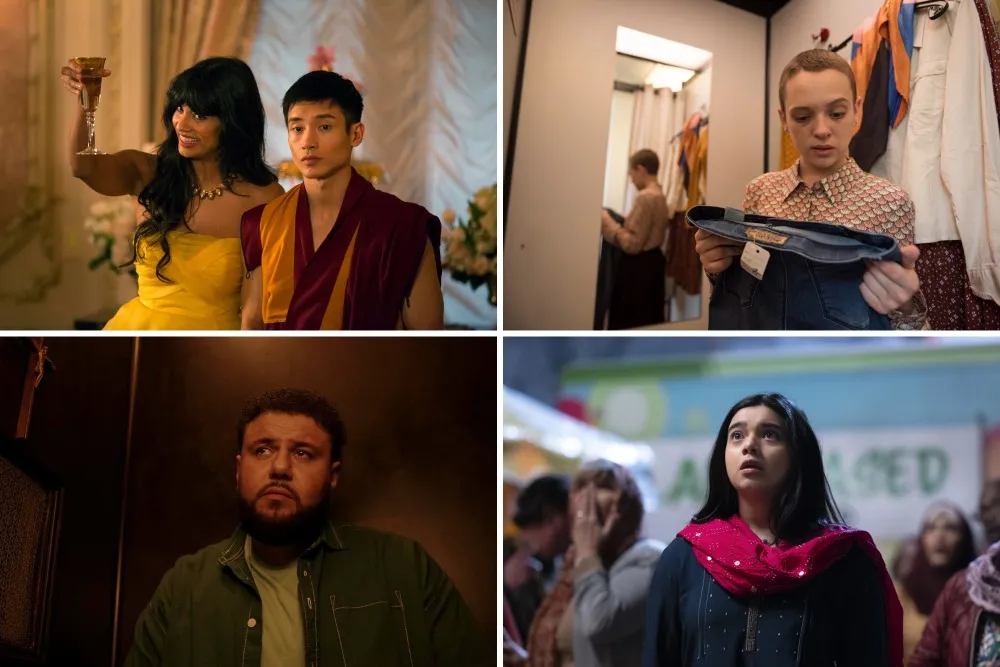
A new study from The Center for Scholars & Storytellers at UCLA reveals that Gen Z and Gen Alpha audiences are craving more nuanced and realistic portrayals of religion and spirituality in media. Over 2,000 people aged 14-24 were surveyed, and a majority expressed sensitivity to how their beliefs are represented on screen.
According to the study, only around 40% of respondents felt that people who share their beliefs or worldviews are accurately represented in the media. A significant 70% of religious respondents stated that the portrayal of their religion or spirituality in media impacts how others treat them. Notably, over 97% of religious respondents and 80% of nonreligious respondents reported being spiritually moved, inspired, or comforted by a piece of media.
The study identified key requests from young audiences for storytellers: increased representation both on-screen and behind the scenes, a focus on the everyday aspects of religion rather than extreme examples, acknowledgement of diversity within religious groups, and the creation of complex spiritual characters who are not simply token figures. Yalda T. Uhls, Ph.D., founder and CEO of CSS, stated, “We heard from young people that they wanted to see grappling with faith.” She explained that young adults are often questioning their faith as they leave home and seek safe spaces for honest discussion, but are frustrated by what they perceive as performative religion online.
Uhls, also a professor in UCLA’s psychology department and a former studio executive at MGM and Sony, believes that incorporating spirituality-forward storylines could significantly engage younger audiences. At a recent Future of Faith event presenting the findings, executives from Netflix, Amazon, NBC, and Lionsgate were in attendance, indicating industry interest. Lionsgate already recognizes the financial potential of purely religious films but sees opportunities to integrate faith-based themes into broader content. Uhls says respondents cited numerous series and films they believed were positive examples of what they were looking for.
Read the original coverage
💬 Comments
📜 Comment Policy