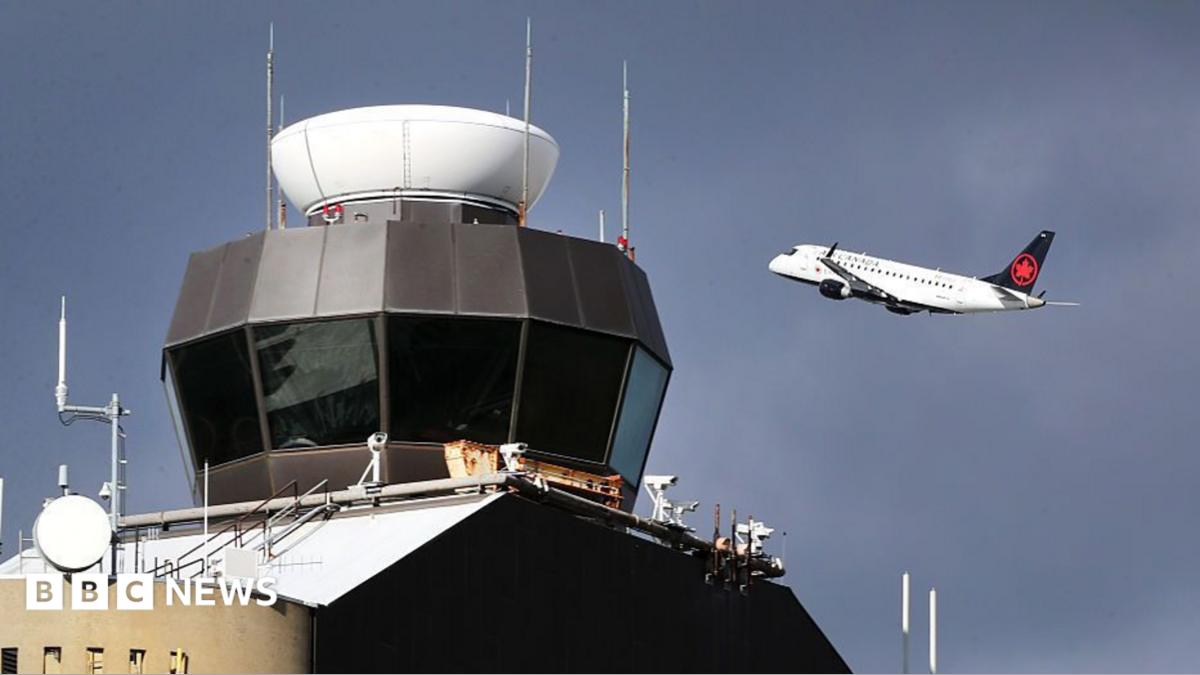
Hundreds of flights were delayed at major US airports Monday after construction workers accidentally severed a backup fiber optic cable critical to air traffic control systems. The damage impacted the Terminal Radar Approach Control system, causing ground stops and delays at airports in New York, Pennsylvania, New Jersey, and Massachusetts. Newark Liberty International Airport experienced the most significant disruptions, with 267 departing and 257 arriving flights delayed. The incident stemmed from work conducted by Amtrak construction crews in New Jersey, according to Transportation Secretary Sean Duffy. While a primary circuit had already failed, the issue was not discovered until the backup cable was cut. Verizon, the cable’s owner, is working to repair the damage, estimated to take approximately 13 hours, but states it bears no responsibility for the incident. The disruption occurred ahead of the UN General Assembly in New York City, potentially impacting travel for world leaders. The affected Philadelphia air traffic control facility experienced similar communication outages in May 2025 and last year, renewing attention on the aging US air traffic control infrastructure. Congress approved $12.5 billion last year to address these issues, and the FAA is currently testing an AI system to predict and mitigate scheduling conflicts.
Officials revealed the severed cable was a backup, and the error was only discovered after the primary circuit failed. Flightradar24 reported average delays of 112 minutes at Newark. Some airlines are allowing passengers to change flights without fees. The FAA is working to restore the key connection by installing a new circuit on the primary line while also repairing the backup fiber optic cable.
This disruption follows previous issues at the same Philadelphia facility, highlighting ongoing concerns about the reliability of the US air traffic control system. The FAA is also testing a new AI system in the Washington, D.C., area to help manage air traffic, but this system was not a factor in Monday’s delays.
Our reading is that this incident, while accidental, underscores the vulnerability of critical US air traffic infrastructure. The fact that a backup system failed *after* the primary system did, and that similar issues have occurred at the same facility recently, suggests systemic problems beyond a single unfortunate event. The scale of the disruption, impacting major airports and potentially travel for the UN General Assembly, highlights the significant consequences of these vulnerabilities.
Read the original coverage
💬 Comments
📜 Comment Policy