Federal Reserve Raises Interest Rates Amid Shifting Economic Landscape
AI-synthesized · Bias removed · Facts only
2 sources: 1 left · 0 center · 1 right
Facts are sacred. Opinion is labelled.
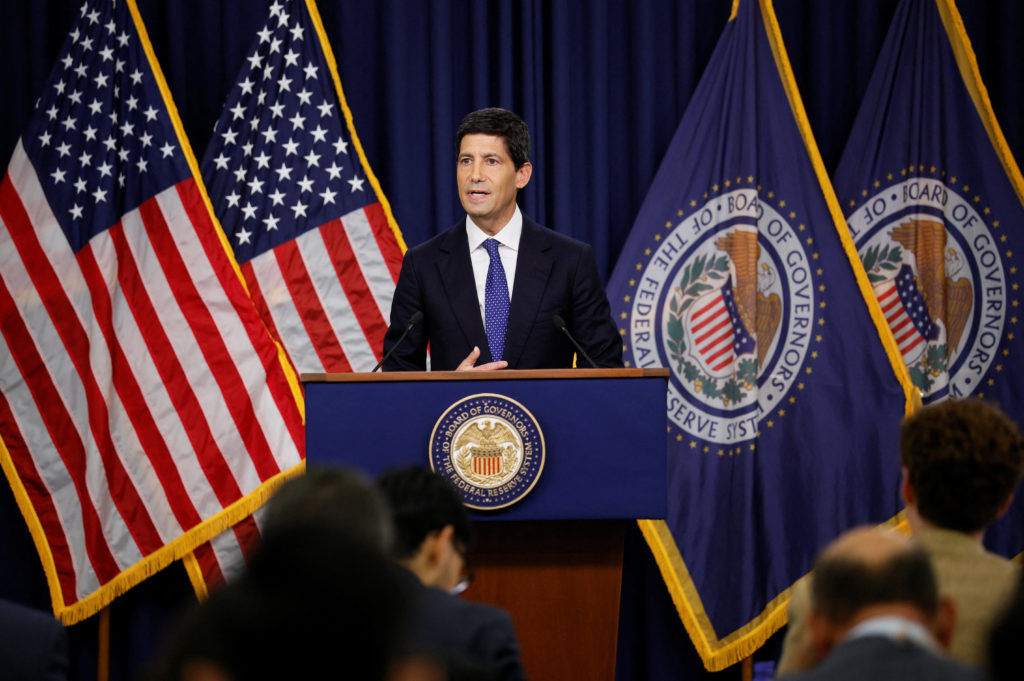
Image: Pbs Newshour
The Federal Reserve on Wednesday raised its benchmark interest rate, signaling a departure from the low-interest, low-inflation environment that followed the Great Recession. This move reflects a new economic reality of persistent inflation and accelerating growth.
Economists note that while the Federal Reserve’s rate hike impacts borrowing costs, broader economic trends are more significant in the long term. The economy is currently experiencing steady growth. Former President Donald Trump has criticized the Federal Reserve following the rate increase. The shift marks the end of a nearly 15-year period characterized by low interest rates and controlled inflation, ushering in an era of higher prices and rates. The decision comes as the economy continues to grow at a steady pace, despite inflationary pressures.
While the sources agree on the rate hike and the broader economic shift, President Trump’s reaction is highlighted by right-leaning coverage, while left-leaning sources focus on the economic factors driving the decision.
Where they differ
- Newsmax emphasized former President Trump’s criticism of the Federal Reserve.
- PBS NewsHour focused on the broader economic factors driving the rate hike and the shift in economic conditions.
- Newsmax noted economists' views that broader economic trends outweigh the Fed's influence on long-term borrowing costs.
Background
- The Federal Reserve raised its benchmark interest rate by 0.25% to a range of 3.75% to 4.00% in September 2026, the first increase since July 2023, to combat persistent inflation [Fact Refinery, 2026-09-17].
- Prior to this recent series of hikes, the US had experienced a nearly 15-year period of low interest rates and controlled inflation [Fact Refinery, 2026-09-16].
- In August 2026, the U.S. economy added 162,000 jobs, exceeding expectations, while the unemployment rate remained at 4.1% [Fact Refinery, 2026-09-04].
- Inflation slowed in July 2026, rising 3.4% over the past year, driven by declines in gasoline and grocery prices, though it remains above the Federal Reserve’s 2% target [Fact Refinery, 2026-08-12].
Our reading
Our reading is that the Federal Reserve is actively attempting to navigate a shift in the economic landscape, moving away from a long period of low interest rates. While acknowledging economic growth, the central bank appears more concerned with addressing persistent inflation, despite criticism from former President Trump. The differing coverage highlights a predictable pattern: right-leaning outlets prioritize the political reaction, while left-leaning sources emphasize the underlying economic factors.
What to watch
- The next Federal Open Market Committee meeting and any indication of future rate hikes or a pause in increases [Federal Reserve website].
- Inflation figures released by the Department of Labor to see if the downward trend from July 2026 continues [Department of Labor website].
- Any further statements from former President Trump regarding the Federal Reserve or monetary policy [Truth Social, news outlets].
💬 Comments
📜 Comment Policy