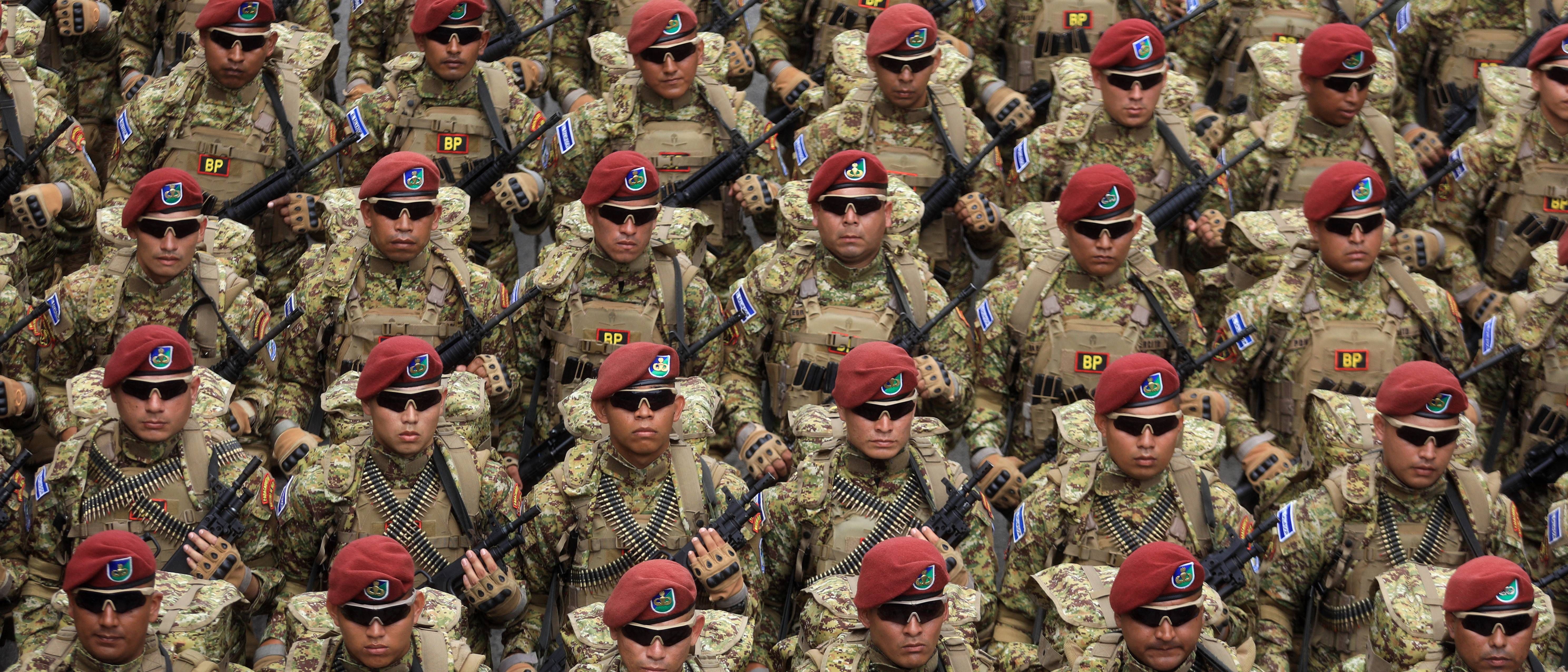
El Salvador Launches Military Operation in Haiti to Rescue Kidnapped Technicians, Threatens Escalation
Politics
✓ Neutralized●○●
1h ago

El Salvador Launches Military Operation in Haiti to Rescue Kidnapped Technicians, Threatens Escalation

AI-synthesized · Bias removed · Facts only
3 sources: 1 left · 0 center · 2 right
Image: Daily Caller

El Salvador’s President Nayib Bukele launched a military operation in Haiti Wednesday to rescue four Salvadoran aviation technicians kidnapped by gangs in the Port-au-Prince area, warning of a significantly stronger response if they are not released unharmed. The technicians were part of an international mission providing medical evacuations and were seized while returning from a market. Bukele stated the operation began after the armored vehicle carrying the technicians came under fire three days prior, marking the first major attack since the deployment of an international gang suppression force. He issued a direct message to the gang leaders, demanding the technicians’ safe return and threatening further action if they are harmed.

Haiti’s government has declared the technicians’ release an “absolute priority” and is coordinating with the Gang Repression Force to strengthen operations. The force, comprised of personnel from El Salvador, Chad, Jamaica, and Guatemala, is still active in the area where the attack occurred. While the number of personnel authorized by the U.N. Security Council is up to 5,550, the current force has over 2,000 troops. El Salvador extended its participation in the force for an initial 12 months beginning Oct. 2.

Bukele emphasized that the Salvadoran mission consists solely of pilots and technical personnel focused on medical evacuations, not combat. He warned that the current attack was minor compared to what could follow if the hostages are not released, stating, “We have already finished with the gangs in El Salvador, and we can finish with you too.” He shared video footage of armored vehicles with shattered windows as evidence of the attack. No group has claimed responsibility for the kidnapping. The incident highlights the power gangs wield over an estimated 70% of Port-au-Prince, as Haiti prepares for its first general election in over a decade.

Where they differ

  • The Daily Caller and The Blaze both emphasized Bukele’s direct address to the gangs in Haitian Creole, while NPR focused on the broader context of the international gang suppression force.
  • The Blaze highlighted Bukele’s previous success in combating gangs within El Salvador, framing it as a warning to Haitian gangs, a point less prominent in NPR and the Daily Caller.
  • The Daily Caller included the full text of Bukele’s message on X, while NPR and The Blaze excerpted portions.

What is not yet known

  • Whether the Salvadoran soldiers are still alive remains unconfirmed.
  • The identity of the gangs responsible for the kidnapping has not been established.
  • The specific nature of any further action Bukele intends to take, beyond the current military operation, is unclear.

Background

  • El Salvador deployed personnel to Haiti as part of a multinational Gang Repression Force authorized by the U.N. Security Council, with a potential of up to 5,550 troops [Fact Refinery, 2026-05-12].
  • Gang violence has been a persistent issue in Haiti, displacing residents and disrupting essential services, particularly in Port-au-Prince [Fact Refinery, 2026-05-12].
  • A human rights report detailed failures by Haitian police contributing to a recent massacre, highlighting reduced security personnel and ignored requests for reinforcements [Fact Refinery, 2026-09-18].
  • The Trump administration previously explored using ships for deportations, potentially shifting costs from the Department of Homeland Security to the Department of Defense [Fact Refinery, 2026-10-09].

Our reading

Our reading is that President Bukele has taken a unilateral and escalatory step in response to the kidnapping of Salvadoran technicians, demonstrating a willingness to act decisively, and potentially outside of established protocols, to protect his citizens. The emphasis on his prior success combating gangs in El Salvador, coupled with the direct threat to Haitian gangs, suggests a deliberate attempt to project strength and deter further attacks. The differing coverage highlights the focus on either the direct communication or the broader context of international intervention.

What to watch

  • Confirmation of the technicians’ status, alive or deceased, would indicate the immediate success or failure of the operation [unconfirmed reports, various news outlets].
  • Identification of the responsible gang(s) would clarify the specific actors Bukele is targeting and potentially reveal existing alliances or conflicts [Haitian authorities, ongoing investigation].
  • Any further military movements by El Salvador, beyond the initial operation, would signal a broader commitment to intervention and potential escalation [Salvadoran Ministry of Defense, official statements].
Was this useful?

Read the original coverage

💬 Comments

📜 Comment Policy