DOJ List of Alleged Noncitizen Voters Contains Errors, Analysis Finds
AI-synthesized · Bias removed · Facts only
3 sources: 1 left · 0 center · 2 right
Facts are sacred. Opinion is labelled.
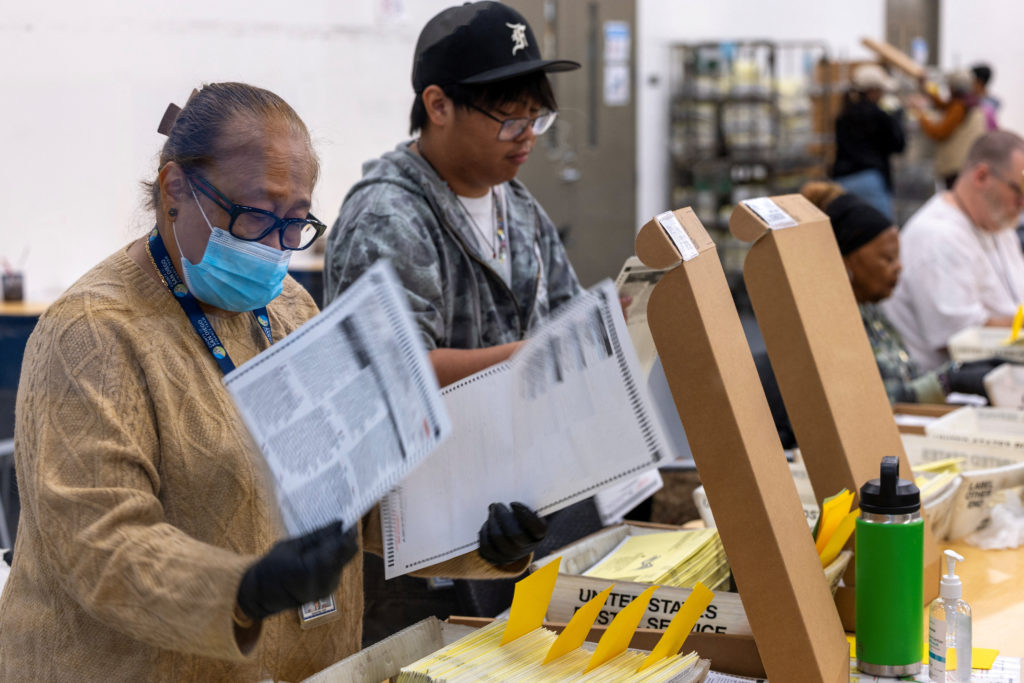
Image: Pbs Newshour
More than 40% of the names on a list of alleged noncitizen voters in California compiled by the Department of Justice (DOJ) cannot be found in the state’s current voter rolls, according to a legal filing Saturday by data analysts at the University of California, Los Angeles. The analysis, the first outside review of the list, also found that thousands of U.S. citizens appear to be flagged as ineligible to vote. The DOJ has used the list to threaten prosecution of election officials, a tactic multiple judges have rejected as unconstitutional. The UCLA analysts, working with the Coalition for Humane Immigrant Rights (CHIRLA), analyzed the 20,930 names the DOJ demanded California election officials separate during the vote count. Their review found 8,880 names, 42% of the list, do not match anyone in California’s current voter file. At least 22 names on the list are confirmed U.S. citizens, and many more may correspond to citizens. Xavier Becerra, the Democratic candidate for California governor and an advisor to the UCLA Voting Rights Project, cosigned the filing, which states the list endangers eligible voters. The Trump administration had previously objected to sharing the list, calling it a “fishing expedition.” On Saturday, President Donald Trump lamented the legal rulings against his effort to separate votes, claiming his Justice Department found “20,000, but potentially Hundreds of Thousands, and maybe even Millions” of fraudulent votes. The administration also urged Washington state to remove 400 possible noncitizens from its rolls.
Where they differ
- The Washington Times and Washington Times Politics led with the percentage of names not found on California’s voter rolls, framing it as a challenge to the DOJ’s claims.
- PBS Newshour and The Independent emphasized the finding that thousands of U.S. citizens were also flagged as ineligible voters.
- The Independent included details about the Trump administration’s objections to sharing the list, characterizing it as a ‘fishing expedition.’
- The Washington Times included President Trump’s social media post about the legal rulings and his claims of widespread voter fraud, while other outlets did not.
What is not yet known
- The full extent to which the errors on the list impact voter eligibility remains unclear.
- The methodology used by the DOJ to compile the list of alleged noncitizen voters has not been publicly detailed.
Background
- The U.S. Department of Justice, under the direction of President Donald Trump, has been actively investigating alleged voter fraud [Fact Refinery, 2026-10-31].
- Prior to this report, the DOJ sought to isolate ballots in Alaska’s Senate race due to concerns about voter confusion stemming from a candidate sharing a name with the incumbent [Fact Refinery, 2026-10-31].
- A federal judge recently limited the DOJ’s ability to contact election workers, preventing intimidation or coercion related to alleged voter ineligibility [Fact Refinery, 2026-10-31].
- Clumped isotope thermometry is a technique used to determine past temperatures by analyzing the bonding of isotopes in materials like tooth enamel [Fact Refinery, 2026-09-20].
Our reading
Our reading is that the UCLA analysis casts significant doubt on the validity of the DOJ’s claims regarding widespread noncitizen voting. The high percentage of names absent from current voter rolls, combined with the inclusion of U.S. citizens on the list, suggests systemic errors. The fact that the DOJ used this flawed list to threaten prosecution, a tactic already rejected by courts, indicates a potentially aggressive and inaccurate approach to election oversight.
What to watch
- The DOJ’s response to the UCLA analysis and whether they will publicly address the identified errors [Department of Justice website].
- Any further legal challenges to the DOJ’s actions regarding voter eligibility, particularly if the department continues to pursue similar tactics [court records].
- The methodology the DOJ used to compile the list, if and when it is publicly released [Freedom of Information Act request].
💬 Comments
📜 Comment Policy