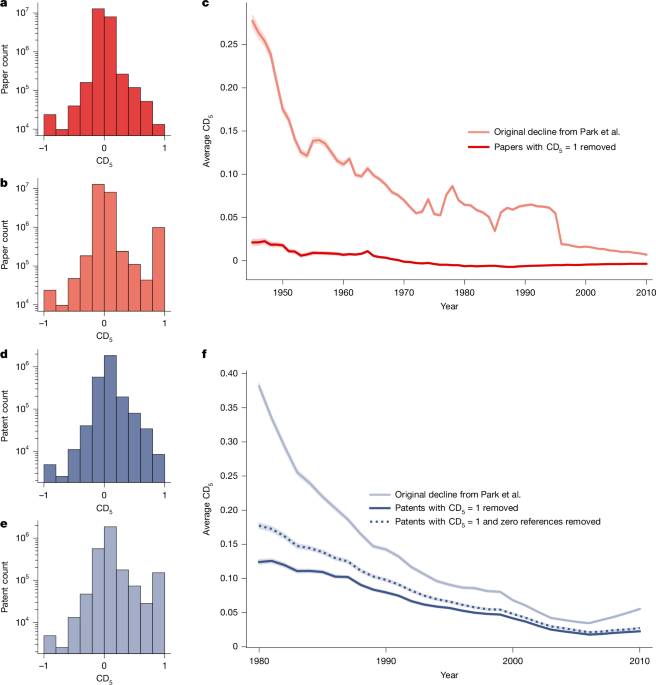
A new study published in *Nature* suggests that artifacts within datasets used to measure disruption may be partially responsible for observed declines. Researchers found that the way data is collected and processed can influence reported trends, potentially leading to inaccurate conclusions about the rate of disruptive events.
The research, published online on August 12, 2026, highlights a critical issue in how we understand change across various fields. The study’s findings indicate that observed decreases in disruption might not solely reflect actual reductions in innovative activity or groundbreaking events. Instead, these declines could be partially driven by the characteristics of the datasets themselves.
The article, with DOI 10.1038/s41586-026-10787-y, does not elaborate on specific types of dataset artifacts but points to their potential influence on measured trends. This suggests a need for greater scrutiny of data collection and analysis methods when assessing the pace of disruption in any field.
We don't rate truth. We strip the spin and show you which perspectives covered the story. You decide.
Read the original coverage
💬 Comments
📜 Comment Policy