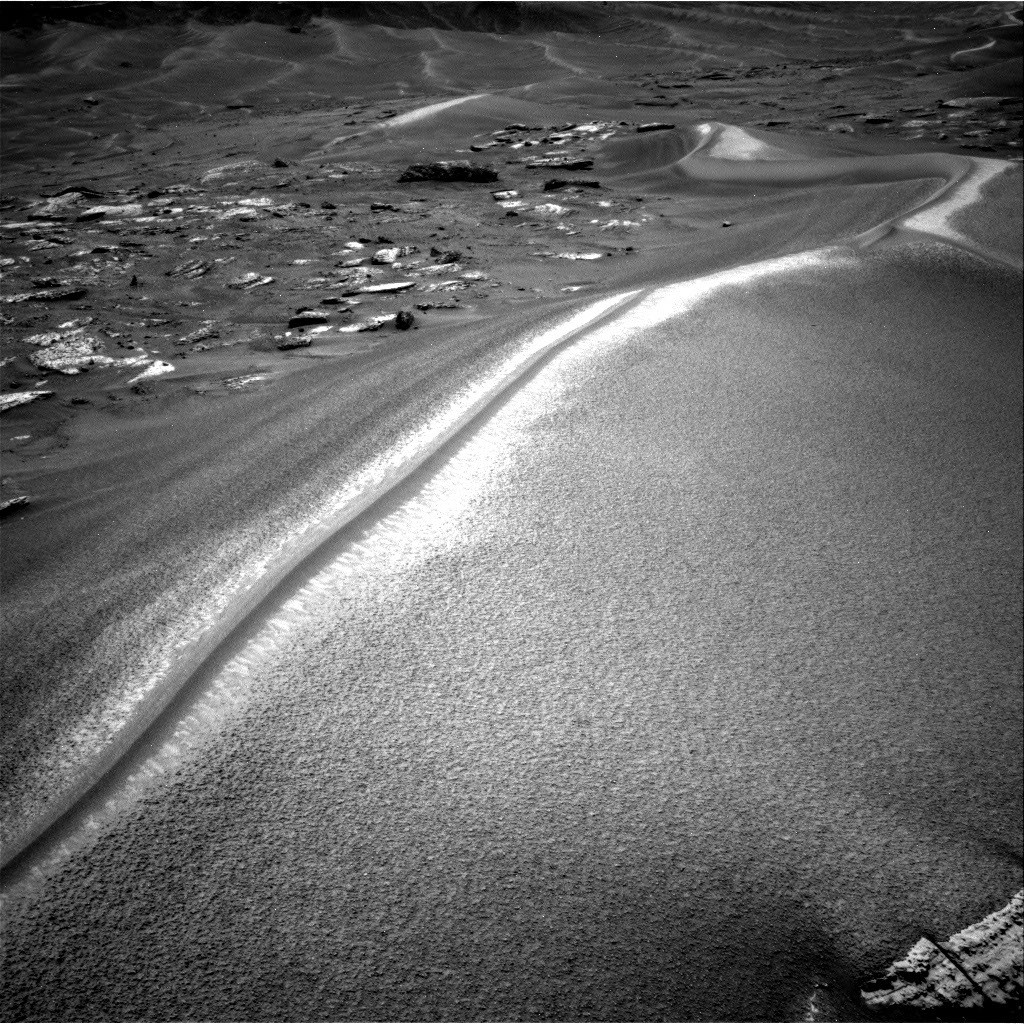
NASA’s Curiosity rover has reached a significant milestone, celebrating 5,000 Martian days (sols) of operation and surpassing 1 kilometer in elevation gain since landing in Gale Crater. Senior Research Scientist William Farrand detailed the rover’s recent activities, which include examining a wind-formed ripple dubbed “Chocolatal.”
Curiosity exceeded the elevation of Spirit rover’s Husband Hill climb in Gusev crater (106 meters, or about 348 feet) by reaching over 1000 meters (about 0.62 miles) above its landing site. This achievement occurred during a period of scientific investigation focused on a long, narrow ripple feature named “Chocolatal.” Scientists aim to determine if Chocolatal is a “transverse aeolian ridge” (TAR), a common feature observed on Mars from orbit.
The rover’s examination of Chocolatal will focus on its composition and formation, comparing it to lower-elevation TARs to identify any differences in grain size or layering. Researchers will investigate how the ridge formed, whether it is currently active, and how it has migrated or stabilized. Curiosity encountered interesting bedrock along its path, analyzing dark-toned coatings with its ChemCam Laser Induced Breakdown Spectroscopy (LIBS) instrument.
During the planning week, Curiosity used its Mastcam and ChemCam instruments to create mosaics of layers in buttes and distant sand ripples. The rover drove into Chocolatal, collecting data from a trenched region. ChemCam analyzed sand at the base of the ripple and nearby bedrock, while Mastcam captured high-resolution images.
Read the original coverage
💬 Comments
📜 Comment Policy