Congo Ebola Outbreak Surpasses 9,000 Cases, Raises Concerns About Healthcare Access
AI-synthesized · Bias removed · Facts only
2 sources: 0 left · 1 center · 1 right
Facts are sacred. Opinion is labelled.
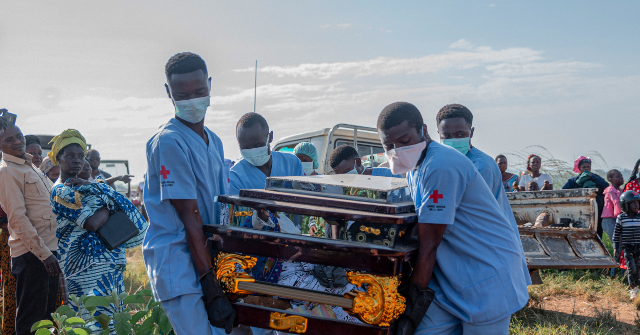
Image: Cbs News
The Ebola outbreak in the Democratic Republic of the Congo has reached 9,066 confirmed cases and 4,381 fatalities, becoming the worst in the country’s history. Health officials fear the actual number of infections could be two to three times higher than reported, and the outbreak is spreading to more health zones within the DRC. While the outbreak has been largely confined to the DRC, with limited cases reported in neighboring countries like Kenya, a concerning trend is emerging: women and children are increasingly avoiding healthcare facilities in eastern Congo due to fears of contracting Ebola or being deliberately infected by medical staff. This has led to a 70 percent increase in maternal deaths in the Ituri province from May to July.
Health officials cite political unrest, shortages of medical resources, and civilian distrust as contributing factors to the outbreak’s spread. A nurse in Butembo reported that patients believe the medicines they are given contain the Ebola virus. Raoul Kamadjeu, a public health emergency expert with UNICEF, warned of the indirect effects of the outbreak on health, nutrition, child protection, and insecurity, and expressed concern about the decline in vaccination rates for other diseases like measles. One pediatrician in Butembo recounted an instance of a mother breaking down in tears when told her son needed an X-ray, fearing deliberate infection. The Kenyan health ministry reported two linked Ebola cases, both originating from individuals who contracted the disease in the Congo, with 113 of 128 contacts traced and 108 quarantined. The outbreak has already surpassed the 2014-2016 West African epidemic in terms of total cases, which claimed over 11,000 lives.
Where they differ
- Breitbart emphasized the fear among women and children, stating they are 'afraid to seek care,' while CBS News did not highlight this aspect with the same level of detail.
- Breitbart framed the outbreak as potentially eclipsing the 2014-2016 West African epidemic, while CBS News reported the current outbreak is the worst in DRC history by case count but did not make a direct comparison to the West African epidemic in its lead.
- Breitbart reported the health ministry stated total confirmed cases reached 9,066 with 4,381 fatalities, while CBS News reported the death toll passed 4,400 with cases on the rise, indicating a difference in the reported numbers.
What is not yet known
- The extent to which political unrest directly impacts the spread of Ebola remains unclear.
- The specific measures being taken to address the decline in vaccination rates for other diseases were not detailed.
Background
- The Democratic Republic of the Congo is experiencing its worst Ebola outbreak in its history, with the Bundibugyo strain currently lacking approved vaccines or treatments [Fact Refinery, 2026-10-13].
- As of October 6, 2026, the outbreak had spread to four countries: DRC, Uganda, Kenya, and France, with 8,463 cases and 4,082 deaths reported [Fact Refinery, 2026-10-06].
- Ongoing conflict between rebel groups and government forces in the DRC hinders healthcare resource transport, and mistrust of healthcare workers exists within local communities [Fact Refinery, 2026-10-13].
- The Trump administration deported over 25,000 people to third countries, raising human rights concerns about sending individuals to nations with no connection to their origin [Fact Refinery, 2026-09-21].
Our reading
Our reading is that this outbreak is not simply a medical crisis, but one deeply interwoven with political instability and eroding public trust. The increasing avoidance of healthcare, particularly by women and children, suggests a breakdown in the social contract and a fear that extends beyond the disease itself. The reported discrepancies in case and fatality numbers across outlets highlight the difficulty in accurately assessing the scale of the problem, and the potential for underreporting due to these factors.
What to watch
- The WHO clinical trial evaluating vaccine efficacy against the Bundibugyo strain, to determine if a viable preventative measure is developed [Fact Refinery, 2026-10-13].
- Vaccination rates for other diseases like measles, to see if the decline continues and indicates a broader collapse of public health infrastructure [Raoul Kamadjeu quote, article text].
- Whether the Kenyan health ministry releases updated contact tracing numbers, to assess the success of their quarantine efforts [Kenyan health ministry report, article text].
💬 Comments
📜 Comment Policy