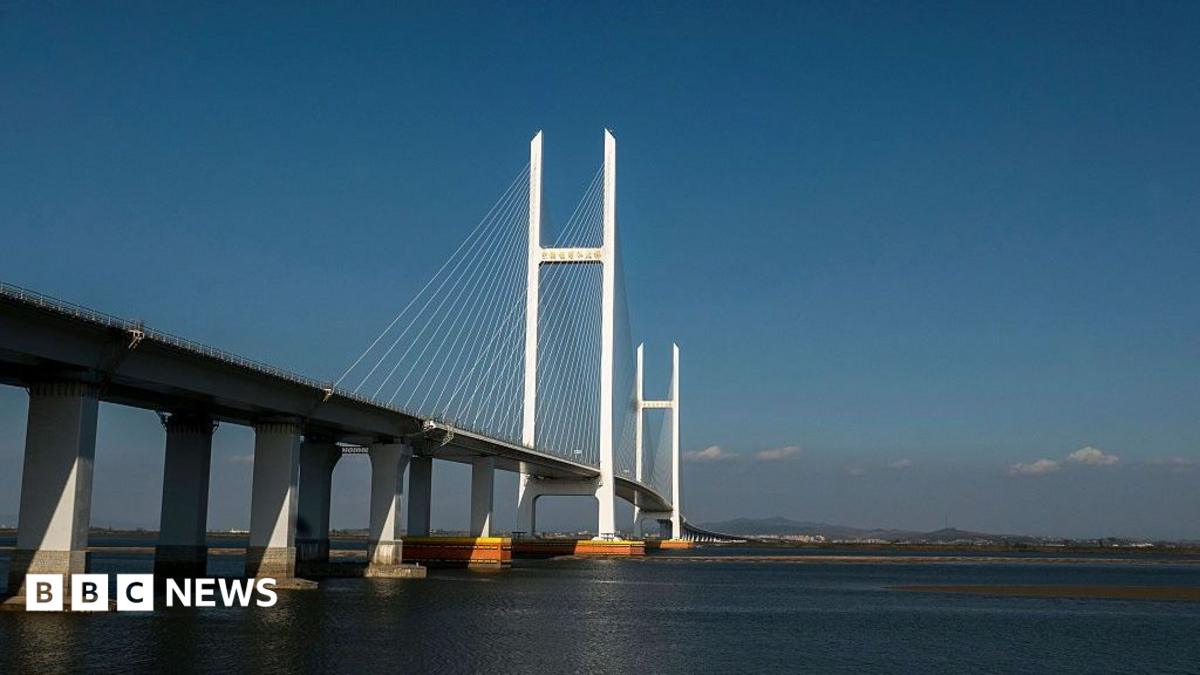
A new 3km bridge connecting China and North Korea opened on Thursday, twelve years after construction was completed, as trade between the two countries recovers. The New Yalu River Bridge is intended to become the primary land route for trade, replacing an aging structure built during the Japanese occupation. China is North Korea’s largest trading partner, and bilateral trade reached $2.7 billion last year, returning to pre-pandemic levels. While the bridge’s opening signals warming relations, experts anticipate a gradual increase in trade due to ongoing UN sanctions and North Korea’s concerns about over-reliance on Chinese imports.
The launch follows a similar opening of a bridge between North Korea and Russia last month, highlighting a shift in Pyongyang’s alliances. At least 2,300 North Korean soldiers are believed to be fighting for Russia in Ukraine, with Russia supplying North Korea with oil in return, a violation of UN sanctions. This growing relationship with Russia coincides with a more muted response from China regarding North Korea’s nuclear weapons program, a departure from Beijing’s earlier criticism. China’s Foreign Ministry spokesperson Mao Ning described the bridge as an “important facility for connectivity” that will facilitate trade and people-to-people exchanges.
Despite the improved infrastructure, a rapid surge in trade is considered unlikely. Kang Jun-young, a professor of Chinese studies, notes North Korea’s caution about becoming overly dependent on Chinese imports. Lim Eul-chul, a North Korea expert, emphasizes the new bridge will significantly improve the efficiency of transporting heavy cargo compared to the older, narrower bridge. Hundreds of people gathered on the Chinese side of the bridge to celebrate its opening, and trucks bearing both nations’ flags began crossing late Thursday morning.
Our reading is that the opening of this bridge, while presented as a positive development for trade, is occurring within a broader context of North Korea actively cultivating relationships with both China and Russia. The simultaneous strengthening of ties with these two powers, coupled with the reported military support North Korea is providing to Russia, suggests a deliberate shift in Pyongyang’s foreign policy. The article highlights a cautious approach to increased trade, implying that North Korea is aware of the potential for over-dependence and is strategically diversifying its partnerships.
Read the original coverage
💬 Comments
📜 Comment Policy