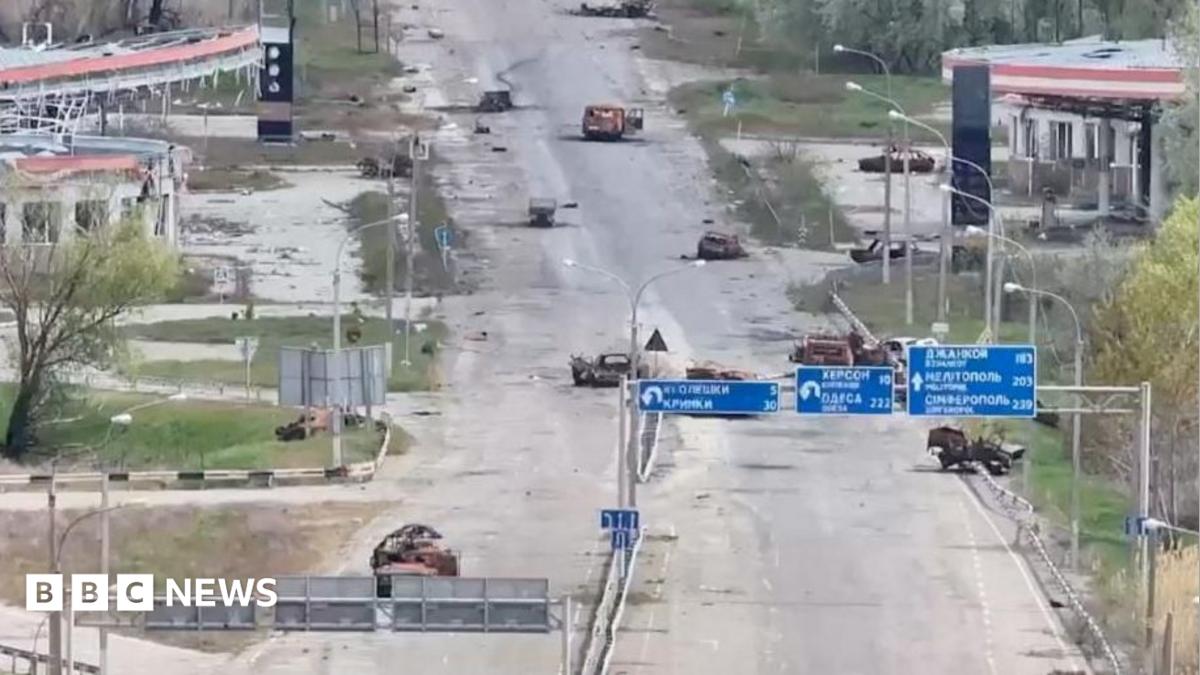
A ceasefire has been extended across Ukraine’s Kherson region, building on a localized truce initially brokered to deliver aid to the Russian-occupied city of Oleshky, where several thousand residents are trapped without food, water, or electricity. The expanded ceasefire, which began Tuesday and is scheduled to last until 22:59 Ukrainian time on Sunday, November 1st, aims to facilitate humanitarian deliveries and evacuations from Oleshky and surrounding areas. Before the war, Oleshky was home to 24,000 people, but has been severely impacted by the destruction of the Kakhovka Dam in 2023, leading to flooding and a complete lack of essential services.
US First Lady Melania Trump and Pope Leo XIV reportedly helped broker the initial ceasefire, with Trump’s representatives playing a key role in its expansion, according to Kremlin spokesman Dmitry Peskov. Ukrainian officials, including Deputy Head of Kherson Oleksandr Tolokonnikov, have confirmed that Russian shelling has stopped in both Ukrainian-held Kherson city and the wider region. Approximately 1,700 to 2,000 people remain in Oleshky itself, with a few thousand more in nearby areas, many resorting to eating garden weeds to survive.
Both sides report that the ceasefire is being observed, with Peskov stating that everything is proceeding “according to plan.” Ukrainian Foreign Minister Andrii Sybiha suggested that a successful ceasefire could “pave the way for other steps in the peace process,” while David Arakhamia, a key official in President Volodymyr Zelensky's parliamentary party, described the truce as the “largest de-escalation since 2022.” Residents have described desperate conditions, with one woman recounting stepping on a landmine and requiring two operations in hospital, fearing she will be unable to join the planned evacuation. Routes out of Oleshky are dangerous, having been mined and subject to drone attacks.
Channel 4 News reported that Russian forces had effectively blockaded Oleshky for months, critically shortening supplies of essential resources.
Our reading is that this expanded ceasefire represents a limited but potentially significant development. The extension, brokered with the involvement of US and Vatican figures, suggests a willingness from all parties to facilitate humanitarian aid to a severely impacted area. The description of the truce as the “largest de-escalation since 2022” implies a notable pause in fighting, even if localized, and a potential, though uncertain, opening for further negotiation.
Read the original coverage
💬 Comments
📜 Comment Policy