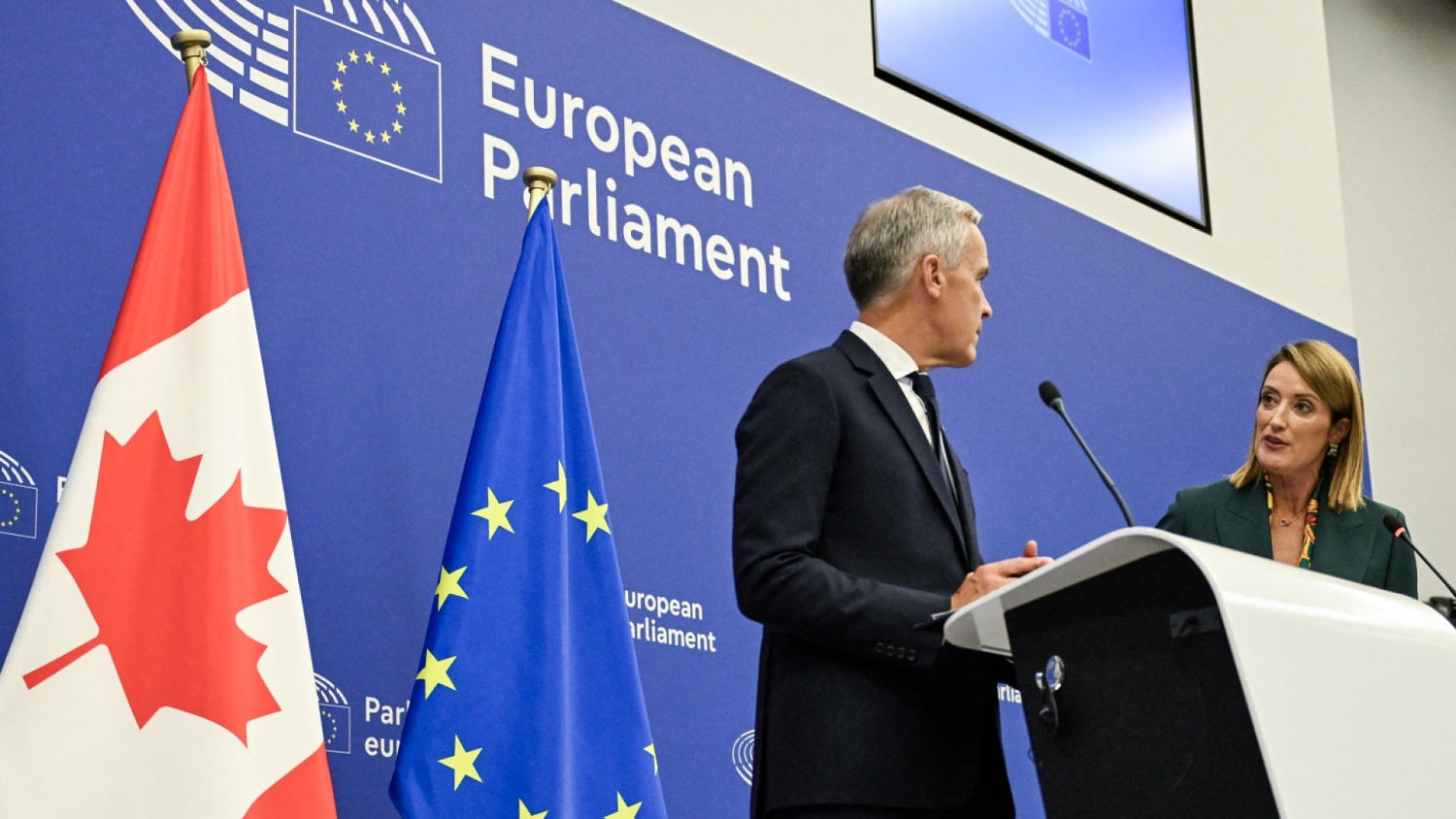
Canada is set to become the European Union’s first “associate member,” a status not currently defined in EU treaties, following a proposal by European Commission President Ursula von der Leyen. Canadian Prime Minister Mark Carney welcomed the proposal during an address to the European Parliament, framing it as a move to strengthen sovereignty and cooperation in areas like defense, critical minerals, and energy security. The initiative comes as Canada and the US are locked in an escalating trade dispute, with each side imposing tariffs after bilateral talks collapsed last month.
Von der Leyen proposed the alliance during her State of the Union address, envisioning a closer relationship encompassing manufacturing, technology, and the Arctic. While the specifics of “associate membership” remain undefined – with one EU diplomat telling Politico that creating the status would require treaty changes – Carney stressed Canada is not seeking full EU membership. He emphasized the importance of nations being able to forge international agreements without external interference.
The proposal drew a sharp rebuke from US President Donald Trump, who threatened “very serious tariffs” on Europe if he deemed the partnership a “hostile act.” Carney responded by stating the alliance is a “positive process” and asserting that Canadians will not be dictated to by other nations. The move is also seen as a response to Canada’s increasing dependence on the US, with approximately 70% of its exports destined for the American market.
While the EU and Canada already have a Comprehensive Economic and Trade Agreement (CETA) in place, and signed a Security and Defense Partnership in 2025, the details of this new “associate member” status are still being worked out. Some EU states have expressed reservations about the proposal, and The proposal has sparked debate in Canada, with support for deeper cooperation with the EU around 80%, but support for eventual accession at 49%.
Read the original coverage
💬 Comments
📜 Comment Policy