Archaeological evidence reveals that the Mississippian people of Etowah, Georgia, consumed cacao from Central America around 11th century CE, demonstrating extensive trade networks.
Adam King, a University of South Carolina archaeologist, and his colleagues discovered fragments of ancient DNA from *Theobroma cacao* within potsherds unearthed at Etowah, a major center of the Mississippian culture located just north of present-day Atlanta, Georgia. The presence of cacao is notable because the plant only grows in tropical climates, meaning the cacao source was at least 3,000 kilometers away.
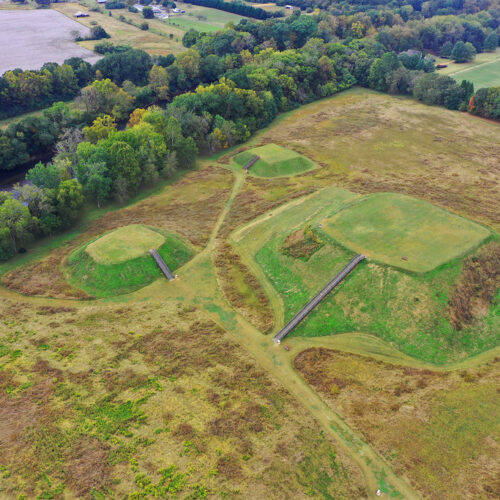
The research focused on pottery discarded after community feasts dating to the early construction phase of Etowah’s first large platform mound. The mound, which would eventually reach 19 meters in height and cover three acres, was built by excavating a large pit and then filling it with refuse, including broken pottery. Because the pottery was not washed before disposal, microscopic residue of ancient drinks soaked into the ceramic, allowing researchers to analyze its contents in a 2017 study.
Etowah flourished in the centuries before European colonization and, by 1350 CE, featured wooden palisades, guard towers, and six earthen mounds, the largest of which covered three acres. These mounds supported log temples overlooking plazas used for ball games, ceremonies, and markets. The discovery of cacao suggests the Mississippian people had established trade connections spanning a vast distance, and that chocolate may have played a role in the construction and communal life of the city.
Read the original coverage
💬 Comments
📜 Comment Policy