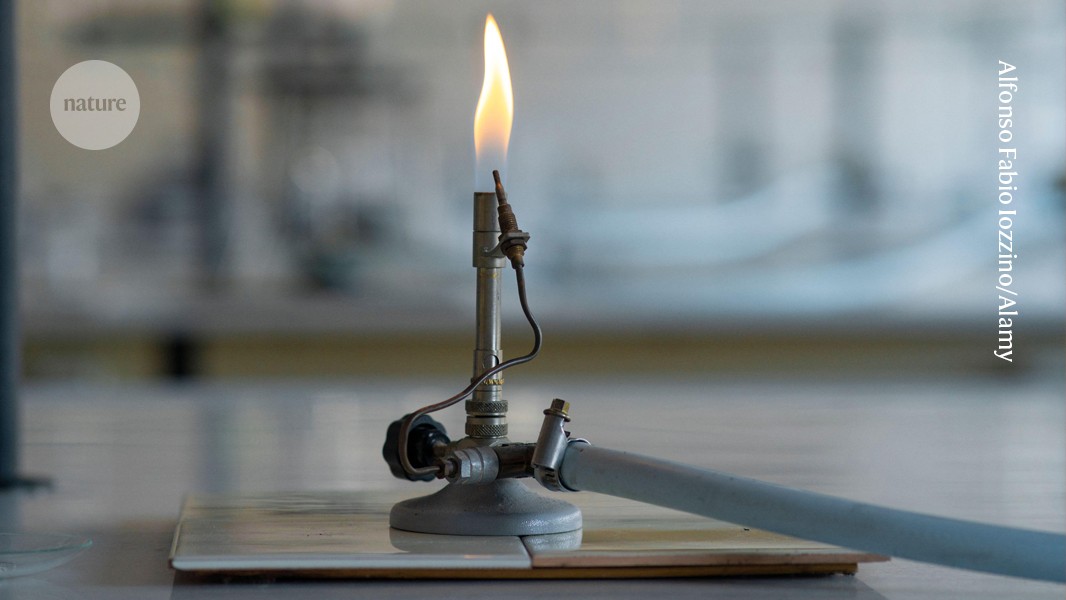
A new study challenges the long-held belief that Bunsen burners sterilize laboratory workspaces, finding they are ineffective and may even worsen contamination. The research, led by Hannah Gavin, a microbiologist at Providence College in Rhode Island, revealed that the burners do not remove airborne bacteria and could contribute to its spread.
For almost two centuries, Bunsen burners have been a staple in biology and chemistry labs, traditionally thought to create convection currents that carry away microbe-containing particles. However, Gavin found no experimental evidence supporting this claim. She stated the lack of evidence “allowed for the propagation of all these hypotheses, theories, lore, mythology around the Bunsen burner.”
The study involved deliberately contaminating lab benches with *Gordonia rubripertincta*, a bright orange bacterium easily visible on Petri dishes. Researchers seeded the air with the bacteria by spraying liquid or shaking bacteria-laced towels. They then compared bacterial growth on Petri dishes placed near an active Bunsen burner to those near an inactive one. The results showed the burners did not reduce bacterial settlement and may have increased it.
Amir Mitchell, a systems biologist at the University of Massachusetts Chan Medical School in Worcester, suggested the findings could be the “nail in the coffin” for the burners’ use in biology labs. The study’s findings could fuel debate about the continued use of this traditional device in modern laboratories.
Read the original coverage
💬 Comments
📜 Comment Policy