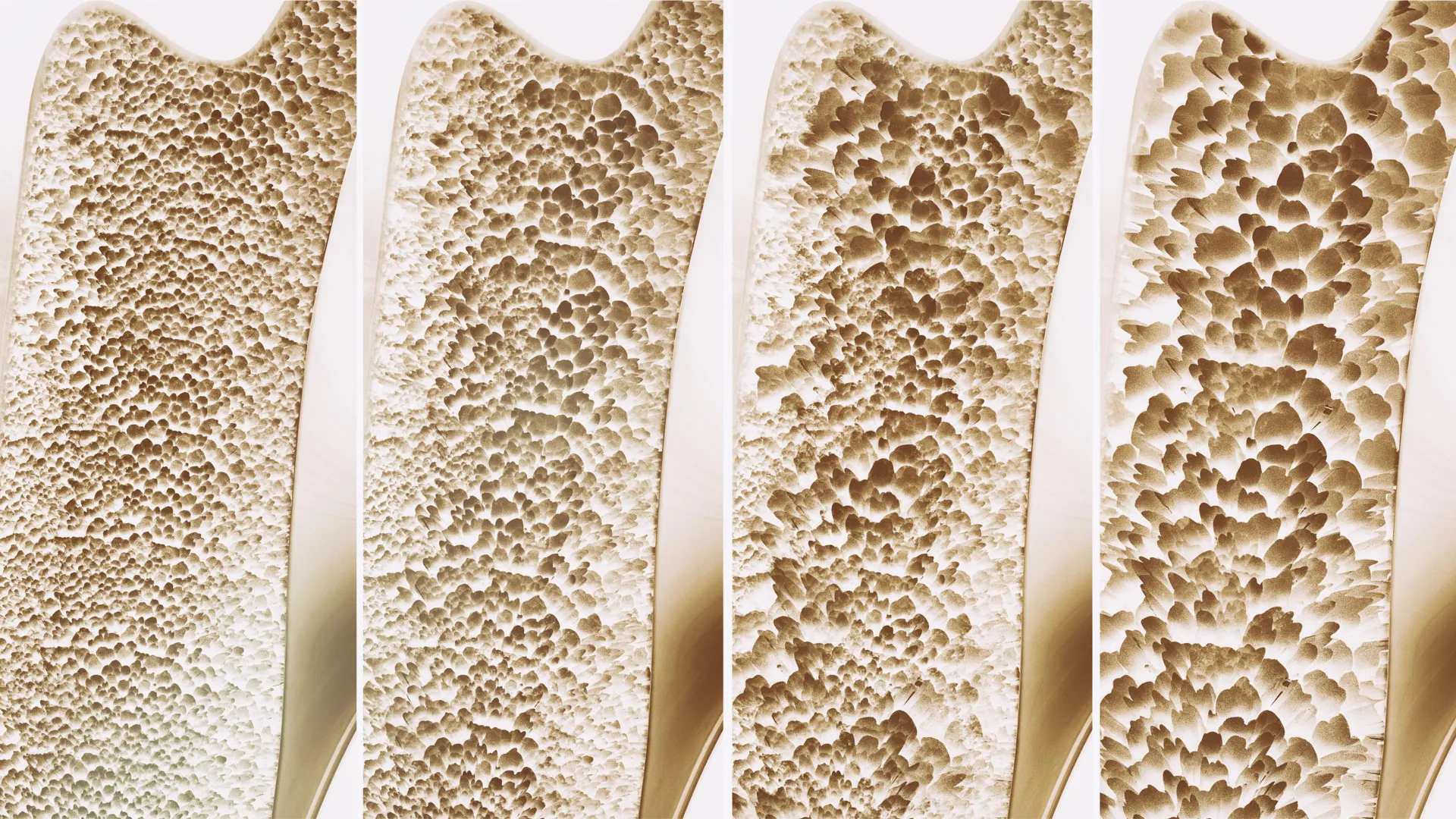
Scientists at Leipzig University have identified the GPR133 receptor as a key factor in bone health and a potential target for osteoporosis treatments. Experiments with mice showed that activating GPR133 with a compound called AP503 significantly increased bone strength, both in healthy mice and those with osteoporosis-like conditions.
Approximately six million people in Germany, mostly women, are affected by osteoporosis, a condition that weakens bones and increases fracture risk. Current treatments have limitations, prompting researchers to seek new biological targets for preserving or rebuilding bone. Professor Ines Liebscher, lead investigator from the Rudolf Schönheimer Institute of Biochemistry at the Faculty of Medicine, explained that if GPR133 is impaired through genetic changes, mice exhibit bone density loss similar to osteoporosis in humans.
The research team utilized AP503, recently identified as a stimulator of GPR133 through computer-assisted screening, to increase bone strength in mice. “Using the substance AP503, which was only recently identified via a computer-assisted screen as a stimulator of GPR133, we were able to significantly increase bone strength in both healthy and osteoporotic mice,” Liebscher stated.
GPR133, an adhesion G protein-coupled receptor, responds to physical forces and interactions between bone cells. Activating the receptor alters the balance between osteoblasts, which build new bone tissue, and osteoclasts, which break down old bone. Specifically, stimulating GPR133 encourages osteoblast activity while reducing osteoclast activity, leading to stronger, more durable bone.
Read the original coverage
💬 Comments
📜 Comment Policy